
Roofing Tips & Guides
Expert Roofing Advice for Charlotte Homeowners
Learn from Charlotte's trusted roofing experts. Tips on maintenance, repair, replacement, and protecting your home from the elements.
Leak or wind damage from Isaias? 24/7 emergency tarping, free storm-damage inspections and insurance-claim help.
Learn from Charlotte's trusted roofing experts. Tips on maintenance, repair, replacement, and protecting your home from the elements.
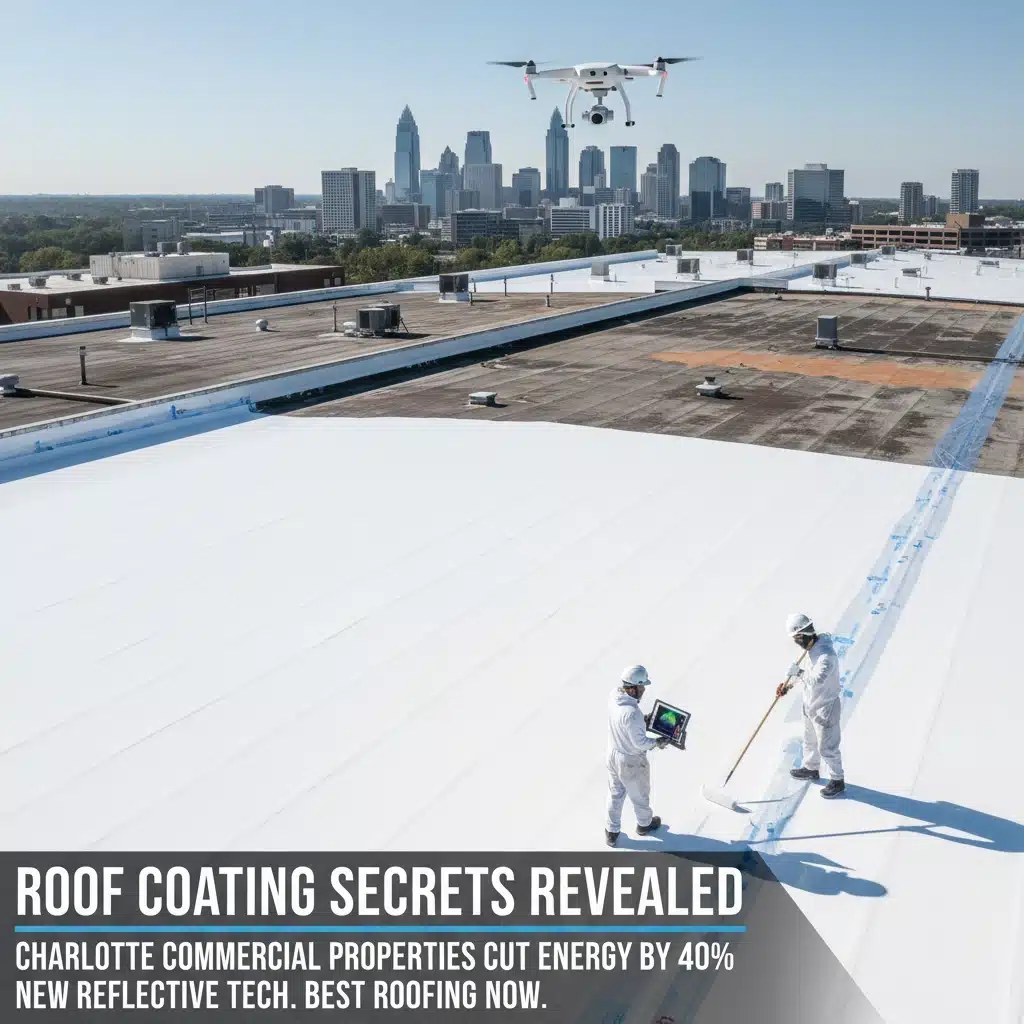
Charlotte business owners are discovering a simple way to slash their energy bills. It's not solar panels or fancy HVAC systems. It's something much simpler: roof coatings.
We've seen commercial properties cut their cooling costs by 40% or more. Some save even more. The best part? Most coatings pay for themselves in just 2-3 years.
Here's what we've learned after coating hundreds of roofs across Charlotte and Lake Norman. These are the secrets that make the biggest difference.
Charlotte gets hot. Really hot. Summer temperatures hit the 90s regularly. Our roofs bake in that sun for months.
A dark roof can reach 160 degrees on a sunny day. That heat soaks right through your building. Your air conditioning works overtime to fight it.
But here's the thing most people don't know. You can keep that same roof 50-70 degrees cooler. Just by changing what's on the surface.
Cool roof coatings reflect sunlight instead of absorbing it. It's like wearing a white shirt instead of a black one on a hot day. The difference is huge.
Let's break this down without the fancy engineering terms.
Your current roof probably absorbs 80-90% of the sun's energy. That energy turns into heat. The heat moves through your roof into your building.
A good roof coating flips this around. It reflects 50-80% of that sunlight back up into the sky. Less heat hits your roof. Less heat gets inside.
The math is simple. Less heat inside means less air conditioning. Less air conditioning means lower electric bills.
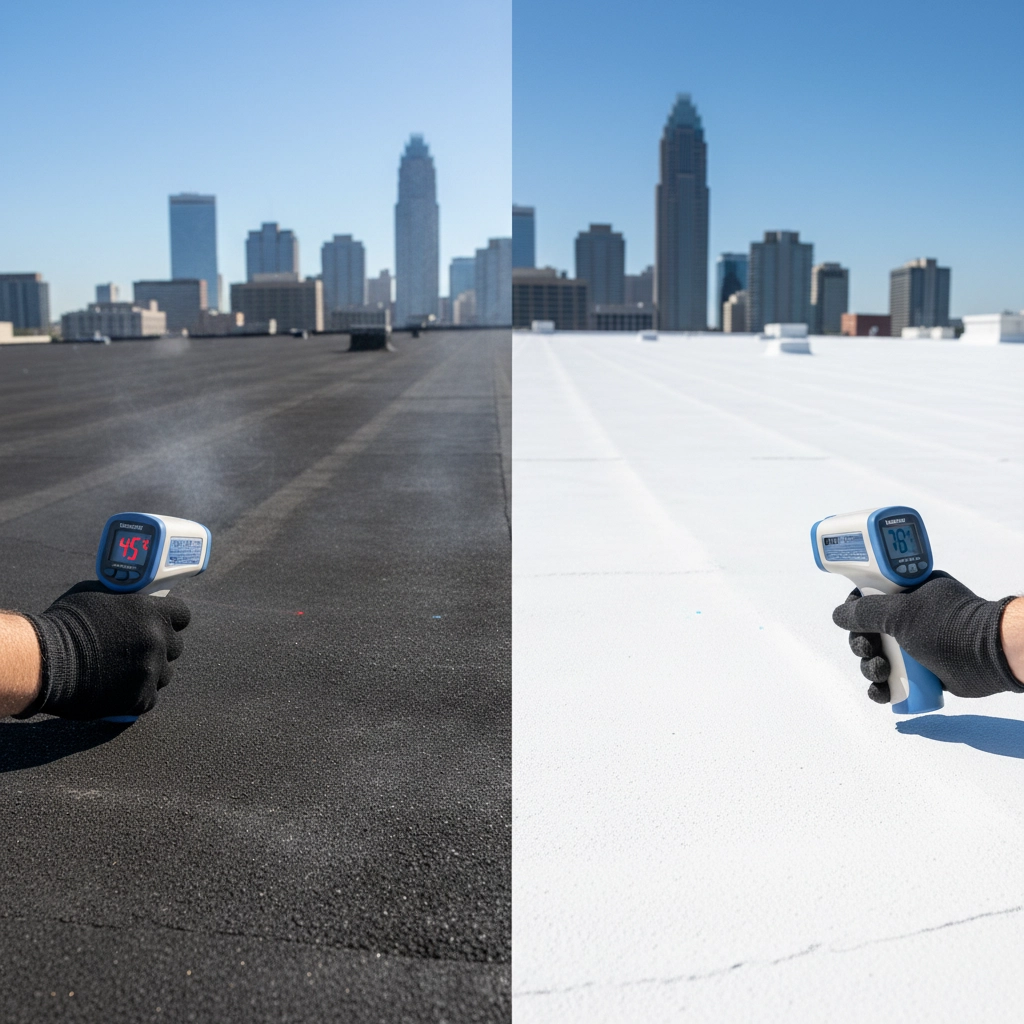
We measured one warehouse roof before and after coating. Before: 145 degrees on the surface. After: 78 degrees. Same day, same weather.
The owner's electric bill dropped 38% that first month. Every month after that, same savings.
Let's talk actual dollars and cents. These numbers come from our customers over the past three years.
A 10,000 square foot office building saved $847 per month on cooling costs. That's over $10,000 per year. The coating cost $6,800. It paid for itself in eight months.
A 25,000 square foot manufacturing plant saw bigger savings. Their monthly electric bill dropped by $1,940. The coating investment of $15,000 paid back in less than eight months.
One restaurant owner told us his summer electric bills dropped from $2,100 to $1,350 per month. That's $750 in monthly savings during peak season.
The U.S. Department of Energy backs up what we see. They say reflective coatings can cut cooling costs by up to 70%.
But here's what they don't tell you. The exact savings depend on several factors. Get these factors right, and you maximize your savings.
Not all roof coatings work the same. The type you pick makes a huge difference in energy savings.
Silicone coatings work best in areas with ponding water. They don't break down from standing water. But they're not the most reflective option.
Acrylic coatings offer the best reflectivity when new. They're also the most affordable. But they can collect dirt over time.
Elastomeric coatings stretch and move with your roof. They last longer but cost more upfront.
For maximum energy savings in Charlotte, we usually recommend acrylic coatings with high reflectivity ratings. Look for coatings with Solar Reflectance Index (SRI) values above 100.
Energy Star certified products are your best bet. They must reflect at least 65% of sunlight when new. Many reflect 80% or more.
Here's what most contractors won't tell you. The prep work matters more than the coating itself.
A coating applied over dirt and debris won't stick properly. It won't reflect as much light. And it won't last as long.
We pressure wash every roof before coating. We remove all grease, dirt, and loose materials. We fill cracks and gaps. We prime problem areas.
This prep work takes time. It costs more. But it makes the difference between a coating that works and one that fails.
One client tried to save money by hiring a cheap contractor. They skipped the cleaning step. The coating started failing within six months. They ended up paying twice to get it done right.
When you apply the coating affects how well it works.
Spring is ideal in Charlotte. The coating has time to cure before summer heat arrives. Fall works too, but you won't see energy savings until the next cooling season.
Avoid coating during rainy seasons. Moisture can ruin the application. Most coatings need 24-48 hours of dry weather to cure properly.
Temperature matters too. Most coatings shouldn't be applied when it's below 50 degrees or above 100 degrees.
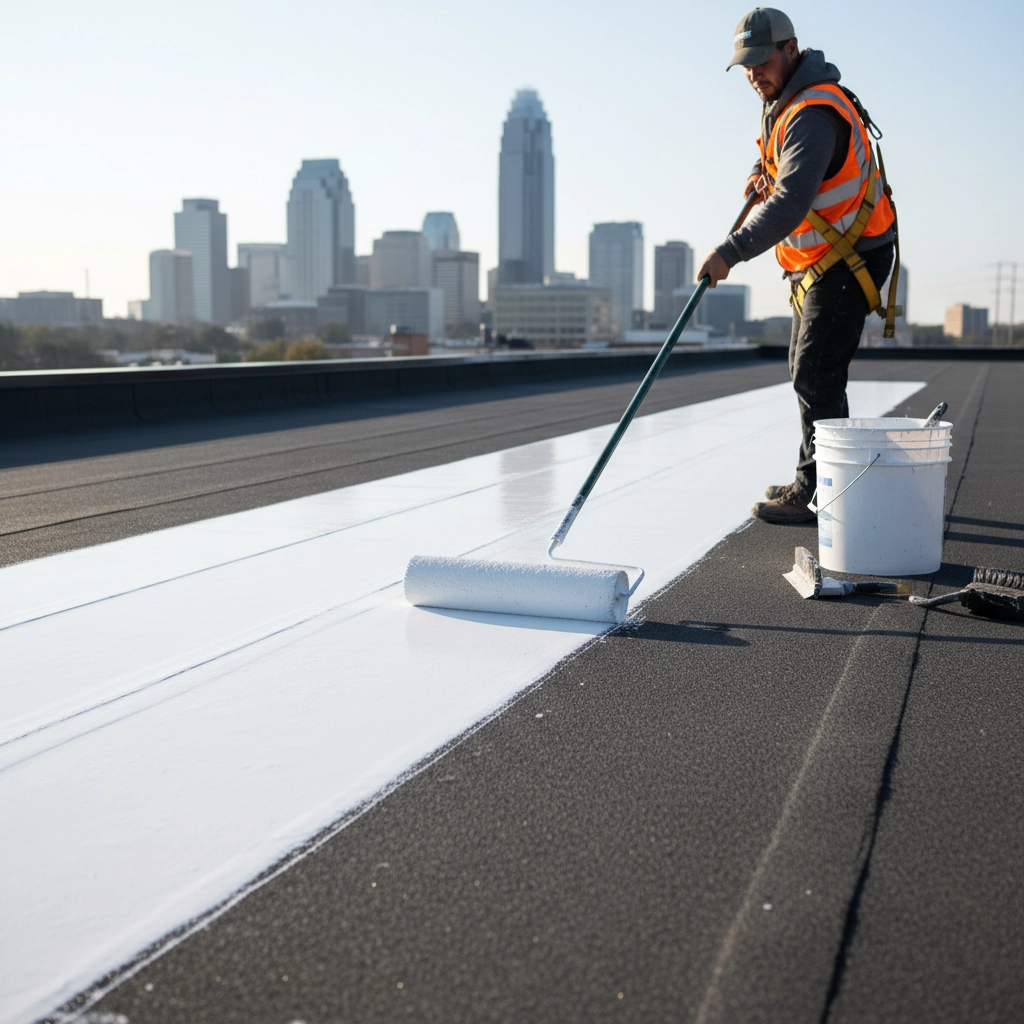
We track weather patterns carefully. We only schedule coating work when conditions are perfect. It costs us some flexibility, but it guarantees results.
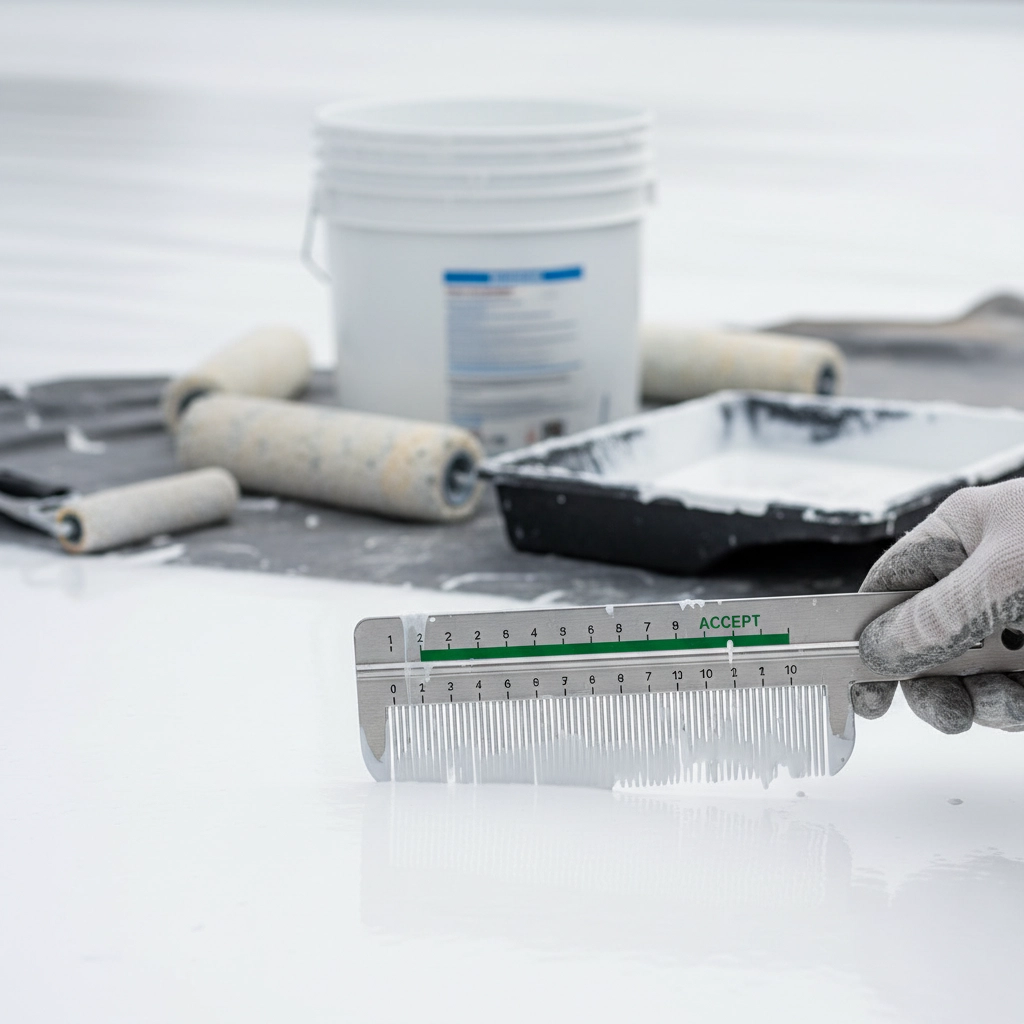
Thicker isn't always better with roof coatings. But too thin definitely doesn't work.
Most manufacturers specify coating thickness in mils. One mil equals 1/1000th of an inch. Most coatings need 20-30 mils when dry.
Too thin, and the coating won't provide full protection or reflectivity. Too thick, and it can crack as it cures.
We measure coating thickness during application. We use wet film thickness gauges to ensure even coverage. This attention to detail separates good contractors from great ones.
The coating industry has made huge advances in the past few years. New technologies deliver better performance than ever before.
Super Therm coatings block up to 96% of solar heat. That's significantly better than standard reflective coatings. These advanced formulas can keep roof surfaces near air temperature even on hot days.
Smart roof coatings from Berkeley Lab automatically adjust their properties based on temperature. They reflect more heat when it's hot and absorb more when it's cool. This technology provides year-round energy benefits.
Ceramic microsphere technology adds tiny reflective particles to standard coatings. These microspheres bounce light in multiple directions, increasing overall reflectivity.
Infrared-blocking additives target specific wavelengths of light that create the most heat. By blocking these specific frequencies, coatings can stay cooler even when they don't look particularly reflective.
We're testing several of these new technologies on local projects. Early results show 10-15% better performance than traditional coatings.
Energy savings grab attention. But roof coatings provide other benefits that add up over time.
Roof protection: Coatings protect your roof membrane from UV damage. This can extend roof life by 10-20 years. That saves you from expensive roof replacement costs.
Reduced maintenance: Reflective coatings reduce thermal expansion and contraction. This means fewer cracks and leaks over time.
Improved comfort: Lower roof temperatures mean more consistent indoor temperatures. Your HVAC system doesn't have to work as hard. Equipment lasts longer.
Environmental benefits: Reduced energy use means lower carbon emissions. Some Charlotte businesses use this for sustainability reporting.
One warehouse owner saved $12,000 per year on energy costs. But he also avoided a $45,000 roof replacement by extending his roof's life. The total financial impact was much larger than just energy savings.
Every building is different. Your exact savings depend on several factors:
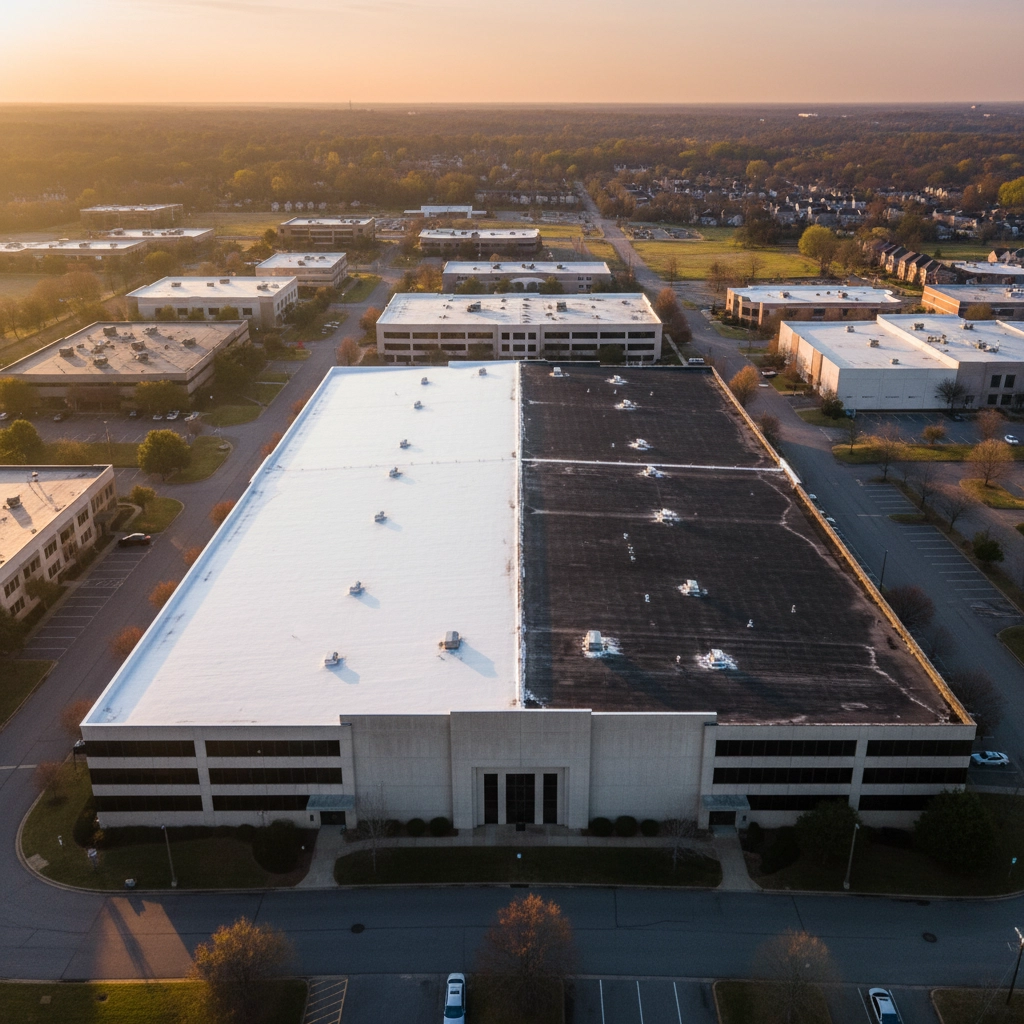
We use specialized software to estimate savings before installation. We factor in your roof size, current surface, local weather data, and energy rates.
The EPA provides a Cool Roof Savings Calculator online. It gives rough estimates based on your zip code and building type.
For accurate projections, have a professional energy audit done. The investment in accurate numbers pays off when making coating decisions.
Professional installation typically takes 1-3 days depending on roof size and complexity.
Day 1: Roof cleaning and preparation. This includes pressure washing, repairs, and priming.
Day 2: First coat application. Most projects need two coats for optimal performance.
Day 3: Final coat application and quality inspection.
Weather can extend this timeline. We never rush application to meet a schedule. Proper curing is essential for long-term performance.
Most installations happen during business hours. But we can work nights or weekends for facilities that can't shut down.
The process is relatively quiet compared to roof replacement. Most businesses can operate normally during installation.
Roof coatings aren't maintenance-free. But they require much less care than other roofing systems.
Annual inspections: Check for damage, ponding water, or dirt buildup. Address issues quickly to prevent bigger problems.
Cleaning: Pressure wash every 2-3 years to maintain reflectivity. Dirt and algae reduce performance over time.
Touch-up coating: High-traffic areas may need additional coating every 5-7 years.
We provide detailed maintenance plans with every installation. Following these plans ensures maximum energy savings for the life of the coating.
Most commercial coating projects pay for themselves within 2-4 years. After that, savings go straight to your bottom line.
Here's a typical timeline for a 15,000 square foot building:
Energy prices keep rising. Your savings get bigger every year even if your usage stays the same.
One client installed coatings five years ago. His first-year savings were $9,400. Last year, with higher energy rates, he saved $13,200 on the same roof.
The contractor you choose affects your results as much as the coating itself.
Look for contractors with:
Avoid contractors who:
Don't let upfront costs stop you from capturing energy savings.
Equipment financing: Many lenders offer specific programs for energy efficiency improvements. Terms typically range from 3-7 years.
Energy service agreements: Some contractors offer programs where they install coatings and you pay from the energy savings.
Utility rebates: Duke Energy and other local utilities sometimes offer rebates for cool roof installations.
Tax incentives: Energy efficiency improvements may qualify for federal tax deductions or local incentives.
Lease programs: Some coating manufacturers offer lease options for large commercial projects.
The key is structuring payments so monthly savings exceed monthly costs from day one.
We see the same mistakes over and over. Avoid these to maximize your energy savings:
Choosing the cheapest bid: Quality matters more than price. Poor installation can cut savings in half.
Ignoring surface preparation: Shortcuts in prep work lead to coating failure and lost savings.
Wrong coating type: Using interior-grade or low-reflectivity coatings wastes money.
No maintenance plan: Neglected coatings lose effectiveness quickly.
Unrealistic expectations: Coatings work great but aren't magic. Proper evaluation prevents disappointment.
Coating technology keeps improving. Here's what's coming next:
Self-cleaning coatings: New formulations that shed dirt automatically, maintaining reflectivity longer.
Phase-change materials: Coatings that absorb and release heat to regulate temperature more precisely.
Smart coatings: Materials that adjust their properties based on weather conditions automatically.
Integrated solar: Coatings that generate electricity while reflecting heat.
Longer warranties: New materials offering 20-25 year performance guarantees.
We stay current with these advances. Our customers get access to the latest technology as it becomes proven and cost-effective.
Energy costs keep rising. The longer you wait, the more money you lose.
Coating technology is mature and proven. There's no reason to wait for "better" options.
Federal tax incentives for energy efficiency improvements may not last forever. Take advantage while they're available.
Your roof is getting older every day. Coatings work best on roofs in good condition. Don't wait until major repairs are needed.
Ready to cut your energy bills by 40% or more?
We offer free energy assessments for Charlotte area commercial properties. We'll inspect your roof, analyze your energy usage, and provide detailed savings projections.
No pressure. No sales pitch. Just honest evaluation of whether roof coatings make sense for your building.
Call us at [phone number] or visit cms.bestroofingnow.com to schedule your free assessment.
Don't spend another summer paying high energy bills when the solution is right above your head.
The question isn't whether roof coatings save money. It's how much they'll save you.
Let's find out together.
Best Roofing Now
Charlotte's trusted roofing experts since 2019
Based on this article, you may be interested in these services.
We proudly serve these Charlotte-area communities with professional roofing services.
View All Service Areas →See our recent roofing work across the Charlotte metro area.
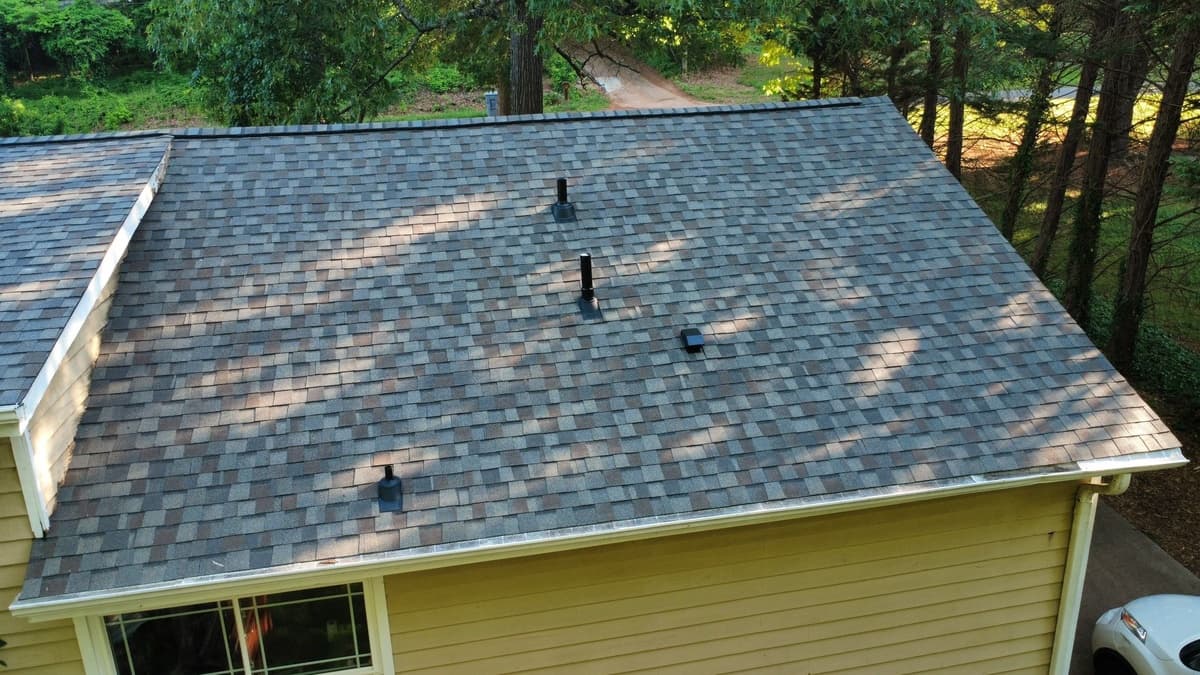
Charlotte, NC
new roof
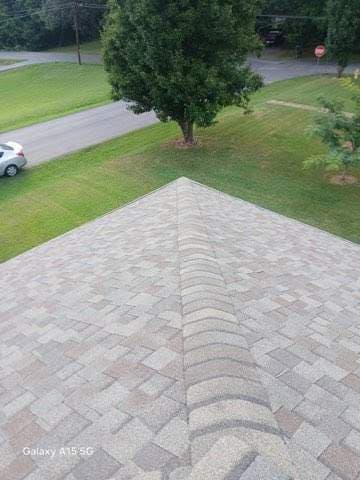
Charlotte, NC
new roof
Charlotte, NC
new roof
Charlotte, NC
new roof
Get a free roof inspection and honest assessment from Charlotte's most trusted roofing company.