
Roofing Tips & Guides
Expert Roofing Advice for Charlotte Homeowners
Learn from Charlotte's trusted roofing experts. Tips on maintenance, repair, replacement, and protecting your home from the elements.
Leak or wind damage from Isaias? 24/7 emergency tarping, free storm-damage inspections and insurance-claim help.
Learn from Charlotte's trusted roofing experts. Tips on maintenance, repair, replacement, and protecting your home from the elements.
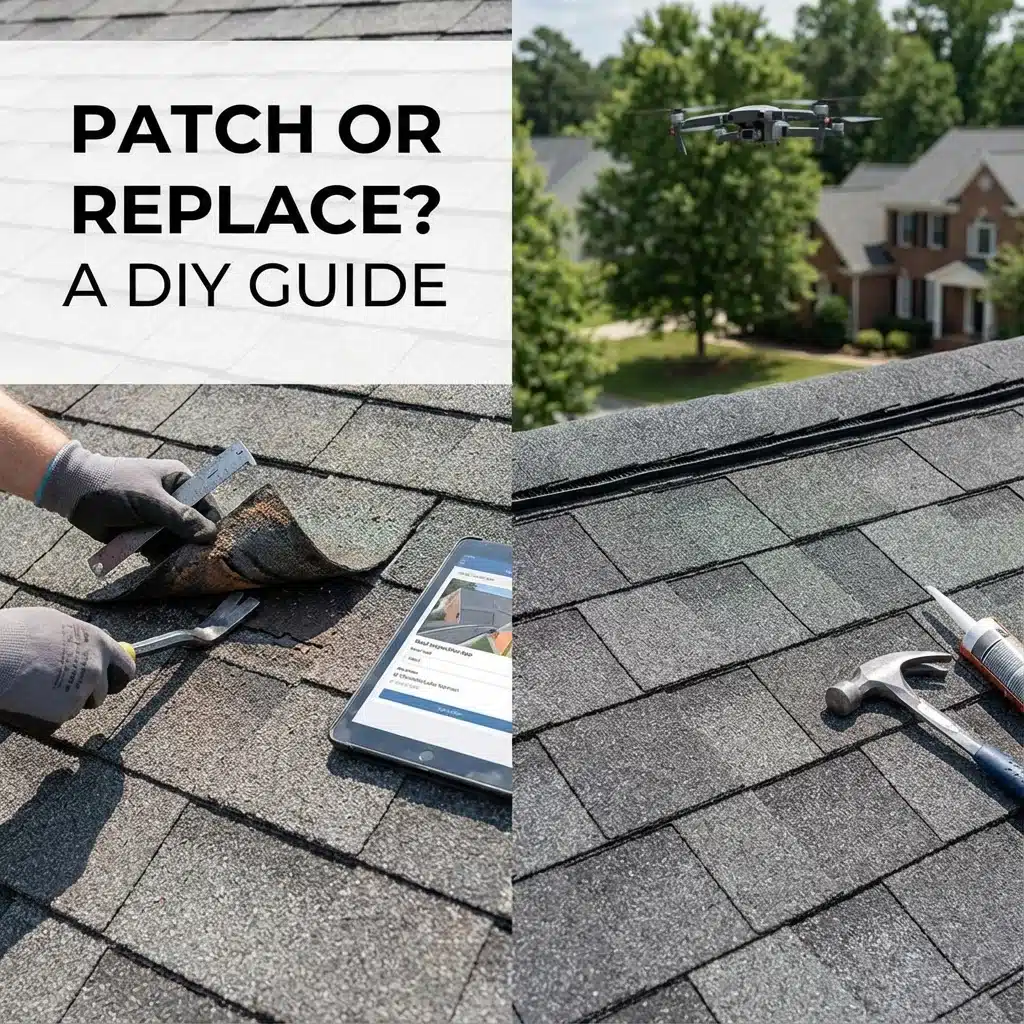
Standing on your driveway, squinting up at your roof after Charlotte's latest thunderstorm, you're probably asking yourself the same question we hear dozens of times every week: "Can I just patch this, or do I need a whole new roof?"
It's a fair question. And honestly? The answer isn't always black and white.
After two decades of climbing onto roofs across Charlotte and the Lake Norman area, I've seen homeowners make both smart repair decisions and costly mistakes. The difference usually comes down to knowing what you're actually looking at up there.
Here's the thing – you don't need to be a roofing contractor to spot the major warning signs. But you do need to know what matters and what doesn't. More importantly, you need to understand when a $300 repair can buy you five more good years, and when it's just throwing money at a roof that's already given you its best.
Let me walk you through exactly how to evaluate your shingle damage like a pro. No fluff, no sales pitch – just the straight truth about what I look for when I'm deciding whether your roof needs a band-aid or surgery.
Before we talk repair versus replacement, let's start with what you can actually see from the ground. Grab a pair of binoculars if you have them, and let's do a quick inspection.
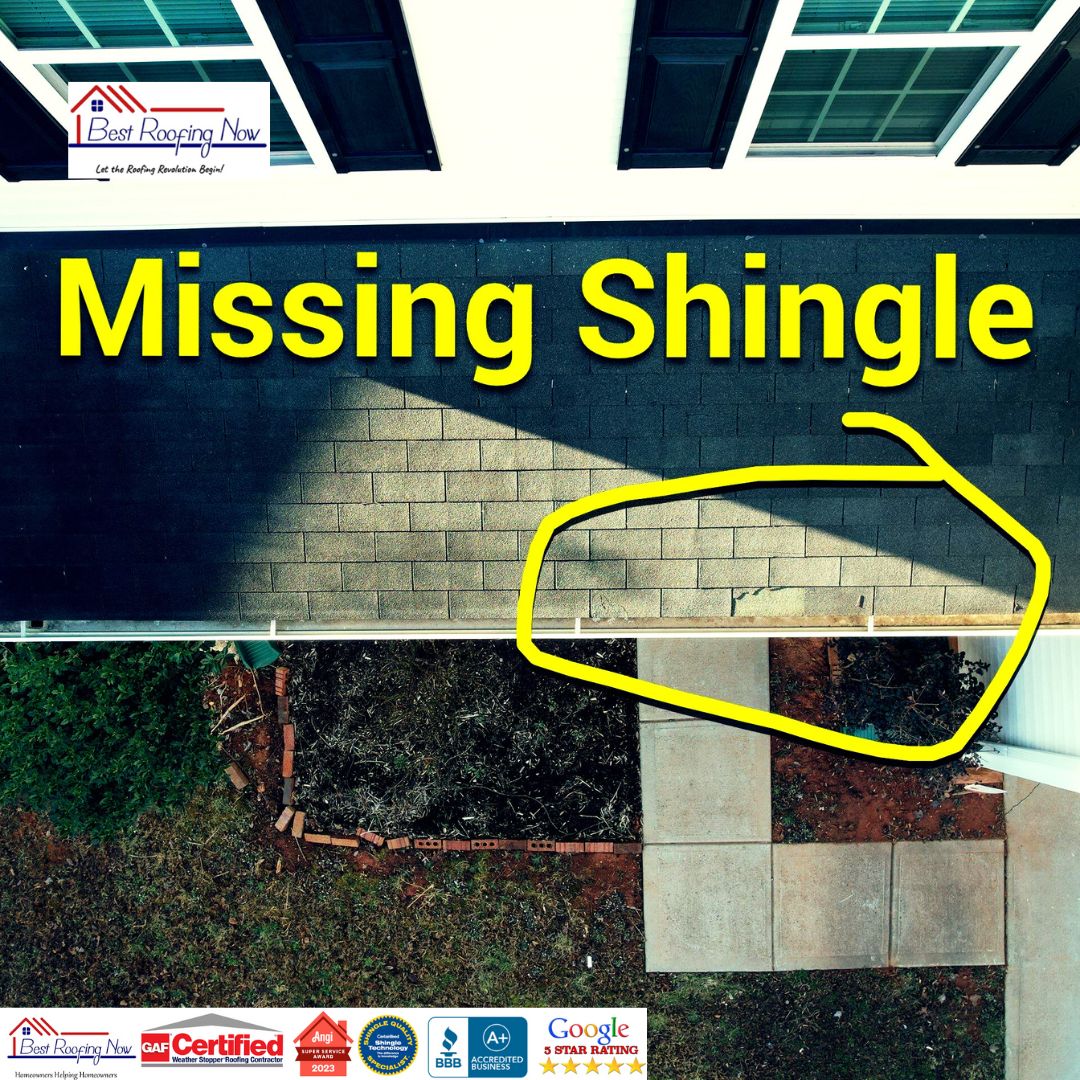
Start with the obvious stuff. Missing shingles stick out like a sore thumb, especially after one of our Carolina wind storms. If you can count them on one hand and they're scattered around (not all in one area), that's usually patch territory.
Look for the "balding" spots. Healthy asphalt shingles should look evenly granulated – kind of like coarse sandpaper. When shingles start losing their granules, they'll appear smooth and darker. A few bald spots? Probably okay. Large sections that look more like smooth asphalt than textured shingles? That's a red flag.
Check your gutters. This is where most homeowners miss a crucial clue. If your gutters are loaded with granules (they look like coarse sand or tiny pebbles), your shingles are shedding their protective coating. A little bit is normal, especially on newer roofs. A lot means your shingles are aging faster than they should.
Scan for the "potato chip" effect. Shingles that are curling up at the edges or buckling in the middle look like potato chips from a distance. This happens when shingles get old or when there's not enough ventilation in your attic. Either way, it's not a good sign.
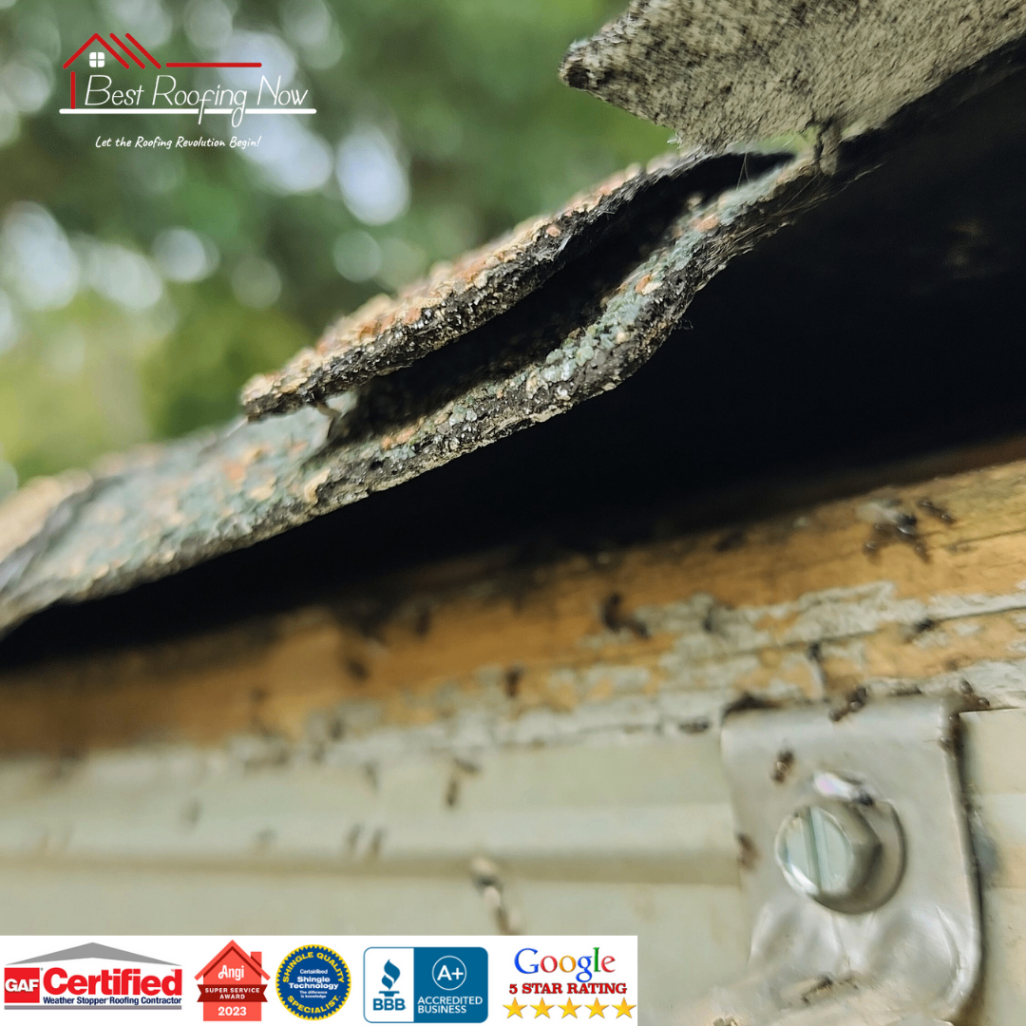
Now, here's where Charlotte and Lake Norman homeowners need to pay special attention. Our weather throws everything at our roofs – summer heat that can hit the upper 90s, sudden hailstorms, ice storms that nobody expects, and those lovely spring winds that can clock 40+ mph.
Heat damage shows up differently than storm damage. Those hot Charlotte summers can literally cook your shingles. You'll see widespread granule loss, shingles that look "tired" or faded, and edges that curl uniformly across large sections. This type of damage usually means your whole roof is aging, not just a few problem spots.
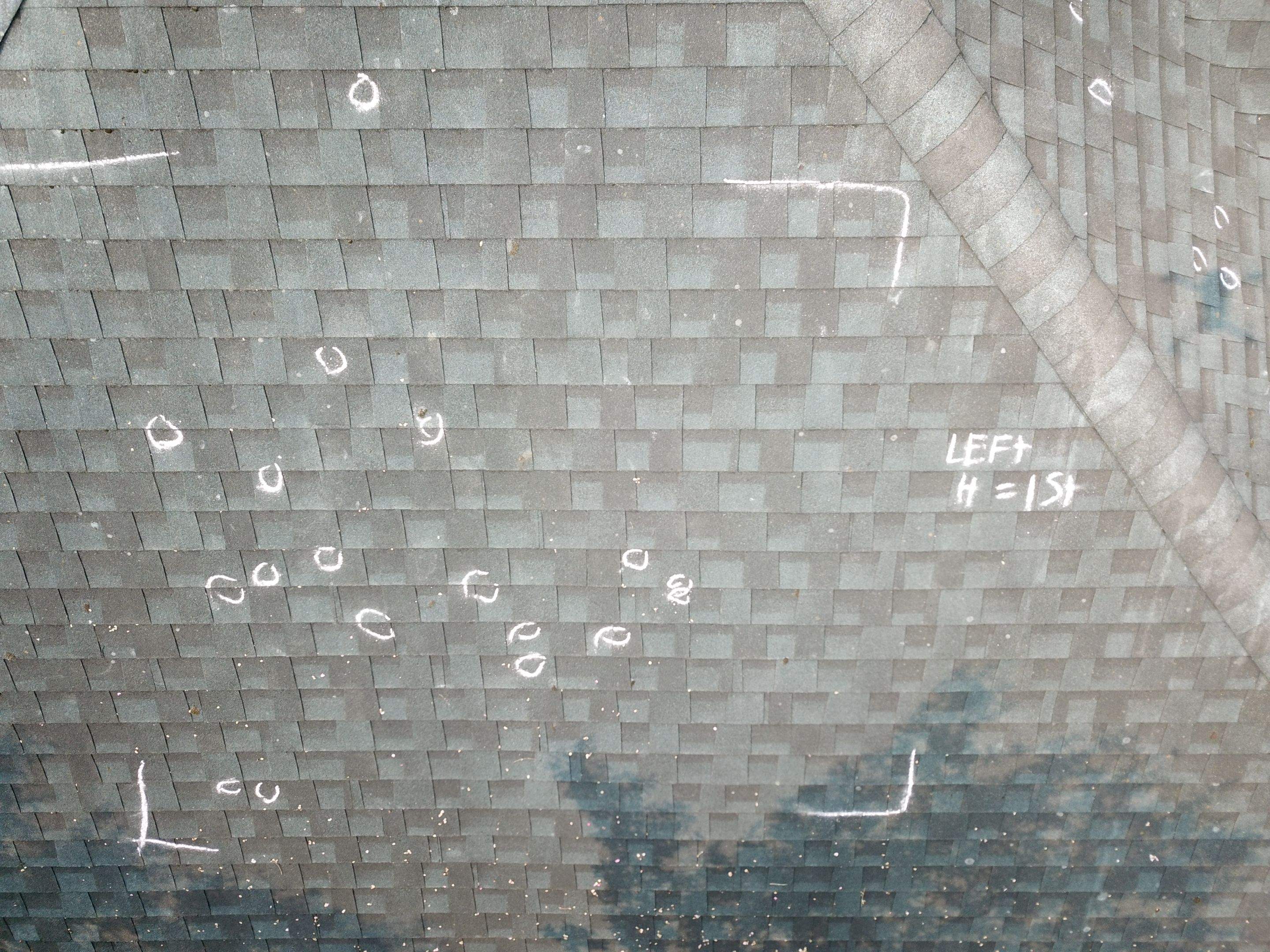
Storm damage is typically more random. Hail creates circular impact marks (sometimes with the granules knocked clean off). Wind damage usually shows up as missing shingles or shingles with lifted edges. These problems can often be patched if the rest of your roof is in decent shape.
Let's be clear about something first: there's absolutely nothing wrong with patching a roof when patching makes sense. Some of the best roofing decisions I've seen homeowners make involved smart, targeted repairs that bought them years of additional life.
The sweet spot for repairs. If your roof is less than 15 years old and you're dealing with isolated damage, repairs are usually the way to go. This means a few missing shingles, minor flashing issues around chimneys or vents, or small leaks that can be traced to specific problem areas.
I had a customer in Cornelius last month whose roof took a direct hit from a falling oak branch during a storm. The branch punched through about a dozen shingles in a 4-foot square area. The rest of the 8-year-old roof was perfect. We patched that section for under $800, and it'll be good for another decade.
The math usually works in your favor. As a general rule, if the repair costs less than 20% of what a full roof replacement would cost, and your roof has at least 5-7 years of useful life left, patching makes financial sense.
But here's the catch – and this is where I see homeowners get into trouble. Patching only works when you're dealing with surface problems, not systemic issues. If the problem is with your shingles themselves (age, manufacturing defect, improper installation), patching is like putting a band-aid on a broken bone.

Signs that patching will work long-term:
Quick test for patch-worthy damage: If you can draw a circle around the problem area with a 10-foot diameter and everything outside that circle looks good, you're probably looking at a repair situation.
Now let's talk about the hard truth: sometimes patching is just wishful thinking.
Age matters more than most people realize. I don't care how good your 25-year-old shingles look from the street – they're living on borrowed time. Asphalt shingles have a finite lifespan, and it's not just about looking pretty. The asphalt base starts to deteriorate, the granules wear away, and the whole system becomes less effective at keeping water out.
In our Charlotte climate, I typically see architectural shingles start showing their age around year 18-20. Basic 3-tab shingles? Often closer to 15-17 years. If your roof is approaching these ages and you're starting to have problems, replacement is almost always the smarter long-term choice.
Multiple leaks spell big trouble. Here's a rule I learned early in my career: if you have three or more separate leak areas, you don't have a shingle problem – you have a roof problem. The issues are usually too widespread and interconnected for patches to be effective.
The "whack-a-mole" pattern. You know what I'm talking about if you've lived it. You fix one leak, then another pops up six months later. Fix that one, and you get a third leak on the other side of the house. This pattern tells you that your roof system is failing gradually, and you're not going to patch your way out of it.
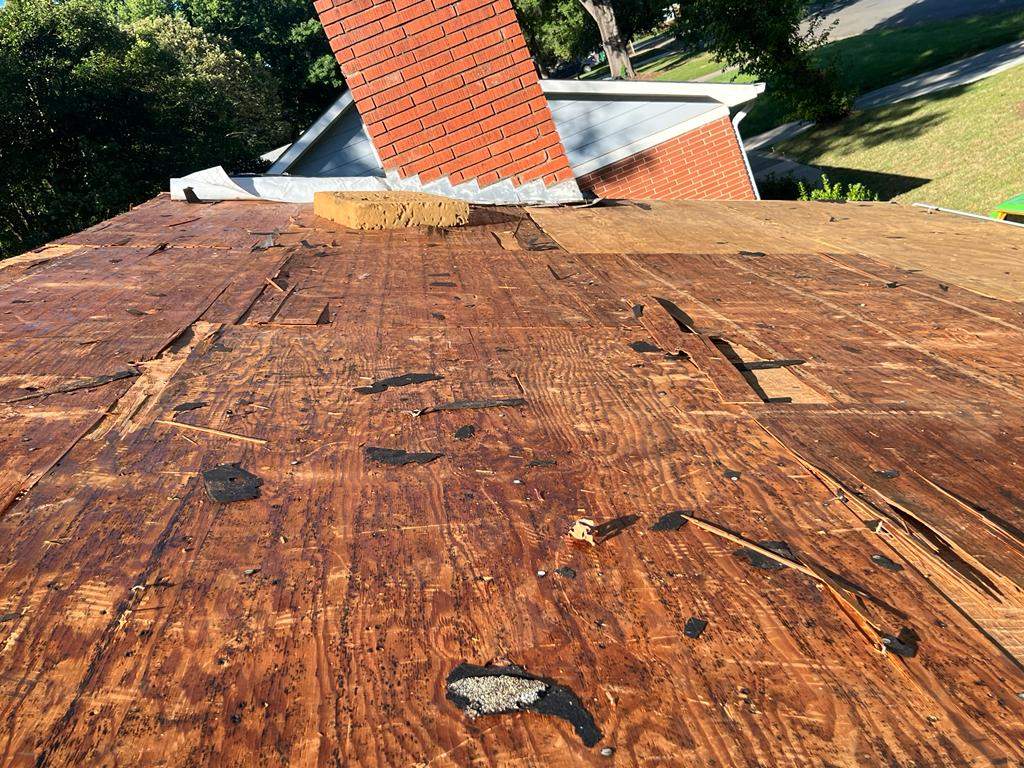
Structural red flags that require replacement:
Alright, let's get practical. Here's exactly how to evaluate your roof damage like I would when I'm deciding between repair and replacement.
Step 1: Document everything with photos. Before you do anything else, take pictures of the damage from multiple angles. If you end up filing an insurance claim, you'll need these. Plus, photos help you track whether problems are getting worse over time.
Step 2: The "25% rule." This is simple math that works pretty well in most situations. If the cost of repairs would be more than 25% of the cost of a new roof, replacement usually makes more sense. In the Charlotte area, that typically means if repairs would cost more than $4,000-$5,000, you should seriously consider replacement.
Step 3: Count your problem areas. Walk around your house and count distinct problem zones – not individual damaged shingles, but separate areas where you see issues. One or two zones? Probably repairable. Four or more zones scattered around your roof? Start shopping for replacement quotes.
Step 4: The "attic test." This one's crucial, and most homeowners skip it. Go into your attic with a flashlight on a sunny day. Look for any spots where you can see daylight coming through the roof. Check for water stains, mold, or soft spots in the wood. If you find multiple issues up there, surface repairs probably won't solve your problems.
Step 5: Consider your timeline. This is where a lot of people get tripped up. Sure, you might be able to patch your way through another couple of years. But if you're planning to sell your house within the next 3-5 years, a new roof often adds more value than the cost difference between patching and replacing.
Step 6: Factor in Charlotte-specific concerns. Our climate is tough on roofs. We get intense UV exposure in summer, freeze-thaw cycles in winter, and some pretty aggressive storms. A roof that might limp along for years in a milder climate could fail much sooner here.
According to the National Roofing Contractors Association, "Roofs in the Southeast typically experience accelerated aging due to UV exposure and thermal cycling. What might be a 5-year repair in Minnesota could be a 2-3 year fix in North Carolina."
Let's talk numbers, because that's usually what the decision comes down to.
Typical repair costs in our area:
Replacement costs for Charlotte/Lake Norman homes:
Now here's the part most homeowners don't think about: the total cost of ownership. If you repair a roof today for $2,000, but you'll need to replace it in three years anyway, you've essentially added $2,000 to your replacement cost. That $14,000 roof just became a $16,000 roof.
The financing factor. Roof replacements often qualify for special financing deals that repairs don't. Many homeowners find it easier to finance a $12,000 roof replacement over 5-7 years than to pay $3,000 out of pocket for repairs today and another $12,000+ for replacement in a few years.
Before we go any further, let's be crystal clear about something: evaluating roof damage from the ground is smart. Climbing up on your roof to do it yourself can be deadly.
Every year, we see homeowners get hurt trying to diagnose their own roof problems. Charlotte area emergency rooms treat dozens of fall injuries from roofs annually. It's just not worth it.
Safe DIY evaluation methods:
When to absolutely call a professional:
⚠️ Fair warning: I've seen too many homeowners turn a $500 repair into a $5,000 problem (plus medical bills) by trying to "just take a quick look" up there.
Here's something that can completely flip your repair-versus-replace decision: insurance coverage.
If storm damage triggered your roof problems, your insurance might cover a full replacement even when the damage seems minor. Insurance companies often prefer to replace the whole roof rather than risk ongoing claims from continued problems.
Document everything before you call your insurance company. Take photos, note the date and type of storm that caused the damage, and keep any repair estimates you've gotten. Your insurance adjuster will want to see all of this.
Understand your policy. Most homeowners policies cover "sudden and accidental" damage but not wear-and-tear issues. A tree branch that punctures your roof during a storm? Covered. Shingles that fail because they're old? Not covered.
In the Charlotte area, we see a lot of hail damage claims. Even small hail can cause enough damage to justify full roof replacement, especially if your shingles are more than 10-12 years old.
If you live around Lake Norman, you've got some special considerations that might influence your repair-versus-replace decision.
Wind exposure. Homes closer to the lake get hit with stronger, more consistent winds. This means shingles that might last 20 years in South Charlotte could start failing around year 15-17 near the water. If you're seeing wind damage, it's probably not the last time.
Humidity and moss growth. The higher humidity around Lake Norman can accelerate certain types of roof deterioration, especially moss and algae growth. While these aren't usually structural problems, they can make shingles more brittle and prone to damage.
Higher property values. This one's purely financial, but homes around Lake Norman typically have higher property values. That means the cost-to-value ratio for a new roof often works out better than it would in other areas. A new roof on a $400,000 home near the lake might add $15,000-$20,000 in value, while the same roof on a $200,000 home in other parts of Charlotte might only add $8,000-$12,000.
So how do you actually decide? Here's the decision tree I use with customers:
Choose repair if:
Choose replacement if:
Still not sure? Here's what I tell homeowners: if you're genuinely torn between repair and replacement, you're probably looking at a roof that's on the borderline. In those cases, I usually recommend replacement. Here's why – you're going to be thinking about this roof for the next few years regardless. Every storm, every leak, every repair bill is going to make you wonder if you should have just replaced it. Sometimes, peace of mind is worth the extra cost.
According to Tom Shanahan, a roofing consultant with 30+ years in the industry, "When homeowners can't decide between repair and replacement, it usually means the roof is trying to tell them something. In my experience, borderline roofs rarely get better – they just become more expensive to maintain."
Some situations make the repair-versus-replace decision crystal clear. If you see any of these, start getting replacement quotes:
Multiple layers of shingles. If your house already has two layers of roofing, most building codes require complete removal before installing new shingles. You can't just patch a multi-layer roof indefinitely.
Widespread granule loss. If large sections of your roof look smooth and dark instead of textured and colorful, the shingles have lost their protective granule coating. This is like having sunscreen that's worn off – it might still provide some protection, but not for long.
Daylight in your attic. If you can see daylight coming through your roof boards from inside the attic, you've got structural issues that go way beyond shingle problems.
The "checkerboard" effect. If your roof looks like a patchwork quilt from all the different repair attempts over the years, it's time to start over. A roof with mismatched shingles from multiple repairs rarely performs well long-term.
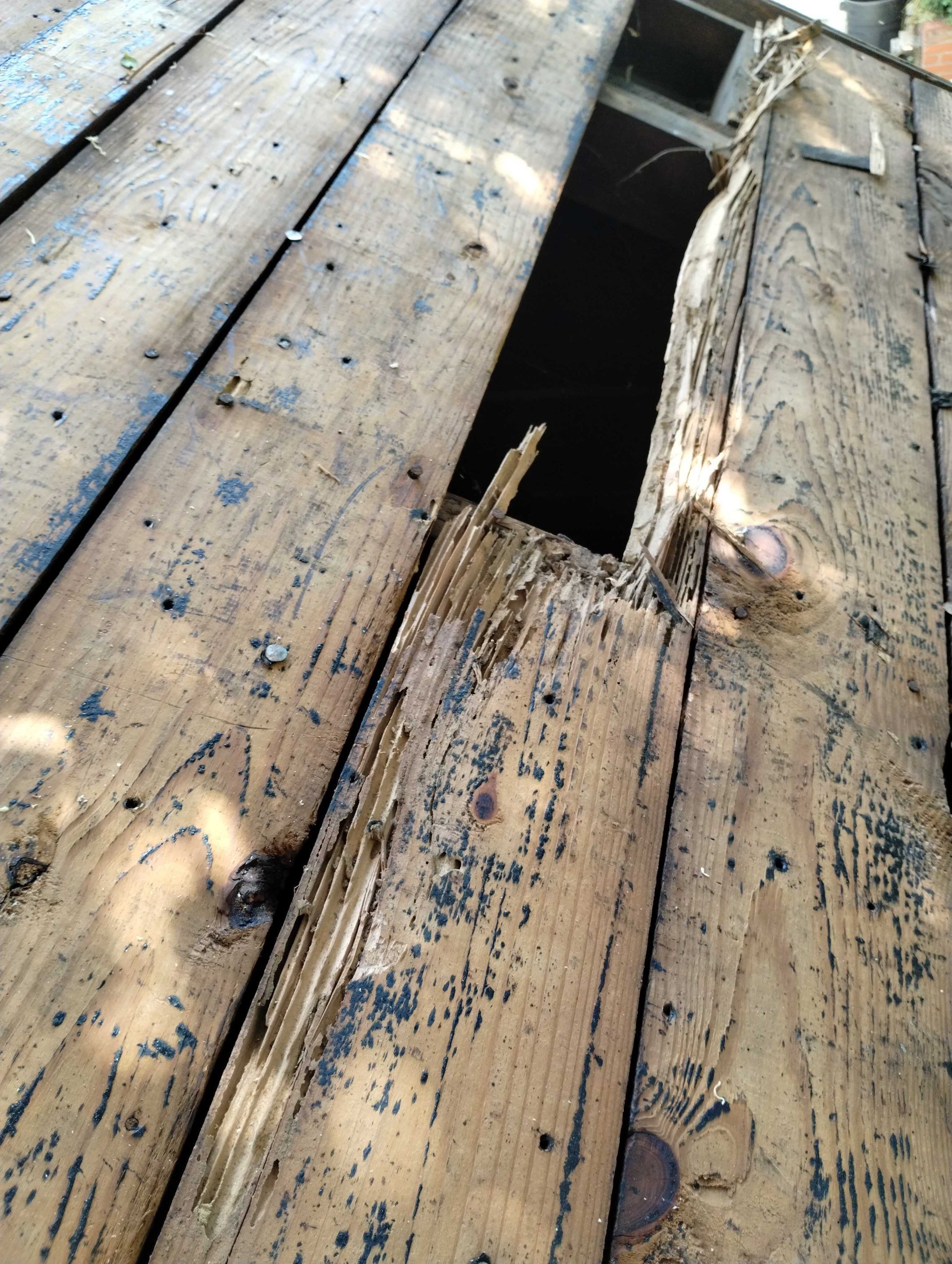
Sagging or uneven roof lines. If your roof doesn't look straight when you view it from the street, you likely have structural issues that require complete replacement.
Look, I get it. Roof replacement is a big decision and a significant investment. But here's what I've learned after 20 years in this business: the homeowners who are happiest with their roofing decisions are the ones who made informed choices based on facts, not wishful thinking.
If you're still not sure whether your roof needs repair or replacement, don't guess. The difference between a smart $800 repair and an unnecessary $15,000 replacement is too big to leave to chance.
✅ Ready to get a professional opinion? We offer free, no-obligation roof inspections throughout Charlotte and the Lake Norman area. I'll personally come out, take a look at your specific situation, and give you an honest assessment of your options – repair, replacement, or "you're fine for now, but keep an eye on it."
No sales pressure, no hidden fees, just straight talk about what your roof actually needs.
Schedule your free roof inspection today or call us at [phone number]. Because when it comes to protecting your biggest investment, you deserve to know exactly what you're dealing with.
 local roofing company" srcset="https://www.bestroofingnow.com/wp-content/uploads/2024/08/local-roofing-company.jpg 1344w, https://www.bestroofingnow.com/wp-content/uploads/2024/08/local-roofing-company-300x171.jpg 300w, https://www.bestroofingnow.com/wp-content/uploads/2024/08/local-roofing-company-1024x585.jpg 1024w, https://www.bestroofingnow.com/wp-content/uploads/2024/08/local-roofing-company-768x439.jpg 768w" sizes="(max-width: 480px) 100vw, 480px" title="">
Best Roofing Now
Charlotte's trusted roofing experts since 2019
Based on this article, you may be interested in these services.
We proudly serve these Charlotte-area communities with professional roofing services.
View All Service Areas →See our recent roofing work across the Charlotte metro area.
Charlotte, NC
new roof
Charlotte, NC
new roof
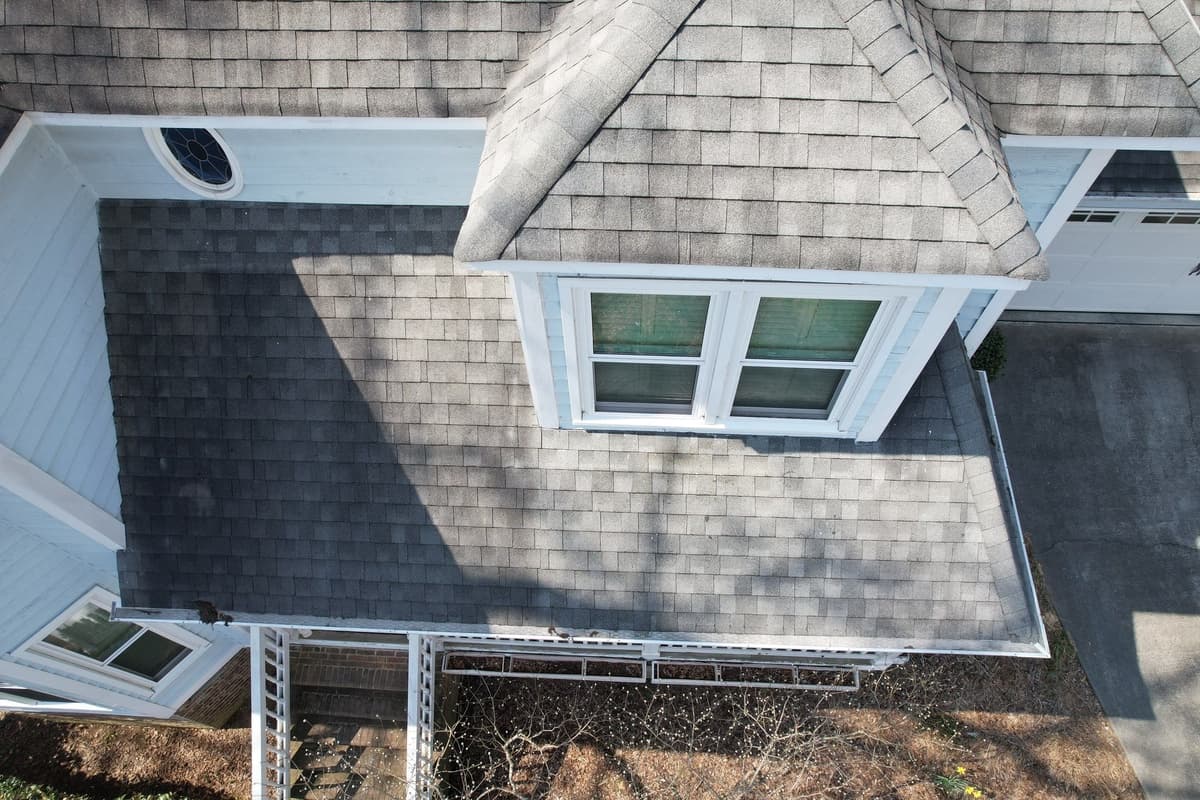
Charlotte, NC
new roof
Charlotte, NC
new roof
Get a free roof inspection and honest assessment from Charlotte's most trusted roofing company.


