
Roofing Tips & Guides
Expert Roofing Advice for Charlotte Homeowners
Learn from Charlotte's trusted roofing experts. Tips on maintenance, repair, replacement, and protecting your home from the elements.
Leak or wind damage from Isaias? 24/7 emergency tarping, free storm-damage inspections and insurance-claim help.
Learn from Charlotte's trusted roofing experts. Tips on maintenance, repair, replacement, and protecting your home from the elements.
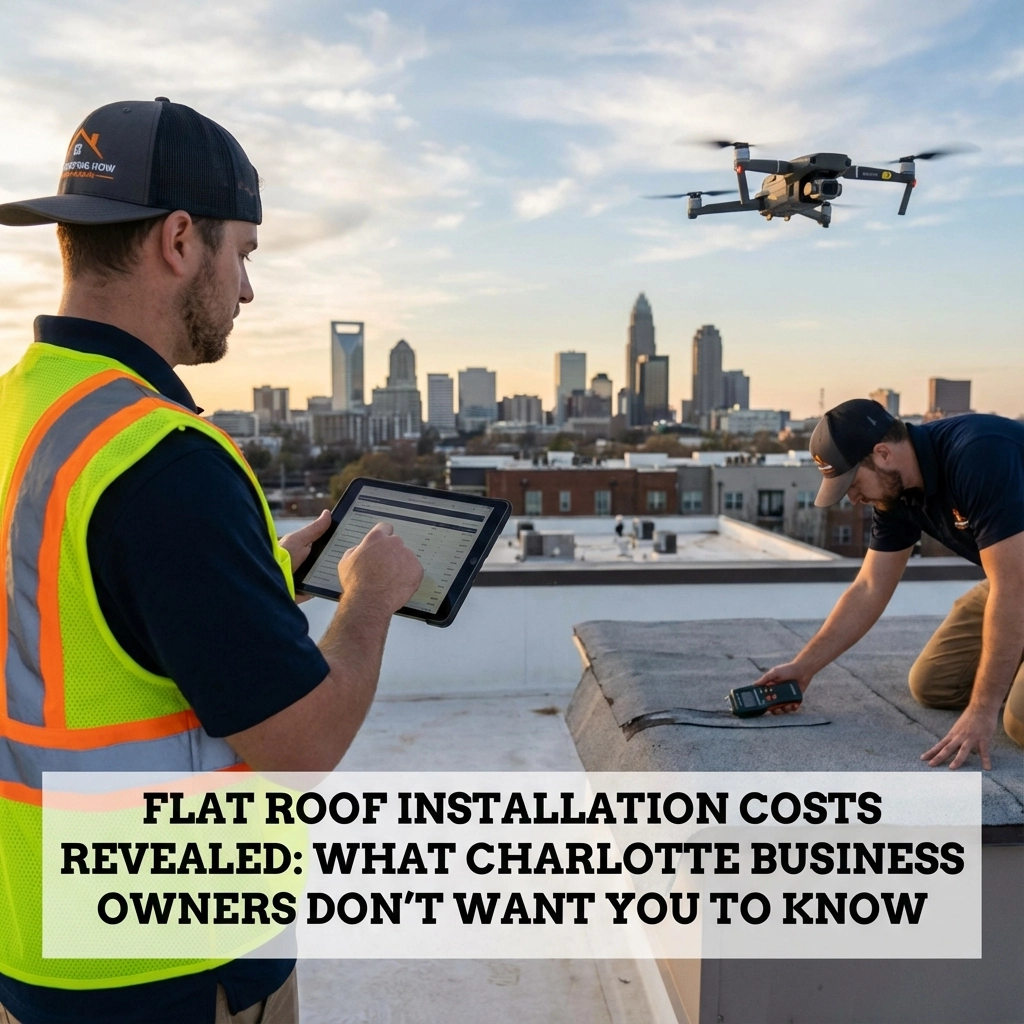
Here's what no one tells you about flat roof costs in Charlotte: that $8,000 quote you got might be missing half the story. And that $25,000 estimate? It might actually be the smart choice.
After installing flat roofs across Charlotte's business districts for over a decade, I've seen too many property owners get blindsided by "hidden" costs that weren't really hidden at all. They were just never explained properly.
Today, I'm pulling back the curtain on what flat roof installation really costs in Charlotte. No sugar-coating, no sales pitch. Just the numbers you need to make smart decisions for your business.
Let's start with the basics. Flat roof installation in Charlotte runs $3.20 to $12.50 per square foot. For a typical 2,000-square-foot commercial building, you're looking at $6,400 to $25,000.
But here's the thing: saying "flat roof costs $6,400" is like saying "cars cost $15,000." It's technically true for some, but it doesn't help you budget for what YOU need.
The price spread comes down to three main factors:
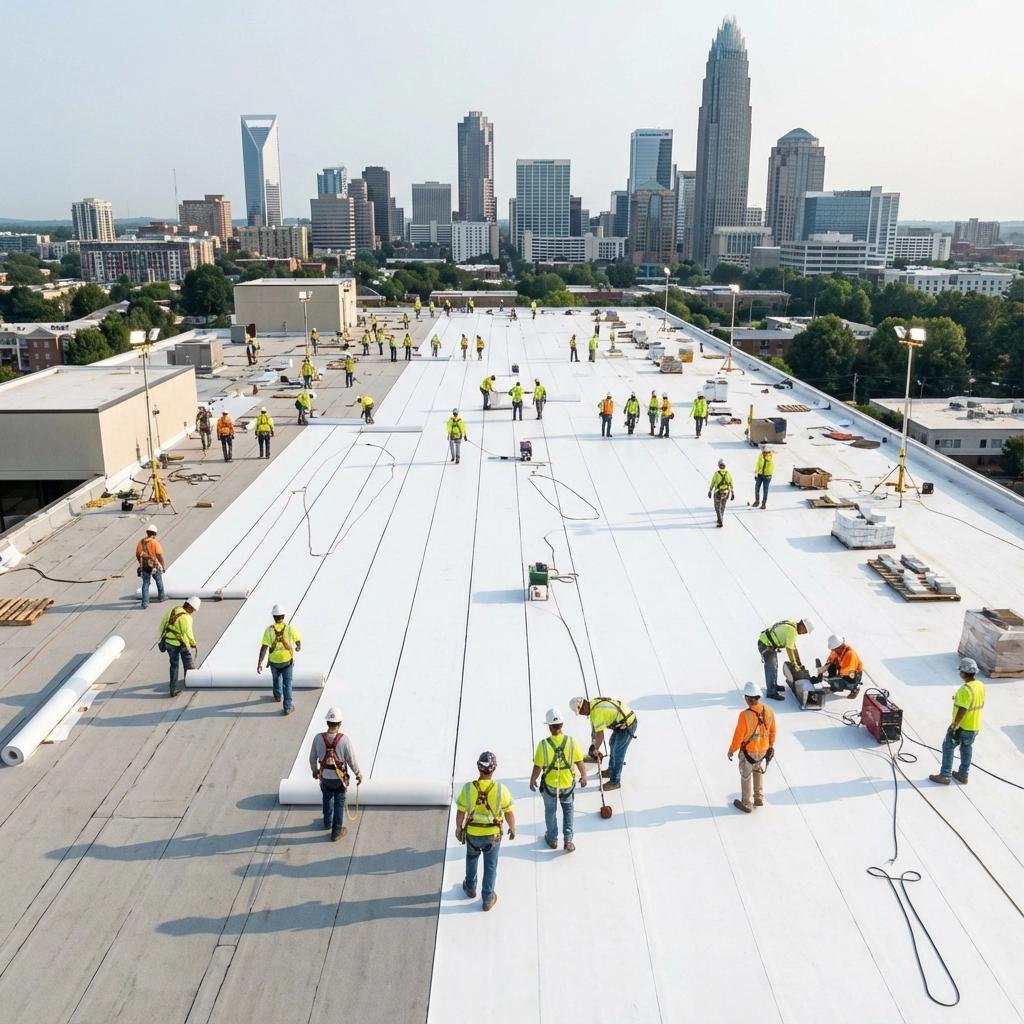
EPDM is the workhorse of flat roofing. It's been protecting Charlotte buildings since the 1960s, and there's good reason why.
For a 2,000-square-foot roof, expect to pay $10,000 to $20,000 including labor. The rubber itself costs about $1.50 to $3.00 per square foot, but installation, adhesives, and seaming add up quickly.
EPDM works great for Charlotte's climate. It handles our hot summers (remember that 98°F week last July?) and occasional ice storms without cracking. The black color does absorb heat, which can bump up cooling costs slightly.
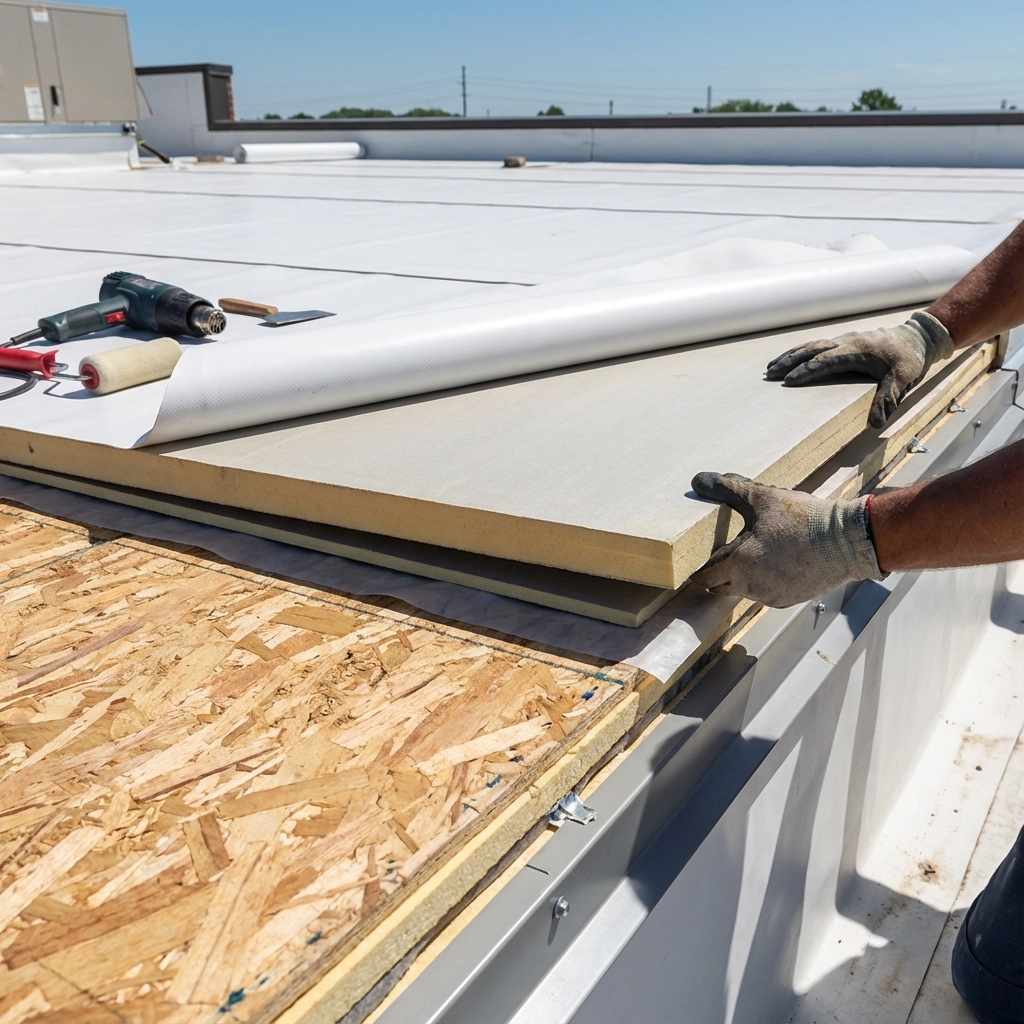
TPO has become Charlotte's favorite flat roofing material, and I understand why. That bright white surface reflects heat like crazy, keeping buildings cooler and energy bills lower.
Total installed cost for 2,000 square feet: $12,000 to $24,000.
TPO's biggest advantage in Charlotte? It saves money on air conditioning. During our brutal summer months, a white TPO roof can cut cooling costs by 10-20% compared to dark surfaces. Over 15-20 years, that adds up to real money.
This is the middle ground option. Modified bitumen gives you some of the durability of built-up roofing with easier installation and repair.
For 2,000 square feet, budget $8,000 to $16,000. It's a solid choice for businesses that want reliability without premium pricing.
The old-school choice. Multiple layers of tar and gravel that can last 30+ years with proper maintenance.
Total cost for 2,000 square feet: $6,000 to $14,000.
BUR is less popular now because installation is messy and labor-intensive. But it's still the most durable option for heavy foot traffic areas.
Here's where quotes get tricky. That initial price often doesn't include everything you'll actually pay.
Most flat roofs in Charlotte need complete tear-off. You can't just slap new roofing over old roofing indefinitely. Building codes limit you to two layers max, and honestly, you usually want to start fresh anyway.
For a 2,000-square-foot roof, tear-off adds $2,000 to $6,000 to your project cost. It's messy, time-consuming work, but it's often the right choice for long-term durability.
This is the big wildcard. You won't know how much decking needs replacement until the old roof comes off. I've seen projects where we expected to replace 200 square feet and ended up replacing 800.
Charlotte's humidity and occasional roof leaks create perfect conditions for wood rot. Budget at least $1,000 to $2,000 for unexpected decking repairs, even on roofs that look fine from below.
Building codes change. Energy efficiency standards get stricter. Your 1995 roof might not meet today's insulation requirements.
Adding or upgrading insulation can add $2,000 to $8,000 to your project, but it usually pays for itself through lower energy bills within 5-7 years.
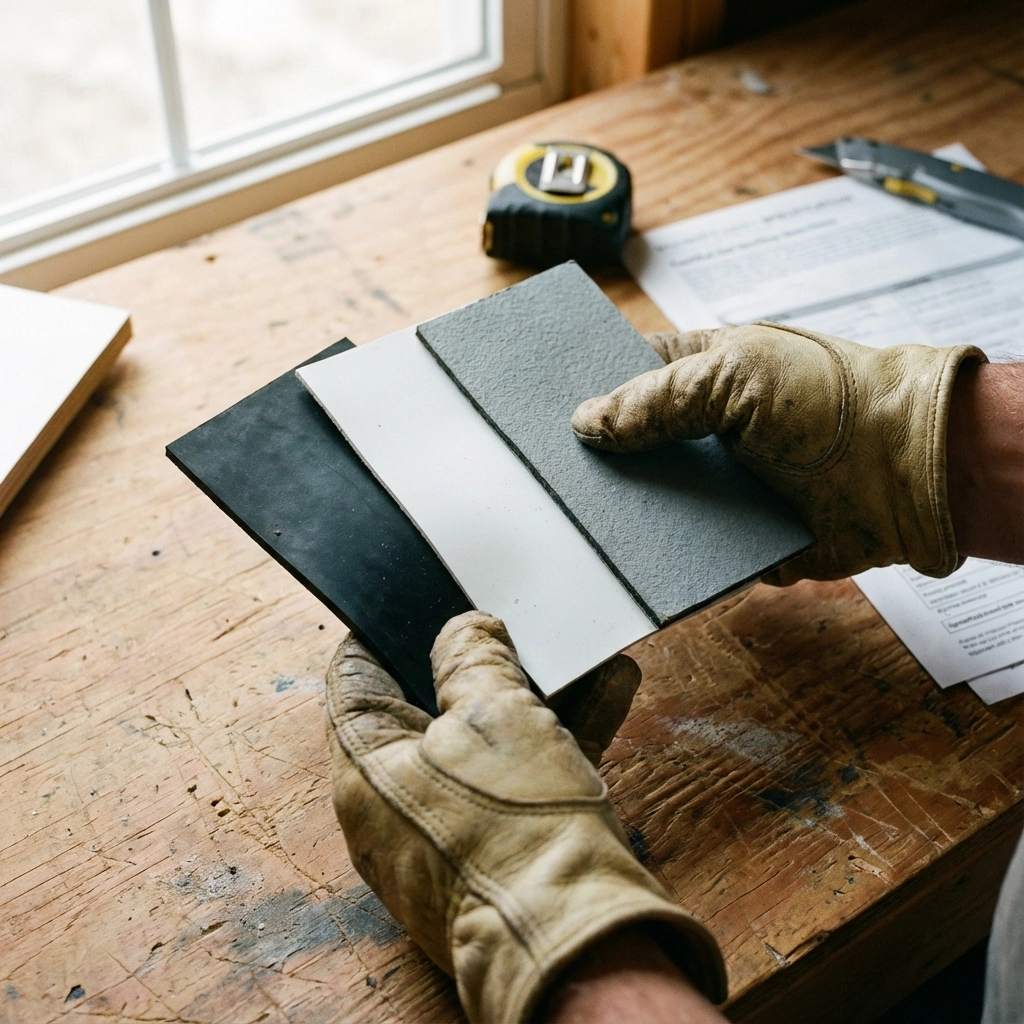
Mecklenburg County requires permits for most commercial roof replacements. The permit fee itself is usually $200-$400, but you'll also need engineered drawings for some projects, which can add another $500-$2,000.
Every pipe, vent, and HVAC unit that goes through your roof needs proper flashing and sealing. If your HVAC contractor didn't coordinate with the roofer, you might need additional work.
Budget $100-$200 per penetration for proper flashing and sealing work.
Charlotte's older commercial buildings (think 1970s-1980s strip centers) often have structural issues that add complexity. Sagging joists, inadequate drainage, and outdated electrical systems can all impact roofing costs.
Modern tilt-up buildings are usually straightforward. Simple rectangular footprints with proper drainage and easy access keep costs down.
Is your roof accessible by crane? Can we get materials up easily?
I've worked on South End high-rises where material delivery added $3,000 to the project cost. I've also done suburban warehouse jobs where we could back a truck right up to the building.
Difficult access can add 20-30% to labor costs.
Charlotte's weather creates natural busy and slow seasons for roofing. Spring and fall are prime time – everyone wants their roof done before summer heat or winter ice.
Schedule your project during slower periods (December through February) and you might save 10-15% on labor costs. Just make sure your contractor can work around winter weather delays.
Larger roofs cost less per square foot. A 5,000-square-foot roof might cost $8 per square foot while a 1,000-square-foot roof costs $12 per square foot.
Material costs are fairly fixed, but setup, mobilization, and overhead get spread across more square footage on bigger jobs.
Charlotte sits right in the sweet spot for flat roofing challenges. We get enough rain to test drainage systems, enough heat to stress membranes, and just enough ice to create problems.
Our typical 45 inches of annual rainfall means proper drainage isn't optional. Poor drainage adds thousands in water damage repairs down the road.
The occasional ice storm (remember February 2021?) can wreak havoc on flat roofs that aren't properly designed for ice loading.
Mecklenburg County has gotten stricter about energy efficiency requirements over the past five years. New commercial roofs often need higher R-values than older installations.
The inspection process is thorough but fair. Budget 2-3 inspections during your project: rough-in, insulation, and final.
Charlotte's central location keeps material costs reasonable compared to coastal cities. We're within trucking distance of most major manufacturers, which helps with both cost and delivery times.
During busy seasons or after major storms, material availability can become tight. Hurricane seasons along the coast sometimes create shortages inland too.
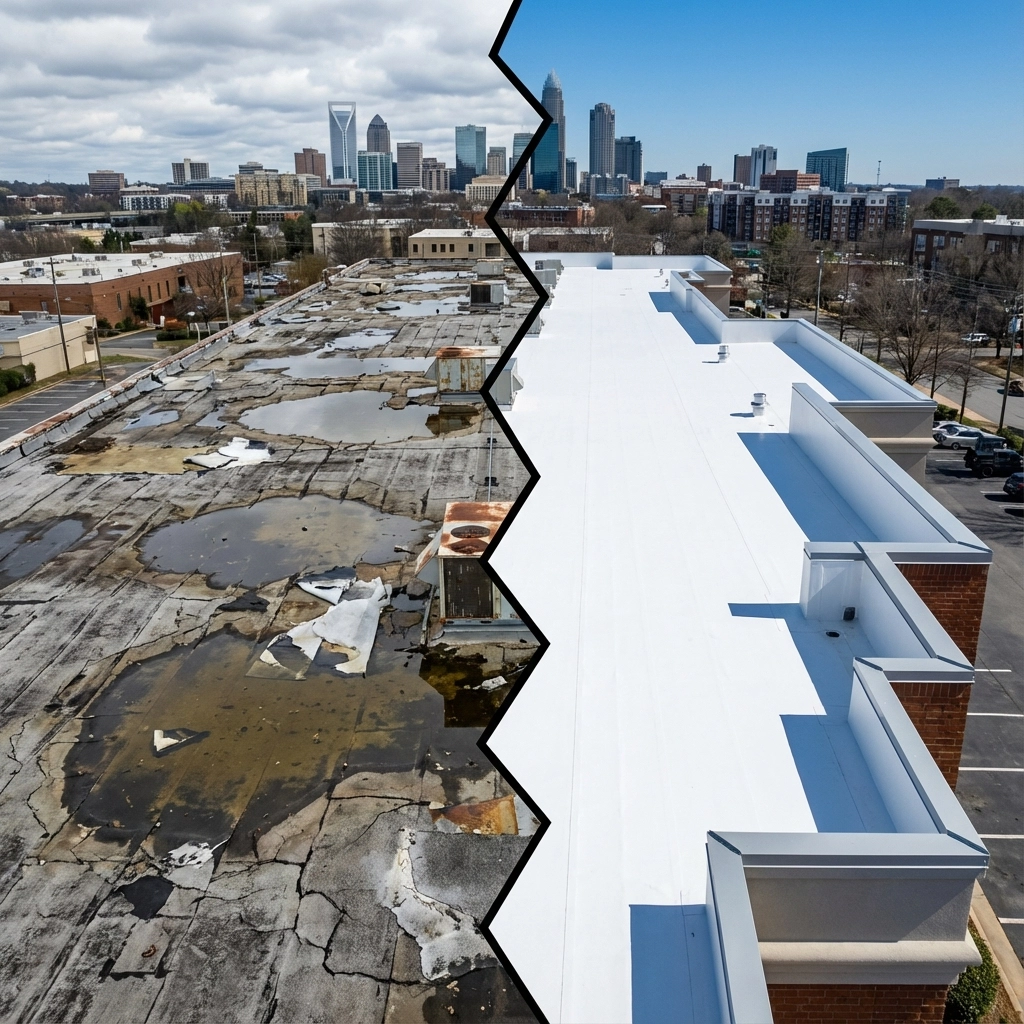
Any contractor who gives you a single lump sum number is hiding something. Good contractors break down costs like this:
Material warranty vs. labor warranty are different things. Most membrane manufacturers offer 15-20 year material warranties, but labor warranties vary widely.
At Best Roofing Now, we offer 5-year labor warranties on commercial flat roofs. Some contractors only warranty labor for 1-2 years. Make sure you understand what's covered and for how long.
Three quotes is the sweet spot. Five quotes just creates confusion. Make sure you're comparing apples to apples – same materials, same scope of work.
The lowest bid usually isn't the best value. I've seen too many businesses choose the cheapest contractor only to need repairs within 2-3 years.
Not every flat roof needs complete replacement. Sometimes strategic repairs can buy you 5-10 more years at a fraction of the cost.
Minor repairs: $200-$800
Major repairs: $1,500-$5,000
Full roof coating: $2-$5 per square foot
Let's talk numbers that matter to business owners. How does roof investment impact your bottom line?
A new TPO roof can cut cooling costs by $0.15-$0.30 per square foot annually compared to old, dark surfaces. For a 5,000-square-foot building, that's $750-$1,500 per year in savings.
Over a 20-year roof life, energy savings alone can offset 15-25% of installation costs.
Commercial real estate appraisers typically add $0.75-$1.00 in property value for every dollar spent on quality roofing improvements.
A $20,000 roof replacement often adds $15,000-$20,000 in property value immediately.
Nobody wants to deal with roof leaks, temperature control issues, or business interruptions. Quality roofing helps retain good tenants and justifies higher rental rates.
Many insurance companies offer discounts for newer roofing systems, especially impact-resistant or high-wind-rated materials.
Some policies require roof replacement after 20-25 years regardless of condition. Check your policy before making repair vs. replacement decisions.
Most banks treat roofing as property improvement loans. Terms typically range from 5-15 years with interest rates tied to prime rate plus 2-4%.
Required down payments vary but expect 10-25% down for most commercial projects.
Some lenders treat roofing systems as equipment rather than improvements. This can offer better terms for businesses with strong cash flow but limited collateral.
Duke Energy offers rebates for energy-efficient roofing upgrades. Cool roof installations can qualify for $0.50-$1.00 per square foot rebates.
Federal tax credits for commercial solar installations can offset roofing costs if you're planning solar panels.
Many roofing contractors offer financing options through third-party lenders. Interest rates are often higher than bank loans, but approval is usually faster and easier.
At Best Roofing Now, we work with several commercial lenders who understand roofing projects and can usually provide decisions within 48 hours.
If someone quotes your 2,000-square-foot TPO roof at $4,000 total, they're either missing something major or cutting dangerous corners.
Super-low bids usually mean:
Legitimate commercial roofing contractors don't need to knock on doors looking for work. If someone shows up unsolicited offering to "inspect" your roof, be very skeptical.
Good roofing work requires planning, permits, and proper scheduling. Any contractor who demands immediate signatures is either desperate for work or running some kind of scam.
North Carolina law limits how much contractors can request upfront. For projects over $30,000, maximum down payment is $1,000 or 6% of contract price, whichever is less.
Any contractor asking for full payment before starting work is operating illegally.
A flat roof is like a car – regular maintenance keeps it running much longer than ignoring problems until they become disasters.
Professional inspections catch small problems before they become expensive ones. We recommend inspections every spring and fall, plus after major storms.
Charlotte's trees drop a lot of leaves and debris. Clogged drains cause standing water, which leads to membrane damage and leaks.
Clean drains quarterly if your building has large trees nearby. Twice yearly is usually sufficient for other locations.
White TPO roofs need occasional cleaning to maintain energy efficiency. Dirty surfaces absorb more heat and increase cooling costs.
Professional cleaning every 3-5 years usually pays for itself through energy savings.
Flashing and penetration sealants need replacement every 5-10 years. It's much cheaper to reseal a penetration than to fix water damage later.
Charlotte's weather is getting more extreme. Heavier rainstorms, longer droughts, and more frequent severe weather events all impact flat roofing performance.
Consider upgrading drainage capacity beyond minimum code requirements. The extra cost is minimal compared to flood damage repairs.
Modern flat roofs can accommodate solar panels, green roof systems, and rooftop HVAC units more easily than older designs.
If you're planning any of these additions, discuss them during the roofing design phase. Retrofitting is always more expensive than initial installation.
Your roof works as part of a complete building envelope system. Wall insulation, window efficiency, and air sealing all impact how hard your roof has to work.
Consider whole-building energy audits before major roofing investments. Sometimes combining roof replacement with other efficiency upgrades qualifies for additional rebates and financing options.
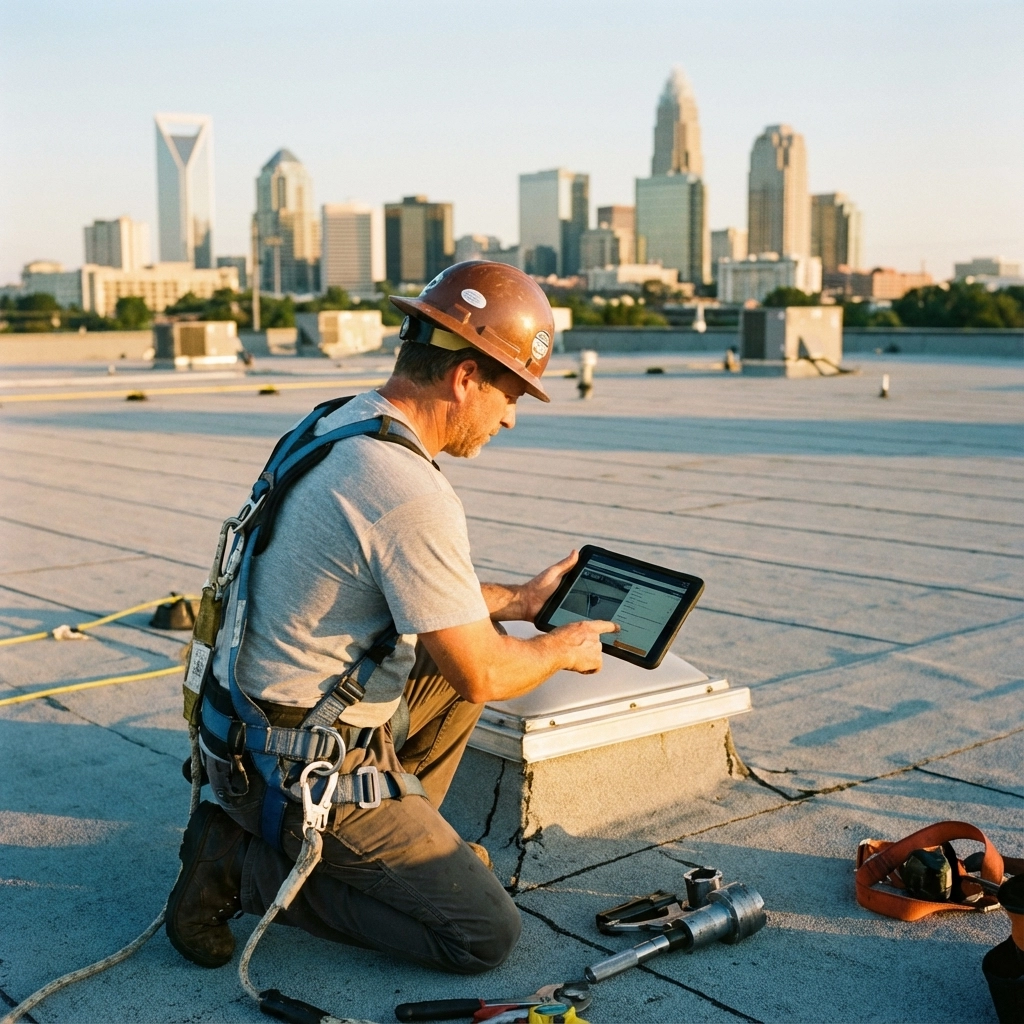
Here's what I recommend: get a professional roof inspection before you need it. Don't wait for leaks to force your hand.
An honest assessment of your roof's condition helps you plan and budget appropriately. You'll make better decisions when you're not dealing with emergency repairs and water damage.
At Best Roofing Now, we provide detailed commercial roof inspections that include:
Ready to get the truth about your roof's condition? Call us at 704-605-6047 to schedule your comprehensive commercial roof inspection. No pressure, no sales pitch – just honest assessment from roofing professionals who understand Charlotte's unique challenges.
Your roof is protecting your business, your equipment, and your people. Shouldn't you know exactly what condition it's in?
Best Roofing Now
Charlotte's trusted roofing experts since 2019
Based on this article, you may be interested in these services.
We proudly serve these Charlotte-area communities with professional roofing services.
View All Service Areas →See our recent roofing work across the Charlotte metro area.
Charlotte, NC
new roof
Charlotte, NC
new roof
Charlotte, NC
new roof
Charlotte, NC
new roof
Get a free roof inspection and honest assessment from Charlotte's most trusted roofing company.


