
Roofing Tips & Guides
Expert Roofing Advice for Charlotte Homeowners
Learn from Charlotte's trusted roofing experts. Tips on maintenance, repair, replacement, and protecting your home from the elements.
Leak or wind damage from Isaias? 24/7 emergency tarping, free storm-damage inspections and insurance-claim help.
Learn from Charlotte's trusted roofing experts. Tips on maintenance, repair, replacement, and protecting your home from the elements.
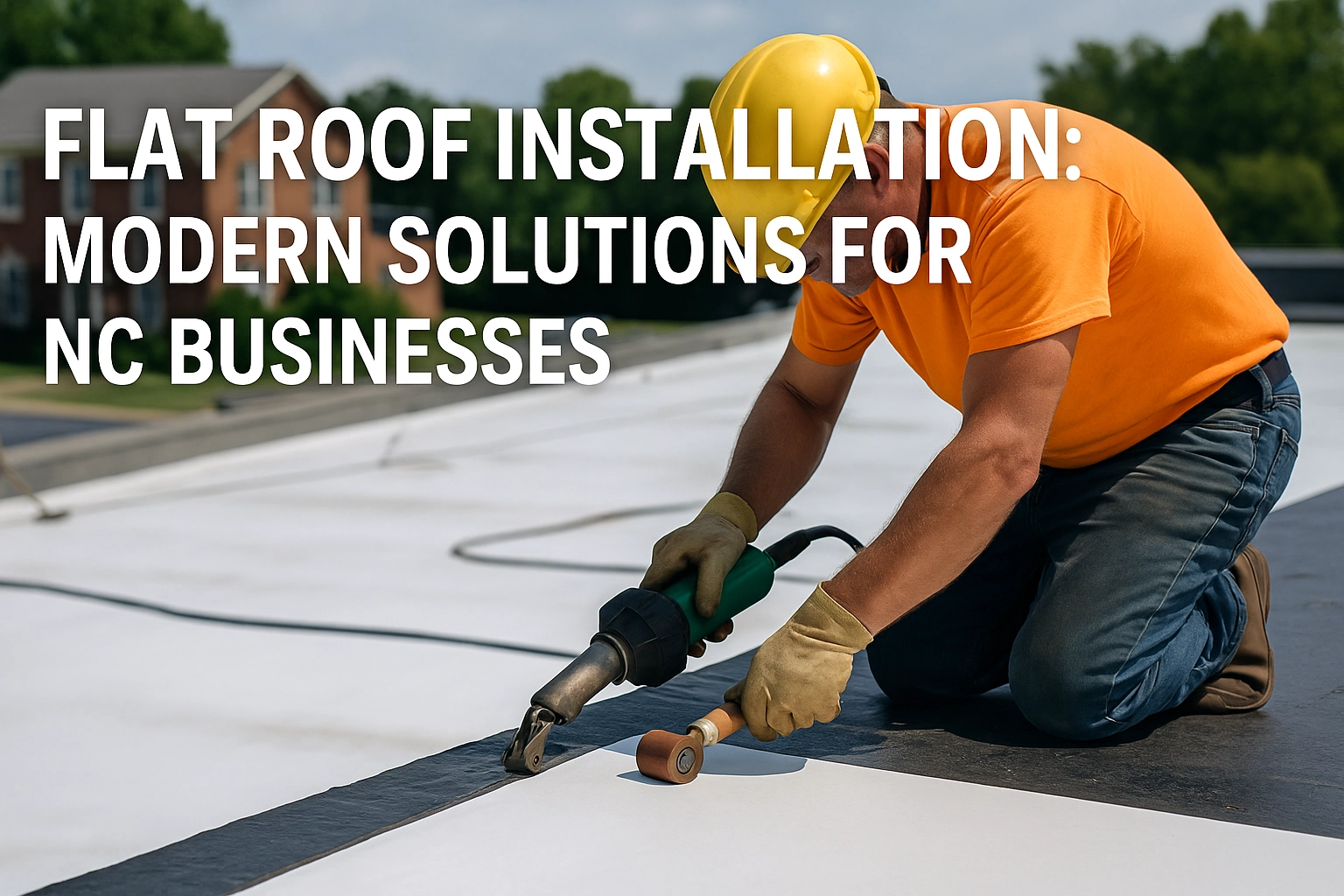
When we walk through Charlotte's business districts or cruise around Lake Norman's commercial areas, flat roofs are everywhere. Warehouses, office buildings, retail centers, and manufacturing facilities all rely on these practical roofing systems. But here's what many business owners don't realize: today's flat roofing technology is light-years ahead of what was available even a decade ago.
We've installed hundreds of commercial flat roofs across North Carolina, and the evolution we've witnessed is remarkable. Modern flat roof systems offer better energy efficiency, longer lifespans, and installation techniques that minimize business disruption. Let's dive into what makes today's solutions so much better for NC businesses.
Flat roofs aren't actually flat – they have a slight slope for drainage. But their low-profile design offers unique advantages for businesses. They're cost-effective to install, provide space for HVAC equipment, and can support solar panels or rooftop gardens.
In North Carolina's climate, flat roofs handle our weather patterns well when properly installed. Our summers are hot and humid, winters bring occasional ice, and spring storms can be intense. Modern flat roof materials are engineered to handle all of this while keeping energy costs manageable.
The space factor is huge for businesses. Where else can you put those massive HVAC units without compromising your building's appearance or eating up valuable ground space? We've helped countless Charlotte businesses maximize their property's potential with smart flat roof solutions.
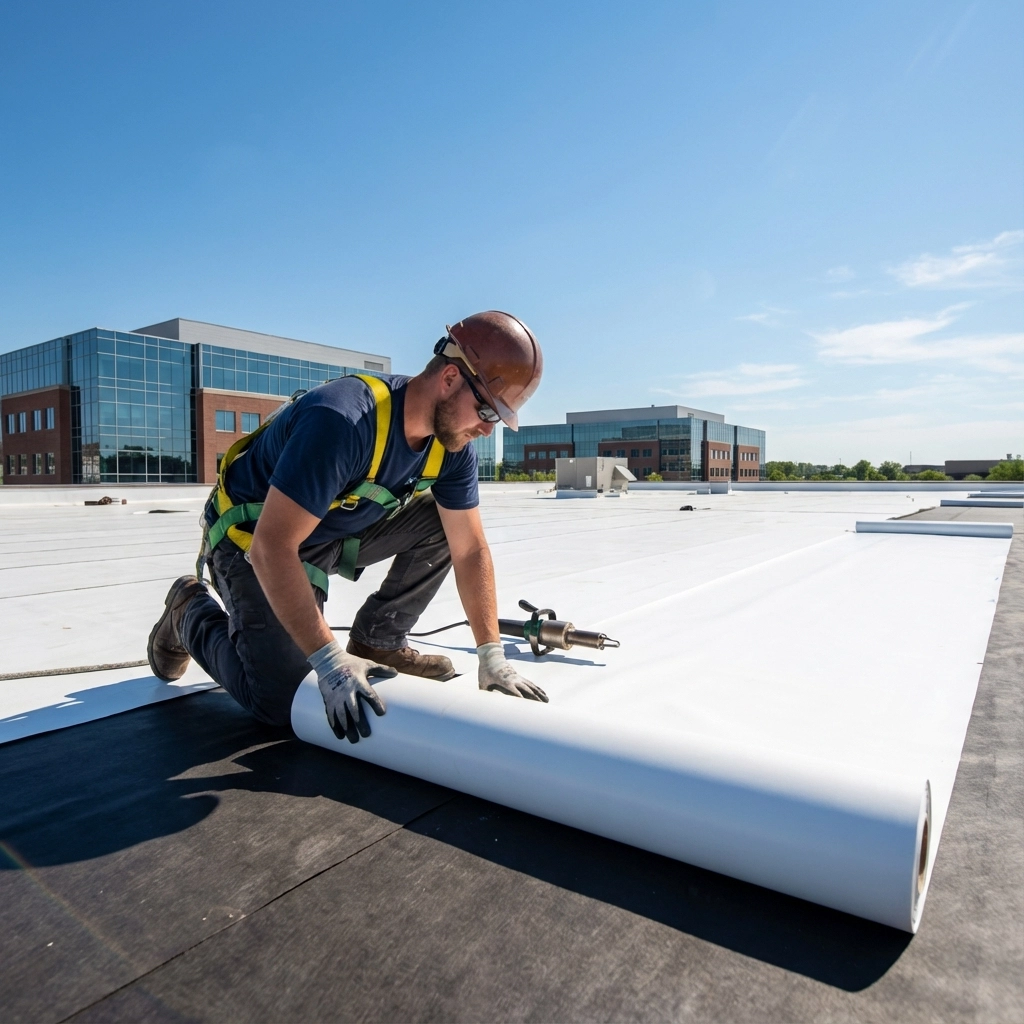
EPDM (ethylene propylene diene monomer) synthetic rubber has been the gold standard for decades, and it keeps getting better. This black membrane stays flexible even when temperatures drop to -60°F – not that we see those extremes in NC, but it shows how durable this stuff is.
What we love about EPDM is its track record. Properly installed systems last 50+ years with minimal maintenance. The material is forgiving during installation and repairs easily if damage occurs. For businesses wanting reliability without breaking the bank, EPDM delivers.
The downside? That black color absorbs heat during our Carolina summers. Your cooling costs will be higher compared to reflective options. But for many businesses, the lower upfront cost and proven longevity make EPDM the smart choice.
TPO (thermoplastic polyolefin) has revolutionized commercial roofing. This white, reflective membrane can cut cooling costs significantly – a big deal when Charlotte summers push temperatures into the 90s for weeks.
We heat-weld TPO seams, creating bonds stronger than the membrane itself. This isn't the old-school adhesive approach that could fail over time. The welded seams create a monolithic barrier that keeps water out for 20+ years.
TPO is also environmentally friendly. It doesn't contain chlorine, it's recyclable, and the energy savings add up over decades. For businesses focused on sustainability or operating costs, TPO makes financial sense.
PVC membranes work similarly to TPO but excel in one area: chemical resistance. If your building has equipment that might drip oils, solvents, or other chemicals, PVC won't break down like other materials might.
We've installed PVC on manufacturing facilities, auto shops, and restaurants where grease and cleaning chemicals are part of daily operations. The heat-welded seams provide the same reliability as TPO, with added protection against chemical damage.
PVC costs more upfront, but for the right applications, it prevents expensive repairs down the road.
Don't write off modified bitumen as outdated technology. Modern versions incorporate advanced polymers that improve flexibility and weather resistance. These systems can reduce heat transfer by up to 50% compared to basic built-up roofing.
We can install modified bitumen with torches (for experienced crews) or self-adhering versions (safer and faster). The multi-layer approach provides redundancy – if one layer develops an issue, others continue protecting your building.
For businesses wanting proven technology with modern improvements, modified bitumen bridges old and new approaches effectively.
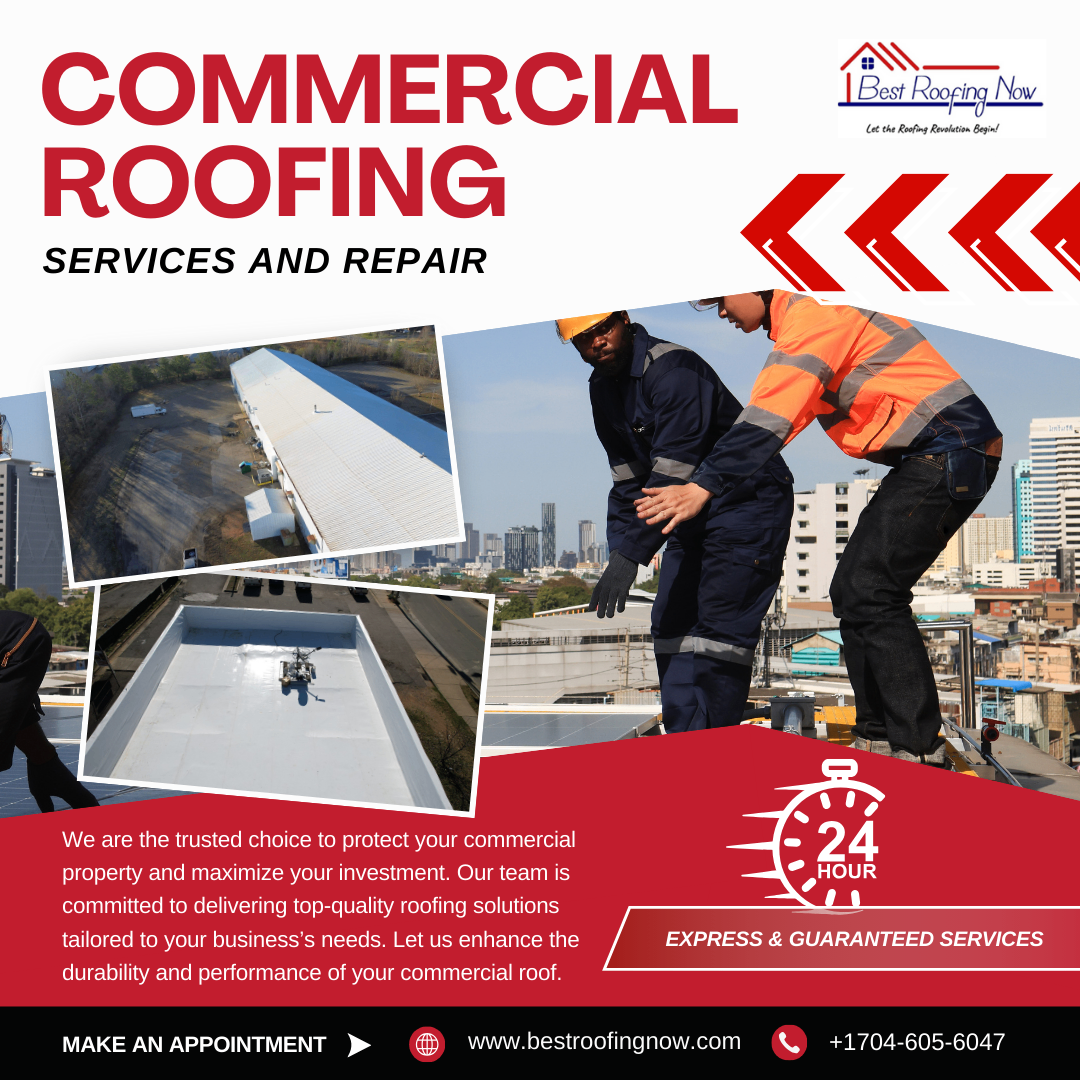
Professional flat roof installation follows critical steps that prevent the problems we see with poorly installed systems. Skipping steps or rushing the process creates leaks, premature failures, and expensive repairs.
Everything starts with proper slope. Flat roofs need at least 1/8 inch of slope per foot toward drainage points. Water that sits on a roof for more than 48 hours will find ways to cause problems.
We often use tapered insulation systems that create slope while adding energy-saving R-value. This approach lets us fix drainage issues on existing buildings without major structural work. It's elegant engineering that solves multiple problems at once.
The substrate matters too. We install high-density gypsum board over insulation to create a stable surface that won't compress under equipment loads. This prevents membrane stress that leads to premature failure.
Installing the waterproof membrane requires precision and experience. We measure carefully, allowing extra material around all edges and penetrations. The membrane gets positioned perfectly before any adhesive application – there are no do-overs with contact adhesive.
Our crews work systematically, using water-based adhesives in field areas and contact adhesive around perimeters. Every inch gets proper coverage, and we use dry rollers to eliminate air bubbles that could cause bonding issues.
The seaming process is critical. For single-ply systems like TPO and PVC, we create heat-welded seams that are stronger than the membrane itself. No adhesives, no tapes – just molecular bonding that lasts decades.
Roof penetrations are where most leaks develop. Every pipe, vent, HVAC unit, and wall connection needs custom flashing with proper termination. We use preformed boots where possible and secure termination bars every 8 inches.
Parapet walls require special attention. The membrane extends up the wall and gets covered with counterflashing that sheds water away from the roof edge. These details take time to install correctly, but they prevent the majority of leak problems.
Proper drainage keeps your roof healthy for decades. We install scuppers, internal drains, and gutters with careful attention to flashing details. Every drainage component gets tested before final inspection.
Edge details matter more than many people realize. We install drip edges that direct water away from the building and gravel stops that protect membrane edges from wind damage. These "finishing touches" actually prevent major problems.
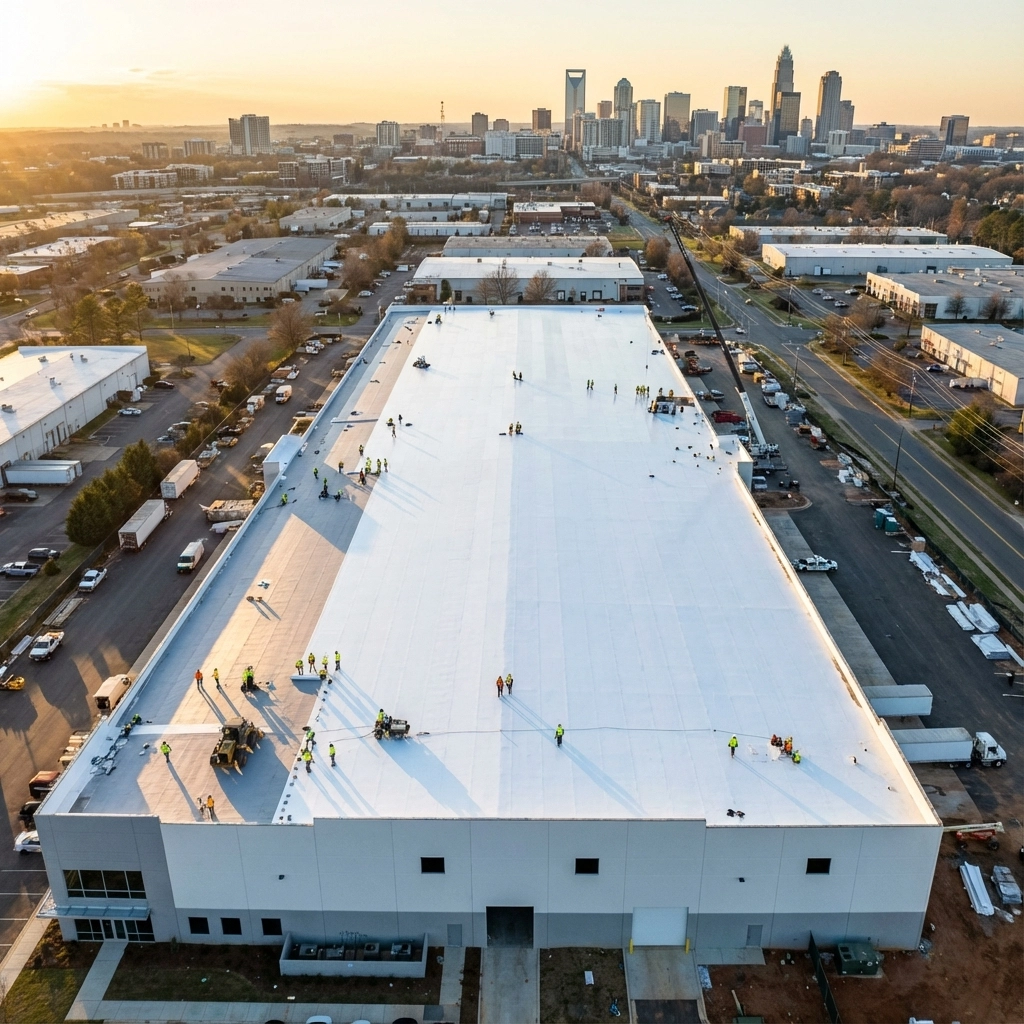
Before we call any project complete, we perform comprehensive testing. Our drain tests involve flooding roof sections to verify proper slope and drainage function. Standing water after 48 hours means we fix the problem before final approval.
We inspect every seam, penetration, and detail point. Our crews know that small issues during installation become expensive problems for building owners. Taking extra time for quality control saves everyone money and headaches.
North Carolina's climate makes energy efficiency a priority for most businesses. Modern flat roof systems offer multiple ways to reduce operating costs while improving comfort.
Reflective membranes like TPO and PVC can significantly reduce cooling loads during our hot summers. The difference in surface temperature between black EPDM and white TPO can be 30-50 degrees on sunny days. That translates directly to lower electric bills.
Cool roof coatings take this concept further. These specialized coatings reflect even more solar energy while providing additional waterproofing protection. For existing roofs in good condition, coatings offer energy savings without complete replacement costs.
Proper insulation installation prevents thermal bridging and reduces heat transfer year-round. We design insulation systems that work with your building's HVAC setup to maximize efficiency and comfort.
North Carolina's diverse climate zones require thoughtful material selection. Eastern regions deal with high humidity and occasional hurricanes. Mountain areas see more temperature extremes and ice formation. The Piedmont region (where Charlotte sits) experiences it all.
Our summers are hot and humid, making reflective roofing materials attractive for energy savings. But we also get ice storms that can stress roof membranes and drainage systems. Modern materials handle these conditions well when properly installed.
Wind resistance matters in our area. We've seen microbursts and tornado damage that tests roofing systems beyond normal design parameters. Proper mechanical attachment and membrane selection help buildings survive severe weather events.
We've seen expensive roofing materials fail prematurely due to poor installation. We've also seen basic systems perform flawlessly for decades because they were installed correctly. Installation quality trumps material selection almost every time.
Experienced contractors understand local building codes, weather patterns, and installation best practices. We know which details cause problems in North Carolina's climate and how to prevent them. This knowledge prevents costly repairs and ensures maximum system performance.
Professional installation also includes proper warranties and follow-up service. When problems arise – and they occasionally do even with perfect installation – having a reliable contractor makes all the difference.
Flat roof installation costs vary based on materials, building complexity, and current conditions. But the lowest bid isn't always the best value. Quality installation and materials provide better long-term returns through reduced maintenance, lower energy costs, and extended system life.
Consider total cost of ownership, not just installation price. A more expensive system that lasts 30 years with minimal maintenance often costs less than a cheaper system requiring regular repairs and early replacement.
Energy savings can be substantial with the right material choices. In some cases, utility rebates and tax incentives help offset initial costs for high-efficiency systems.
Even the best flat roof systems require periodic maintenance to reach their design life. Regular inspections catch small problems before they become expensive repairs. Drain cleaning prevents water backup that can overwhelm any roofing system.
We recommend twice-yearly inspections for commercial buildings, plus additional checks after severe weather events. Small membrane repairs are inexpensive when caught early but become major problems if ignored.
Proper maintenance extends system life and preserves warranty coverage. It's insurance for your roofing investment that pays dividends through avoided repair costs and extended performance.

Roofing technology continues advancing rapidly. Smart roof systems with integrated sensors can detect leaks before they cause damage. Solar integration becomes more seamless with new mounting systems designed specifically for flat roofs.
Green roof systems and rooftop gardens are gaining popularity for their environmental benefits and marketing appeal. These systems require specialized installation but offer unique benefits for the right applications.
We stay current with these developments because our clients deserve access to the best solutions available. The commercial roofing landscape will continue evolving, and we evolve with it.
Every business has unique needs, budget constraints, and performance expectations. The "best" flat roofing solution depends on your specific situation, not generic recommendations.
We evaluate each project individually, considering building use, budget, energy goals, and long-term plans. Sometimes the premium solution makes sense. Other times, a basic system properly installed provides better value.
What matters most is working with experienced professionals who understand your needs and can execute quality installation. The roofing system is only as good as the team that installs it.
Your flat roof investment should provide decades of reliable protection while supporting your business operations. Modern solutions make this possible, but only when properly selected and professionally installed.
Ready to explore modern flat roofing solutions for your North Carolina business? Contact Best Roofing Now today for a comprehensive evaluation of your commercial roofing needs. We'll help you choose the right system and ensure it's installed to deliver maximum performance and value for your investment.
Best Roofing Now
Charlotte's trusted roofing experts since 2019
Based on this article, you may be interested in these services.
We proudly serve these Charlotte-area communities with professional roofing services.
View All Service Areas →See our recent roofing work across the Charlotte metro area.
Charlotte, NC
work in progress
Charlotte, NC
new roof
Charlotte, NC
new roof
Charlotte, NC
work in progress
Get a free roof inspection and honest assessment from Charlotte's most trusted roofing company.


