
Roofing Tips & Guides
Expert Roofing Advice for Charlotte Homeowners
Learn from Charlotte's trusted roofing experts. Tips on maintenance, repair, replacement, and protecting your home from the elements.
Leak or wind damage from Isaias? 24/7 emergency tarping, free storm-damage inspections and insurance-claim help.
Learn from Charlotte's trusted roofing experts. Tips on maintenance, repair, replacement, and protecting your home from the elements.
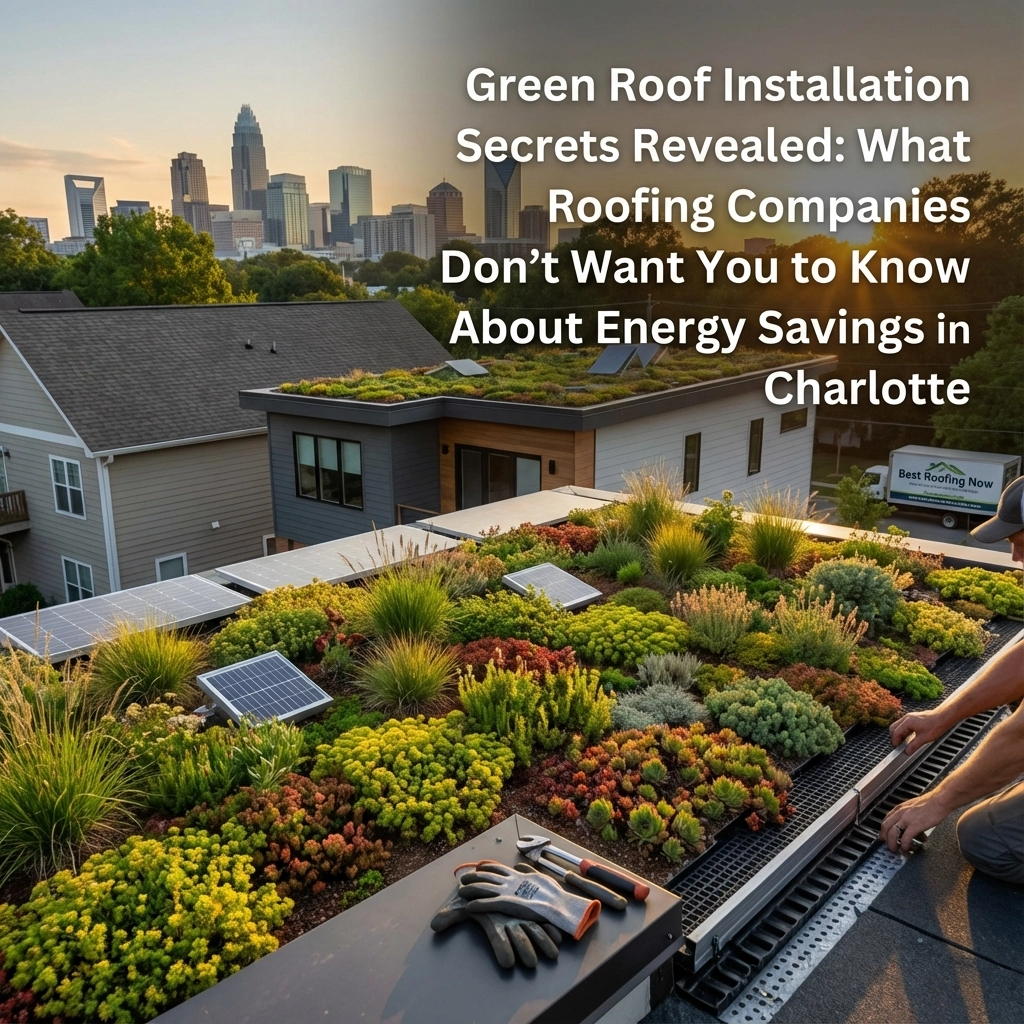
You're probably thinking green roofs are just for fancy hotels or big city buildings. That's what most roofing companies want you to believe. Truth is, green roofs work amazingly well for Charlotte homes and businesses. And they can cut your energy bills by 25% or more.
I've been installing roofs in Charlotte for years. I've seen how traditional roofing companies stick to what they know. They push asphalt shingles because they're easy to install and cheap to buy. But they're missing something huge.
Green roofs are game-changers for energy efficiency. Let me share what I've learned about eco-friendly roofing in Charlotte. These are the secrets most contractors won't tell you.
Here's what shocked me when I first learned about green roofs. They don't just save a little energy. We're talking about serious money staying in your pocket.
A properly installed green roof system reduces heating and cooling costs by 20-30%. In Charlotte's hot summers and chilly winters, that adds up fast. The average Charlotte homeowner spends $1,200-1,800 per year on heating and cooling. A green roof could save you $300-500 annually.
But here's the kicker. Those savings compound over time. After 10 years, you're looking at $3,000-5,000 in energy savings. After 20 years? You could save $8,000-12,000 or more.
Most roofing companies won't share these numbers because green roof installation requires special training. It's easier to sell you standard shingles and move on to the next job.
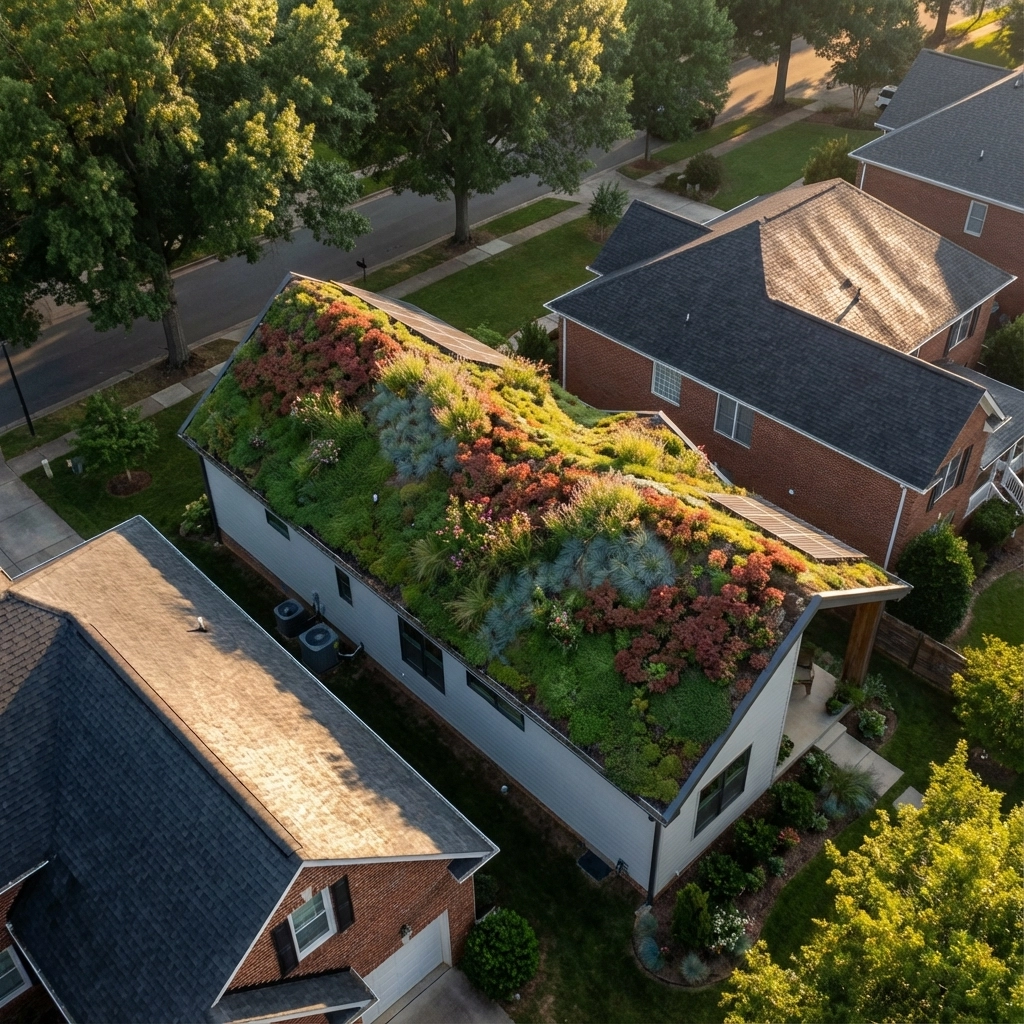
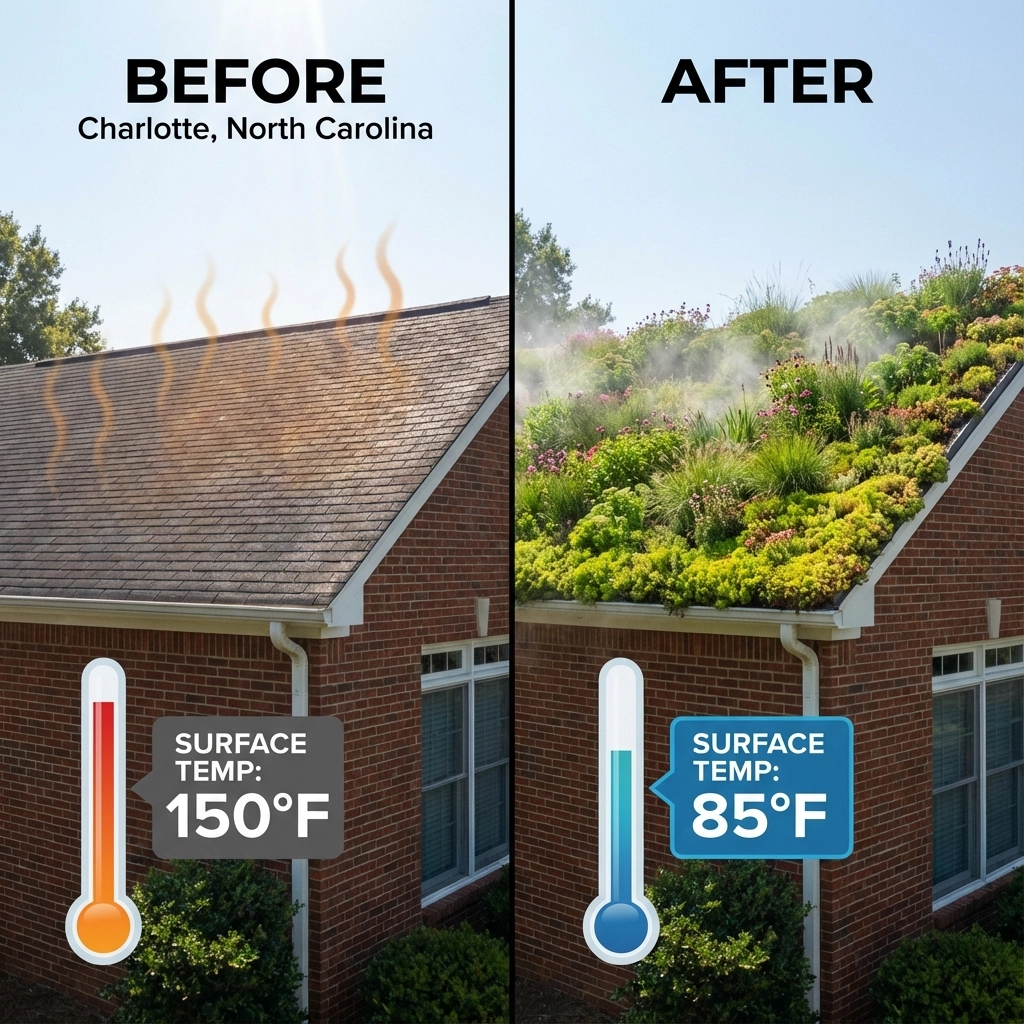
Let me break this down in simple terms. Your regular roof absorbs heat like crazy during summer. Dark shingles can reach 150-180 degrees on hot Charlotte days. That heat transfers right into your attic and home.
Green roofs work completely different. The soil and plants create natural insulation. They absorb sunlight and use it for photosynthesis instead of creating heat. The evapotranspiration process (plants releasing water vapor) actually cools the air around your roof.
In winter, that same soil layer acts like a thick blanket. It keeps warm air inside your home instead of letting it escape through the roof.
Dr. Brad Bass from the University of Toronto studied this extensively. He found that "green roofs can reduce energy use for air conditioning by 75% and heating energy by 26%."
The thermal mass of a green roof stabilizes indoor temperatures. Your HVAC system doesn't have to work as hard to maintain comfort levels.
Charlotte's weather makes green roofs incredibly effective. We get hot, humid summers and moderate winters. This climate pattern is perfect for living roof systems.
Our average summer temperature hits 89 degrees. Traditional roofs in this heat become massive heat sources. Green roofs actually stay close to air temperature because of plant cooling.
Charlotte gets about 43 inches of rain per year. That's ideal for sustaining roof vegetation without constant irrigation. The rain also helps with the cooling effect through evaporation.
We have a long growing season here. Plants on your roof can work their cooling magic from March through November. That's 8-9 months of natural air conditioning help.
The heat island effect in Charlotte makes green roofs even more valuable. Downtown areas can be 5-10 degrees hotter than surrounding areas. Green roofs help combat this problem while saving you money.
Not all green roofs are created equal. Let me explain the main types that work well in our area.
Extensive Green Roofs are the most practical for residential properties. They use 2-6 inches of growing medium. Plants are typically sedums, grasses, and wildflowers. These systems weigh 15-25 pounds per square foot.
Semi-Intensive Green Roofs offer more plant variety. They use 6-12 inches of soil. You can grow shrubs, perennials, and small ornamental plants. Weight ranges from 25-40 pounds per square foot.
Intensive Green Roofs are like actual gardens on your roof. They can support trees and deep-rooted plants. But they need 12+ inches of soil and weigh 80+ pounds per square foot. Most homes need structural reinforcement for these systems.
For Charlotte homeowners, I usually recommend extensive systems. They're lighter, cheaper, and still provide excellent energy savings. Plus they handle our weather extremes better.
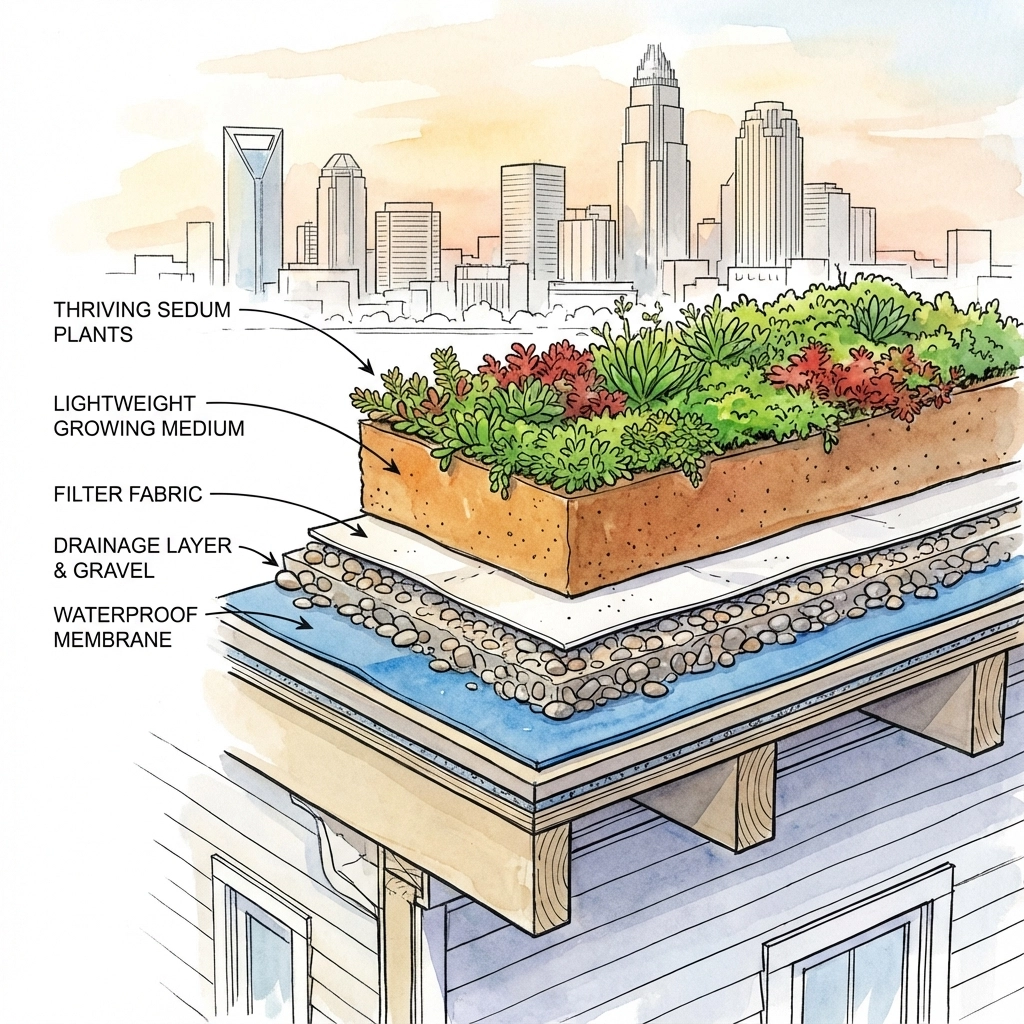
Here's where many contractors drop the ball. Green roof installation isn't just about throwing soil and plants on your roof. There are critical layers most companies don't understand.
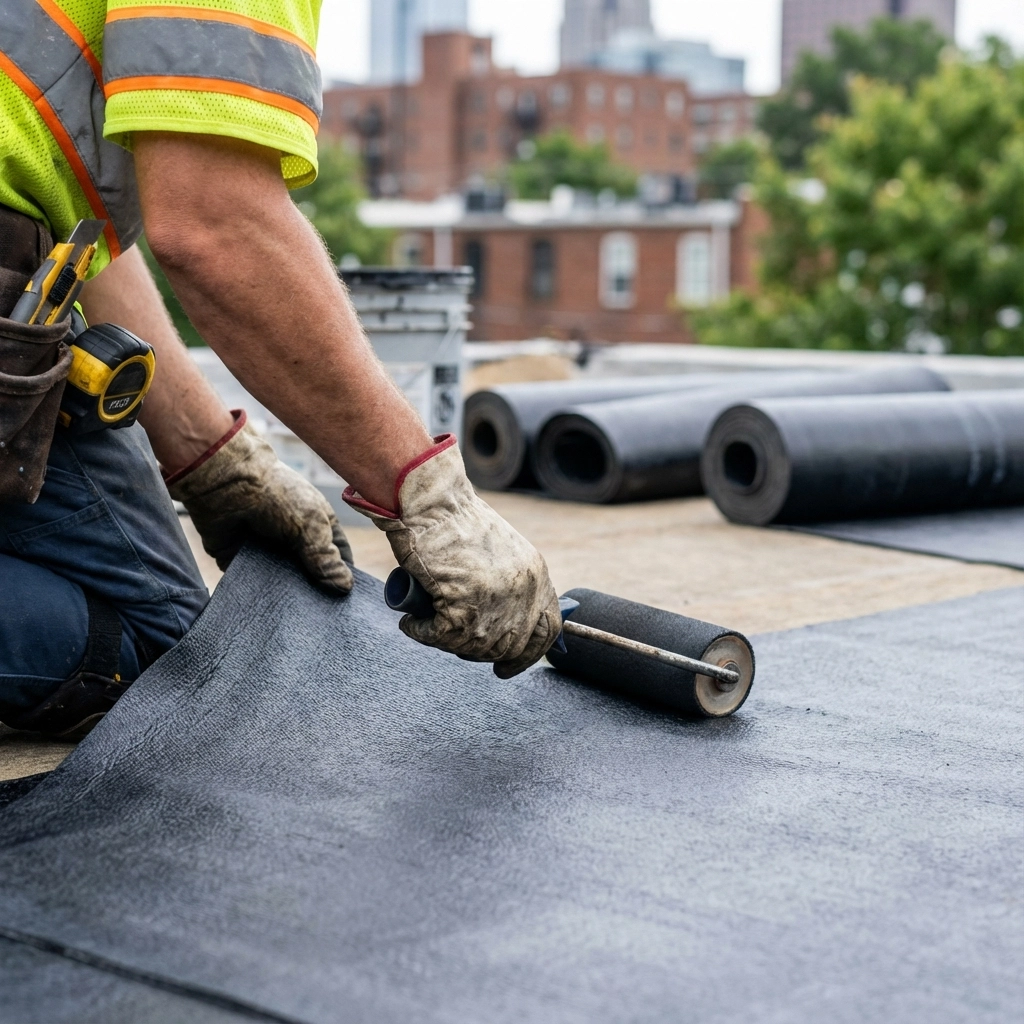
The waterproof membrane is absolutely essential. It has to be root-resistant and durable enough to last 50+ years. Regular roof membranes will fail when plant roots penetrate them.
Drainage layers prevent water from sitting on your roof. Without proper drainage, you'll have leaks, root rot, and structural problems. This layer typically uses gravel or specialized plastic components.
Filter fabric separates the drainage layer from the growing medium. It prevents soil from clogging your drainage system while allowing water to pass through.
The growing medium isn't regular topsoil. It's a specially engineered lightweight mixture. It provides plant nutrition while staying light enough for roof structures.
Plant selection requires knowledge of Charlotte's climate zone (7b/8a). The plants need to handle full sun, wind exposure, temperature extremes, and drought conditions.
Most roofing companies avoid green roofs because they're afraid of structural issues. But modern extensive systems work on many existing homes without reinforcement.
A typical Charlotte home's roof can handle 20 pounds per square foot of additional weight. Extensive green roofs add 15-25 pounds per square foot when saturated with water. Many homes built after 1990 can support this load.
Older homes might need structural evaluation. A structural engineer can assess your roof's capacity and recommend reinforcements if needed. This might involve adding roof trusses or support beams.
The key is honest assessment upfront. I always recommend getting a structural analysis before proposing green roof installation. It protects both you and the contractor.
Flat roofs or low-slope roofs work best for green installations. Steep pitched roofs (over 30 degrees) create drainage and plant establishment challenges.
Here's something most contractors won't tell you. Charlotte offers several programs that can help offset green roof costs.
The city's Tree Ordinance provides credits for green infrastructure projects. Green roofs can count toward required tree preservation credits for new construction or major renovations.
Charlotte's Stormwater Management program sometimes offers rebates for green infrastructure. Green roofs reduce stormwater runoff, which helps prevent flooding and water pollution.
Federal tax incentives exist for energy-efficient home improvements. The Inflation Reduction Act includes provisions for sustainable building upgrades. Green roofs may qualify for these tax credits.
North Carolina's Energize NC program received $156 million to help low-income residents with energy efficiency upgrades. Green roofs are specifically mentioned as eligible improvements.
Duke Energy offers rebates for energy-efficient home improvements. While green roofs aren't always explicitly listed, they may qualify under general efficiency programs.
Let me be straight with you about green roof maintenance. It's not zero maintenance like some companies claim. But it's also not as intensive as traditional landscaping.
The first year requires the most attention. Plants need regular watering until they establish deep root systems. You'll also need to remove weeds and replace any plants that don't survive.
After establishment, extensive green roofs need maintenance 2-3 times per year. This includes fertilizing, weeding, and replacing dead plants. Most homeowners can handle this themselves.
Semi-intensive systems need more frequent care, similar to a garden. You'll need to prune, deadhead flowers, and provide supplemental watering during dry spells.
The irrigation system (if installed) needs annual inspection and winterization. Drainage outlets should be cleared of debris twice per year.
Professional inspections every 2-3 years help catch potential problems early. This includes checking the waterproof membrane and ensuring proper plant health.
Green roofs cost more upfront than traditional roofing. Let me give you honest numbers for Charlotte installations.
Extensive green roof systems typically cost $15-25 per square foot installed. Traditional asphalt shingle roofs cost $8-15 per square foot. So you're looking at about $10,000-15,000 more for an average 2,000 square foot home.
But remember those energy savings I mentioned earlier. Over 20 years, you'll save $8,000-12,000 in energy costs. The payback period is usually 15-20 years.
Green roofs also last longer than traditional roofing. The vegetation protects the waterproof membrane from UV damage and temperature fluctuations. A green roof can last 40-60 years compared to 15-25 years for asphalt shingles.
Factor in the lifespan difference, and green roofs often cost less over their lifetime. You avoid multiple roof replacements that traditional roofing requires.
Property value increases are hard to quantify, but sustainable features typically add 3-5% to home values in Charlotte's market.
Choosing the right plants is critical for green roof success in Charlotte. The plants need to handle our climate extremes and roof conditions.
Sedums are the gold standard for extensive green roofs. Species like Sedum spurium, Sedum kamtschaticum, and Sedum acre thrive in Charlotte. They're drought-tolerant, evergreen, and spread to form dense mats.
Native grasses work well for larger areas. Buffalo grass, little bluestem, and bunch grasses provide texture and seasonal interest. They also support local wildlife.
Wildflowers add color and attract pollinators. Coreopsis, black-eyed Susans, and purple coneflowers are excellent choices. They bloom at different times for season-long interest.
Groundcovers fill spaces between larger plants. Wild ginger, ajuga, and native mints spread quickly and suppress weeds.
Avoid plants with aggressive root systems, heavy water requirements, or poor wind tolerance. Trees and large shrubs aren't suitable for extensive systems.
The key is selecting plants that will thrive, not just survive, in roof conditions. Local native plant societies can provide excellent guidance for plant selection.
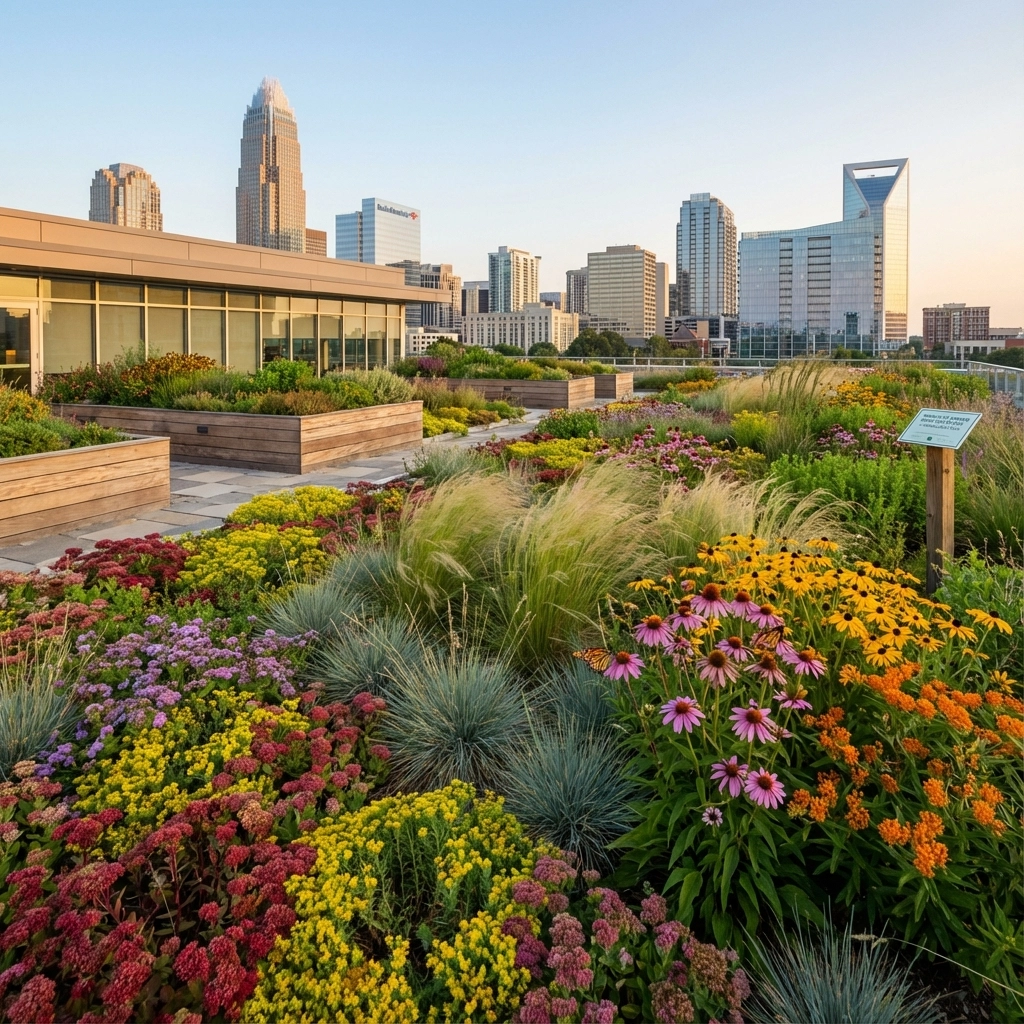
I've seen plenty of green roof failures over the years. Most problems come from cutting corners during installation or using contractors without proper training.
Inadequate waterproofing is the biggest killer of green roof projects. The membrane must be root-resistant and properly installed. Leaks are expensive and difficult to repair once plants are established.
Poor drainage design leads to standing water, plant death, and potential structural problems. The drainage system needs proper slopes and adequate outlets.
Wrong soil mix causes plant failure and weight problems. Garden center topsoil is too heavy and doesn't drain properly. You need engineered growing medium specifically designed for roofs.
Inappropriate plant selection results in dead plants and ugly roofs. Plants must be chosen for specific climate conditions and maintenance expectations.
Insufficient structural analysis can lead to roof failure. Always get a professional evaluation of your roof's load-bearing capacity before installation.
Inadequate irrigation during plant establishment causes high failure rates. Even drought-tolerant plants need regular water their first growing season.
Beyond energy savings, green roofs provide environmental benefits that traditional roofing can't match. These benefits matter for Charlotte's urban environment.
Green roofs absorb up to 75% of stormwater runoff. In Charlotte, where flooding is increasingly common, this helps protect neighborhoods and reduces strain on storm drainage systems.
Air quality improvement comes from plants filtering pollutants and producing oxygen. One square foot of green roof can produce enough oxygen for one person for one year.
Urban heat island reduction helps make Charlotte more livable. Green roofs can reduce local air temperatures by 5-9 degrees compared to conventional roofs.
Habitat creation supports birds, beneficial insects, and pollinators. Native plants on green roofs provide food and nesting sites for urban wildlife.
Carbon sequestration helps combat climate change. The plants and soil on green roofs store carbon that would otherwise be in the atmosphere.
These environmental benefits don't directly save you money, but they improve quality of life and support Charlotte's sustainability goals.
Finding a qualified green roof contractor in Charlotte requires some research. Not all roofing companies have the necessary experience and training.
Look for contractors with Green Roofs for Healthy Cities (GRHC) certification. This organization provides professional training in green roof installation and maintenance.
Ask for references from previous green roof projects. Visit completed installations if possible to see the work quality and plant establishment success.
Verify proper licensing and insurance coverage. Green roof work requires specialized liability coverage due to the unique risks involved.
Get detailed proposals that specify all system components. The proposal should include structural analysis, plant lists, maintenance requirements, and warranty terms.
Avoid contractors who seem hesitant to discuss potential challenges or maintenance requirements. Honest contractors will be upfront about the commitment green roofs require.
Some Charlotte neighborhoods are better suited for green roof installations than others. Location affects costs, regulations, and long-term success.
Uptown Charlotte offers excellent opportunities for commercial green roof projects. The urban heat island effect makes energy savings more dramatic. City incentives are often available for downtown developments.
South End and NoDa have many newer buildings with structural capacity for green roofs. These trendy neighborhoods appreciate sustainable features that green roofs provide.
Myers Park and Dilworth have older homes that may need structural evaluation. But the mature neighborhoods and environmental consciousness make green roofs attractive options.
Ballantyne and SouthPark areas have newer homes often built to handle additional roof loads. The suburban setting provides space for larger green roof installations.
Lake Norman communities like Cornelius, Davidson, and Huntersville offer excellent opportunities. The lakeside environment benefits from stormwater management that green roofs provide.
Rural areas around Charlotte face fewer regulations but may lack access to specialized contractors and maintenance services.
After years of working with different roofing systems, I can tell you green roofs deliver real energy savings in Charlotte. They're not right for every home or every budget, but they work when properly installed.
The 20-30% energy savings are achievable with quality installation and appropriate plant selection. Over the long term, these savings can offset the higher upfront costs.
Green roofs also provide benefits that go beyond energy savings. They manage stormwater, improve air quality, and create habitat for urban wildlife.
The technology has improved dramatically over the past decade. Modern green roof systems are more reliable, lighter weight, and easier to maintain than older versions.
Charlotte's climate and growing environmental consciousness make this an ideal market for green roof adoption. City programs and federal incentives help make projects more affordable.
Green roofs aren't the right choice for every property, but they might be perfect for yours. The energy savings alone can make them worthwhile investments over their 40+ year lifespan.
At Best Roofing Now, we've helped Charlotte homeowners explore sustainable roofing options that make financial sense. We provide honest assessments of structural requirements, cost-benefit analysis, and realistic maintenance expectations.
Don't let another summer pass with sky-high cooling bills when a green roof could be cutting your energy costs by 25% or more. We offer free consultations to evaluate your property's potential for green roof installation.
Call us today at (704) 659-8718 for a free green roof feasibility assessment. We'll help you understand if your Charlotte home is a good candidate for this energy-saving technology and provide transparent pricing for your specific situation.
Best Roofing Now
Charlotte's trusted roofing experts since 2019
Based on this article, you may be interested in these services.
We proudly serve these Charlotte-area communities with professional roofing services.
View All Service Areas →See our recent roofing work across the Charlotte metro area.
Charlotte, NC
new roof
Charlotte, NC
work in progress
Charlotte, NC
new roof
Charlotte, NC
repair
Get a free roof inspection and honest assessment from Charlotte's most trusted roofing company.
