
Roofing Tips & Guides
Expert Roofing Advice for Charlotte Homeowners
Learn from Charlotte's trusted roofing experts. Tips on maintenance, repair, replacement, and protecting your home from the elements.
Leak or wind damage from Isaias? 24/7 emergency tarping, free storm-damage inspections and insurance-claim help.
Learn from Charlotte's trusted roofing experts. Tips on maintenance, repair, replacement, and protecting your home from the elements.
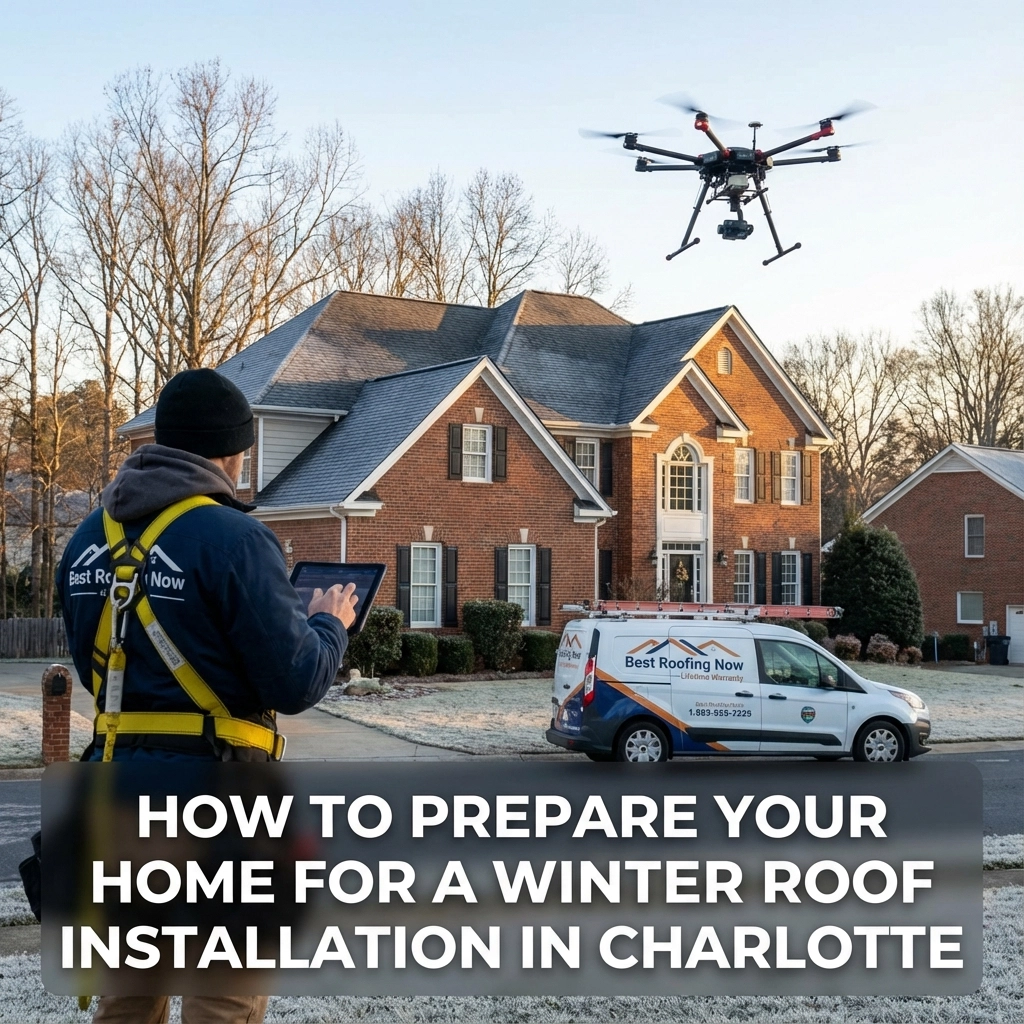
Winter roof installation in Charlotte isn't impossible, but it requires careful planning and preparation. As someone who's overseen countless winter roof projects across the Charlotte and Lake Norman areas, I can tell you that the difference between a successful winter installation and a problematic one often comes down to how well you prepare.
Charlotte's winter weather presents unique challenges. Our temperatures can swing from 60 degrees one day to 25 degrees the next. We get ice storms, unexpected snow, and those bone-chilling winds that make roof work downright dangerous. But when your roof can't wait until spring, proper preparation makes all the difference.
Most homeowners don't realize that asphalt shingles have a self-adhesive strip that needs warmth to activate properly. Below 40 degrees, these strips won't seal on their own. That means your contractor needs to hand-seal each shingle or use special winter-grade adhesives.
And it's not just about the shingles. Cold weather affects everything from how tools work (nail guns can jam in freezing temperatures) to how long the project takes. Safety becomes even more critical when you add ice, frost, and shorter daylight hours into the mix.
But here's the thing – winter installations can be just as durable and effective as warm-weather projects when done correctly. The key is preparation.
The biggest mistake I see homeowners make is waiting until they're dealing with leaks or storm damage to start the roof replacement process. By then, you're in emergency mode, and emergency mode doesn't leave much room for proper preparation.
If you know you'll need a new roof before spring, start planning in September or October. This gives you time to get multiple estimates, choose your materials, and schedule the work for the best possible weather windows.
Early planning also means you'll have more contractor options. The best roofing crews stay busy year-round, but they have more flexibility in their schedules during the fall months.
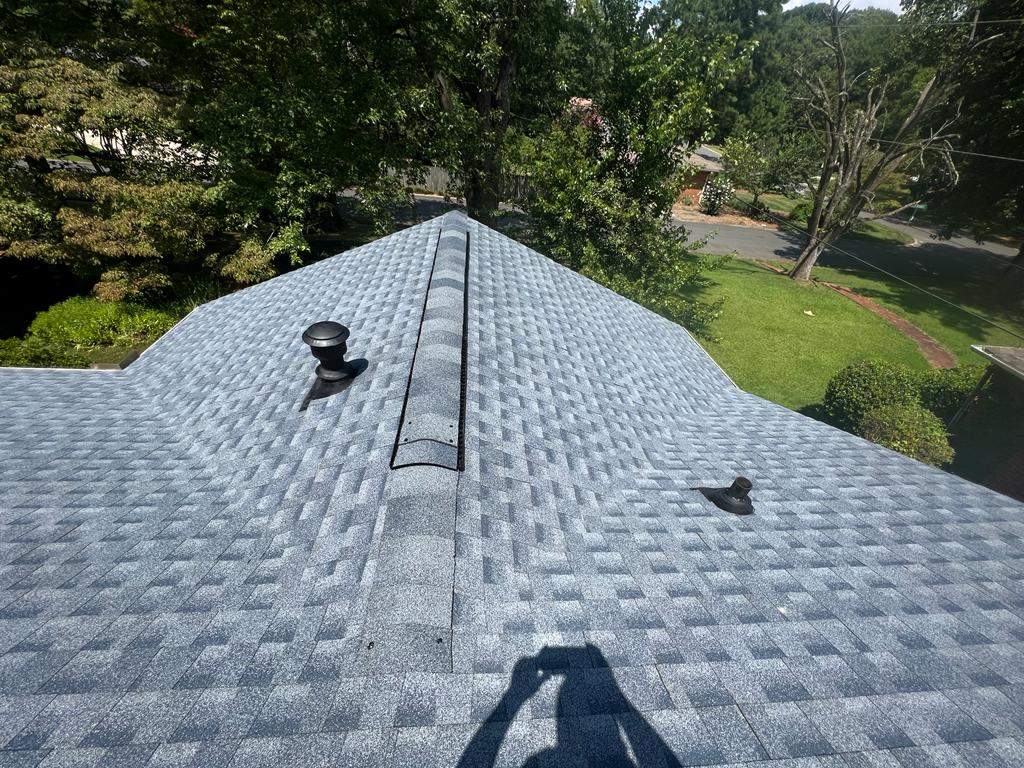
Before any winter roof installation, you need a thorough inspection that goes beyond just looking at your shingles. A proper pre-winter inspection should cover:
Your current roof condition, including missing or damaged shingles, worn flashing, and any signs of water damage. But don't stop there. The inspection should also evaluate your attic insulation and ventilation system.
Poor attic insulation is one of the leading causes of ice dams in Charlotte. When warm air from your house melts snow on your roof, that water refreezes at the gutters and creates ice dams. These dams force water back under your shingles, causing leaks and potential structural damage.
We always check attic insulation levels during pre-winter inspections. Current building codes call for R-38 to R-49 insulation in Charlotte's climate zone. Many older homes fall short of this standard.
Your gutters and drainage systems also need attention. Clogged gutters don't just cause ice dams – they can overflow and damage your home's foundation. We clean gutters as part of our preparation process, but homeowners should keep them clear throughout the fall.
Temperature is everything for winter roof installations. We never install asphalt shingles when temperatures are below 40 degrees, and we prefer days that reach at least 45 degrees.
Charlotte weather is unpredictable, but we've learned to work with it. We monitor weather forecasts constantly and are ready to mobilize crews on short notice when good weather appears.
The ideal winter installation day has:
Sometimes we'll only get a two or three-day window with these conditions. That's why preparation is so important. When good weather hits, everything else needs to be ready to go.
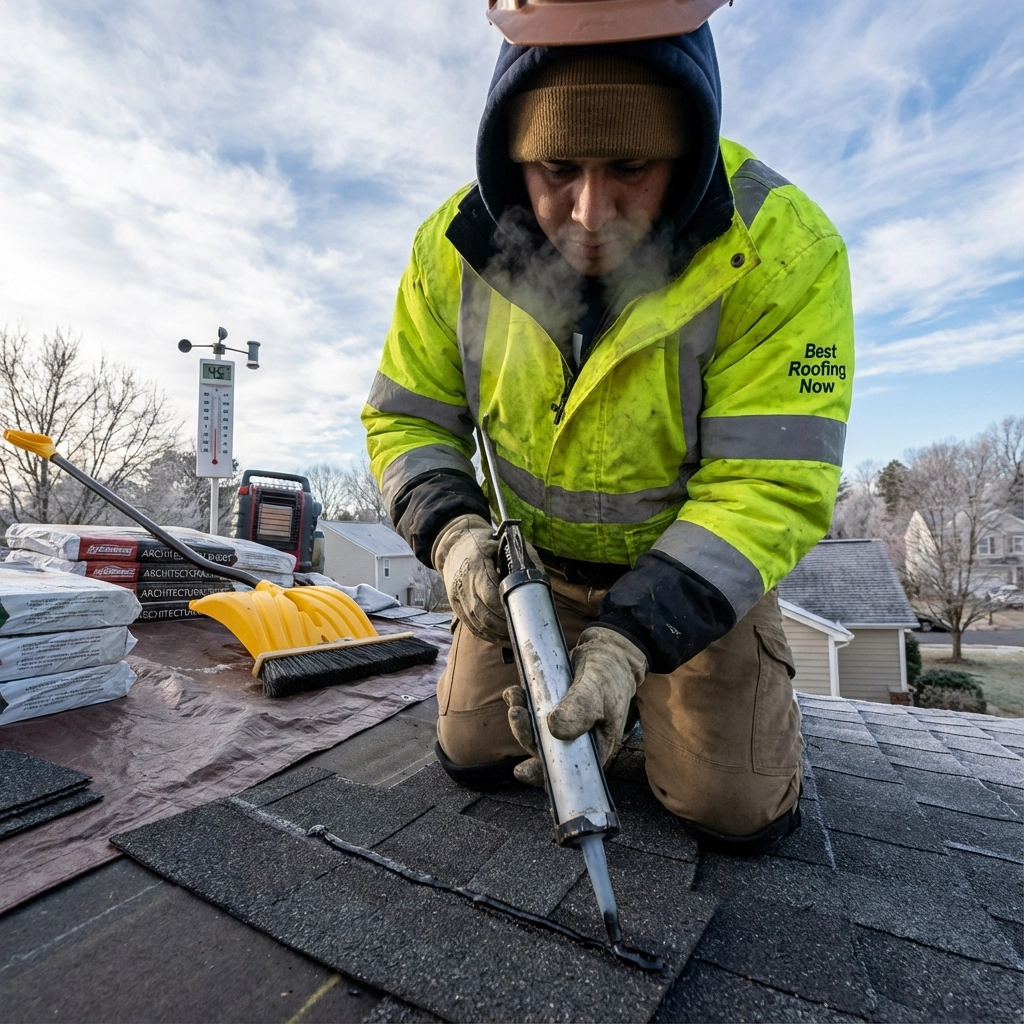
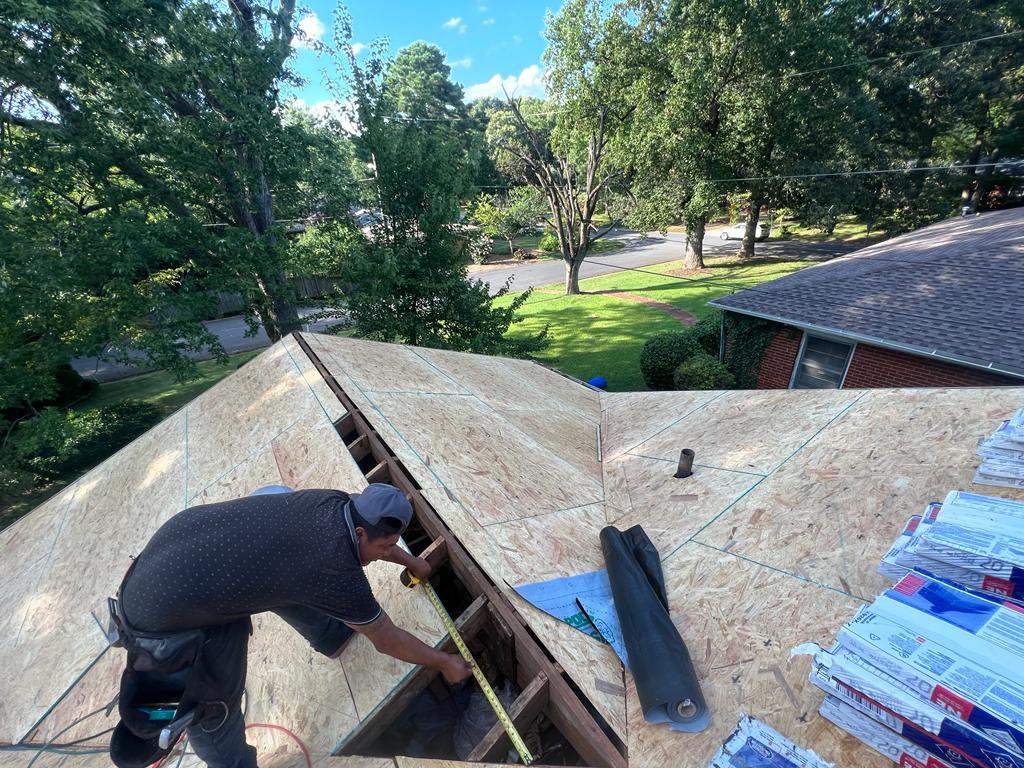
Winter roof installations require extra structural preparation. The roof decking must be completely dry and free of frost, snow, or debris before new materials go on. Any moisture trapped under new shingles can cause mold, rot, and premature failure.
If your inspection reveals damaged decking, we replace those sections before installation begins. Winter isn't forgiving of shortcuts or compromises in structural integrity.
Flashing replacement often becomes more urgent in winter preparations. Old flashing that might hold up through summer can fail quickly when ice and freeze-thaw cycles put extra stress on the seals.
We also pay special attention to chimney and vent penetrations during winter preparations. These are common failure points even in good weather, and winter conditions make any weakness much worse.
Not all roofing materials handle winter installation equally well. Asphalt shingles can work, but they require special techniques and sometimes different products than we'd use in summer.
For winter installations, we often recommend:
Architectural shingles with enhanced adhesive strips – These seal more reliably in cold weather than basic three-tab shingles.
Modified installation techniques – Hand-sealing shingles, using roofing cement at critical points, and applying extra fasteners where needed.
Synthetic underlayment – This performs better than felt paper in cold, wet conditions and provides superior protection if weather delays the project.
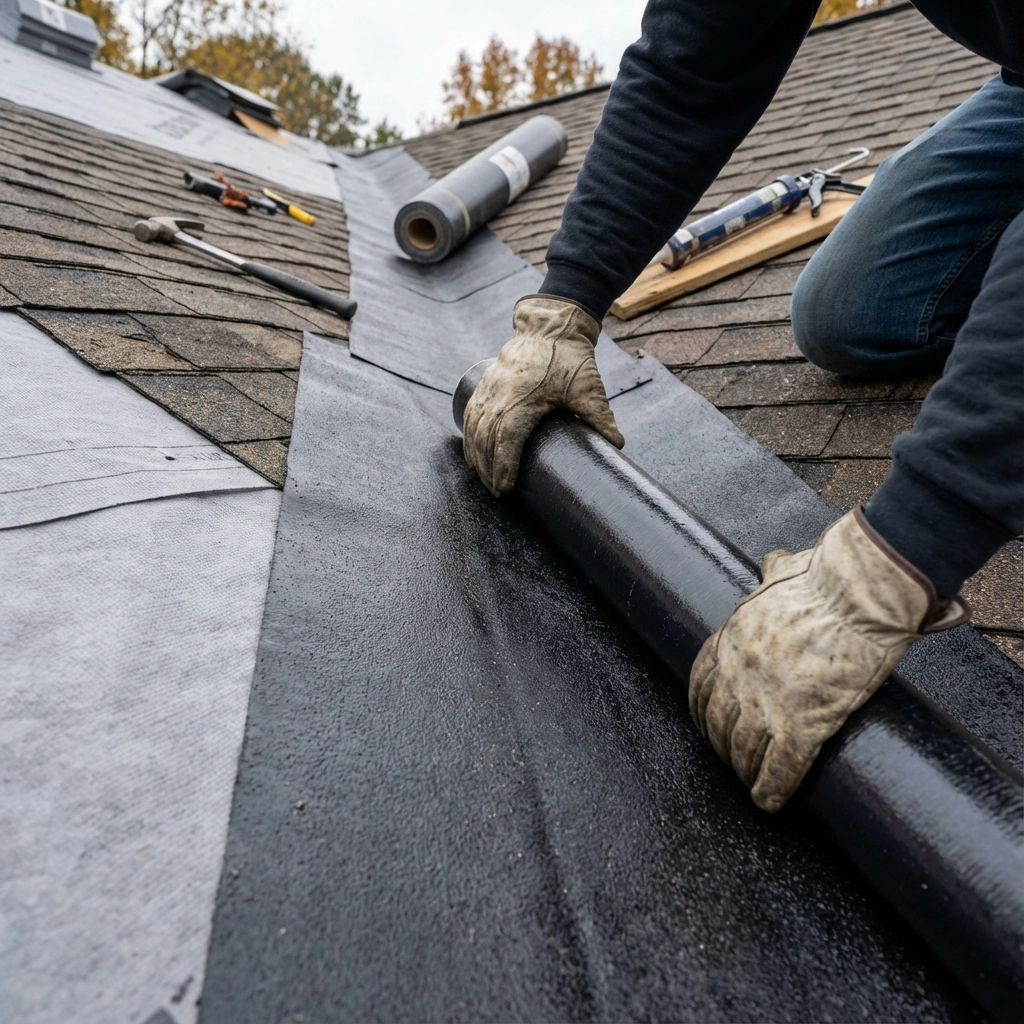
Ice and water shield in critical areas – We install this waterproof barrier (a sticky membrane that goes under shingles) in valleys, around penetrations, and along eaves to prevent ice dam damage.
Metal roofing actually works well for winter installation because temperature doesn't affect the installation process the same way. The panels go on the same regardless of weather, and metal roofs excel at shedding snow and ice.
Winter roof work requires more space and different equipment than warm-weather projects. Crews need room for:
Clear all debris from around your home's perimeter. Remove outdoor furniture, decorations, and anything else that might be damaged by falling debris or interfere with crew access.
Trim back tree branches that hang over or near the roof. Winter storms can bring down branches that would normally stay put, and you don't want them falling on a partially completed roof.
Inside your home, prepare for noise and vibration. Winter installations often require more hammering and tool use as materials become less pliable in cold weather. Move fragile items away from walls and secure anything that might fall.
Winter roof installations take longer than summer projects. Cold weather slows down everything from material handling to tool operation. What might take three days in July could take five or six days in January.
Factor this extended timeline into your planning. If you're dealing with a leaking roof, have contingency plans for protecting your home's interior during the longer installation period.
We use tarps and temporary weatherproofing extensively during winter projects. Sometimes we'll complete one section at a time, fully weatherproofing each area before moving on. This approach takes longer but provides much better protection for your home.
Charlotte's winter weather has patterns you can plan around. Our coldest weather typically hits in January and February. December and March often provide better working conditions.
Ice storms are our biggest challenge. They can shut down work for days and create dangerous conditions that last well after the storm passes. We monitor ice storm forecasts closely and will delay or pause projects when ice is expected.
Snow is less common but more disruptive than many homeowners expect. Even a few inches of snow requires complete removal before work can resume, and the melting process can create slippery, dangerous conditions.
Winter roof installations require extra attention to ventilation systems. Proper ventilation prevents ice dams, controls moisture, and maintains energy efficiency throughout the cold months.
We calculate ventilation needs based on your attic's square footage and install ridge vents, soffit vents, or other systems as needed. The goal is balanced airflow that keeps your attic temperature close to outdoor temperature.
Poor ventilation doesn't just cause ice dams. It can lead to condensation problems, reduced insulation effectiveness, and higher heating bills. Winter is when these problems show up most clearly.
Roof replacement provides an excellent opportunity to upgrade attic insulation. If we're already accessing your attic space for roof work, adding insulation makes financial sense and improves your home's winter performance.
Current energy codes recommend R-38 to R-49 insulation for Charlotte's climate. Many homes built before 2000 have less than R-20. The difference in heating bills can be substantial.
We work with insulation contractors to coordinate timing and access. Sometimes insulation work happens before roof installation begins. Other times it makes sense to complete the roof first, then upgrade insulation.
Winter roof installations create more risk for interior water damage than warm-weather projects. Unexpected weather changes can expose your home's interior to rain, snow, or ice.
We use heavy-duty tarps, plastic sheeting, and temporary decking to protect partially completed roofs. But homeowners should also prepare interior spaces for potential water intrusion.
Move valuable items out of top-floor rooms and attic spaces. Set up temporary water barriers if needed. Have buckets, towels, and dehumidifiers ready in case moisture gets inside.
Most professional contractors carry insurance that covers water damage from installation work. But prevention is always better than dealing with claims after the fact.
Winter installations require more extensive final inspections than warm-weather projects. We check every hand-sealed shingle, verify that all flashing is properly secured, and confirm that gutters and downspouts are properly attached and draining.
Cold weather can hide installation problems that become obvious later. Sealants may not have reached full cure, fasteners might not have driven completely flush, and expansion/contraction cycles can reveal weak points.
We schedule follow-up inspections for spring when temperatures warm up and any winter-related issues become apparent. This follow-up is included in our winter installation service because we stand behind our work regardless of installation season.
Winter roof installation in Charlotte requires more planning, preparation, and patience than warm-weather projects. But with proper preparation, you can get a roof that performs just as well as one installed in perfect spring weather.
The key is working with contractors who understand Charlotte's winter conditions and have experience with cold-weather installations. Don't let winter weather force you into accepting poor workmanship or shortcuts.
Ready to start planning your winter roof installation? Contact our team at Best Roofing Now for a comprehensive pre-winter inspection and installation timeline. We'll help you navigate the challenges and ensure your new roof is ready for whatever Charlotte's winter throws at it.
Best Roofing Now
Charlotte's trusted roofing experts since 2019
Based on this article, you may be interested in these services.
We proudly serve these Charlotte-area communities with professional roofing services.
View All Service Areas →See our recent roofing work across the Charlotte metro area.
Charlotte, NC
storm damage
Charlotte, NC
new roof
Charlotte, NC
new roof
Charlotte, NC
new roof
Get a free roof inspection and honest assessment from Charlotte's most trusted roofing company.


