
Roofing Tips & Guides
Expert Roofing Advice for Charlotte Homeowners
Learn from Charlotte's trusted roofing experts. Tips on maintenance, repair, replacement, and protecting your home from the elements.
Leak or wind damage from Isaias? 24/7 emergency tarping, free storm-damage inspections and insurance-claim help.
Learn from Charlotte's trusted roofing experts. Tips on maintenance, repair, replacement, and protecting your home from the elements.
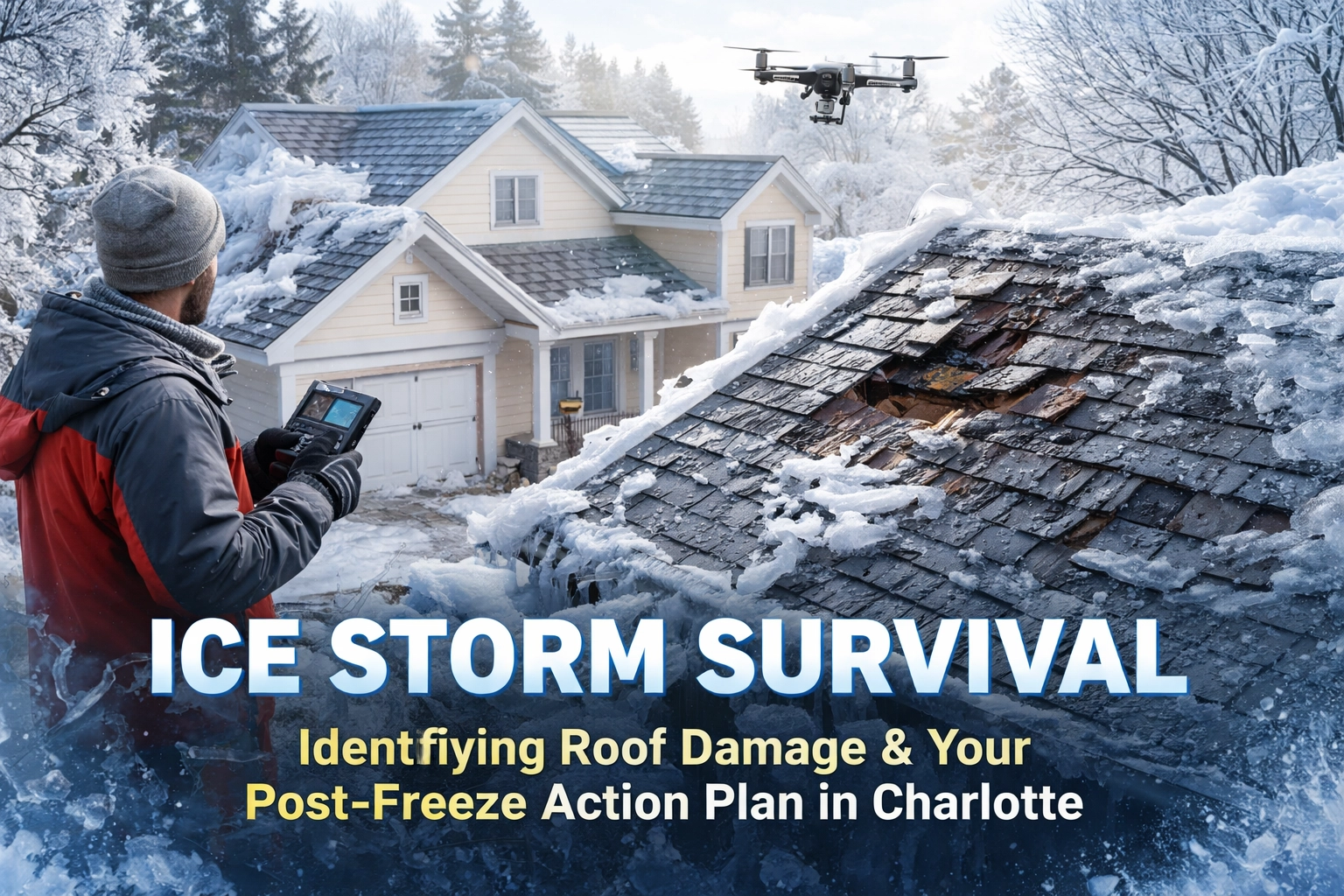
Charlotte doesn't see ice storms every winter. But when they hit, they hit hard. And your roof takes the brunt of it.
Here's the thing about ice damage. It's sneaky. Unlike a fallen tree branch or missing shingles after a windstorm, ice damage often hides. It works slowly. It creeps into places you can't see. And by the time you notice a water stain on your ceiling, the damage has been brewing for weeks.
We've seen it too many times. A homeowner assumes their roof "made it through" the storm. Then spring arrives. The ice melts. And suddenly, there's a leak nobody expected.
That's why we put together this guide. Whether you're in Myers Park, Huntersville, or right on Lake Norman's waterfront, this post will help you understand exactly what ice storms do to roofs: and what you need to do the moment the freeze passes.
Before we talk about solutions, let's talk about the problem. Ice doesn't damage roofs the same way wind or hail does. It's a slower, more patient destroyer.
This one surprises most homeowners. Ice is heavy. Really heavy.
A single inch of ice coating your roof can add thousands of pounds of stress to your structure. That's especially true when ice accumulates on top of existing snow. Wet, dense snow weighs far more than the fluffy kind. Add a layer of ice on top? Your roof is suddenly carrying a load it wasn't designed for.
Watch for sagging areas in your roofline. Any visible dips or bowing after an ice storm signal potential structural compromise. This isn't something to ignore or "wait and see" about.

Ice dams are the real villains of winter roof damage. Here's how they form:
Heat escapes from your attic. That warmth melts snow on the upper part of your roof. The melted water runs down toward your gutters. But at the roof's edge: where there's no heat from below: that water refreezes. It creates a dam. A ridge of ice that blocks proper drainage.
Now here's the problem. More snow melts. More water flows down. But it has nowhere to go. So it backs up. It pools behind the ice dam. And it seeps under your shingles, into your roof deck, and eventually into your home.
Ice dams cause leaks in places that have never leaked before. And because the water intrusion happens gradually, you might not notice until the damage is significant.
Your gutters and downspouts are supposed to move water away from your home. But when they freeze solid, they become useless. Worse, they become dangerous.
Frozen gutters add even more ice weight to your roof's edge: the weakest part of the structure. The expansion of freezing water can also crack or warp your gutter system. And once the thaw comes, all that trapped water has to go somewhere.
If you've noticed your gutters struggling after past storms, ice storms will only make those problems worse.
Charlotte's winter weather is weird. We'll drop to 25°F one night. Then hit 55°F the next afternoon. Then freeze again.
That constant freeze-thaw cycle destroys shingles over time. Water gets into tiny cracks. It freezes and expands. The crack grows. It thaws. More water enters. It freezes again.
After enough cycles, shingles crack, curl, and lose their protective granules. You'll find those granules in your gutters: small, light-colored particles that look like coarse sand. According to roofing industry standards, significant granule loss indicates accelerated wear and reduces your roof's ability to protect against UV rays and impact damage.
Now that you know what causes the damage, let's talk about spotting it. You can identify many warning signs without ever climbing a ladder.
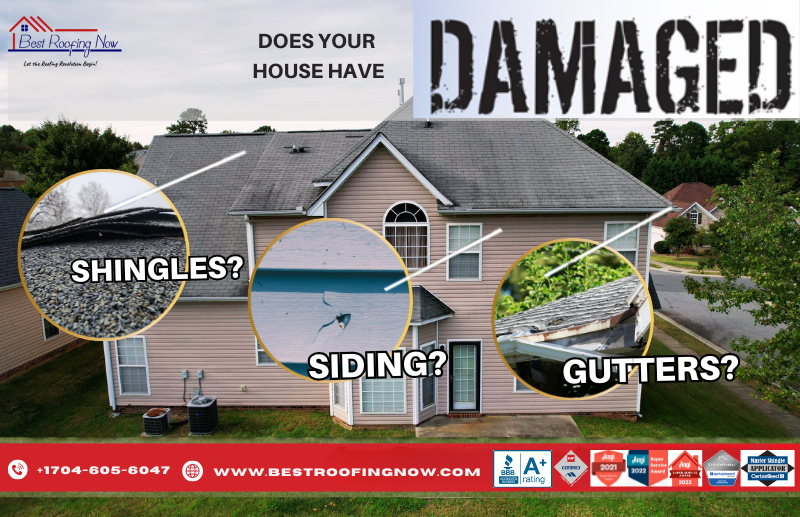
Your roofline. Stand across the street and look at your roof's profile. Is it straight? Or do you see dips, sags, or areas that look "off"? Any change in shape after an ice storm is a red flag.
Visible shingle damage. Look for shingles that appear cracked, curled, or completely missing. Wind during winter storms can loosen and tear off shingles, leaving gaps where melted snow will seep through.
Icicle formation. A few small icicles are normal. Large icicles hanging from your gutters or roof edge suggest ice dams are forming: and water isn't draining properly.
Gutter condition. Check for gutters that are sagging, pulling away from the house, or visibly damaged. Also look for granule buildup in your gutters or at downspout exits.
Flashing around roof penetrations. If you can see the metal flashing around chimneys, vents, or skylights from ground level, check for pieces that look bent, loose, or displaced.
The interior of your home tells an important story after an ice storm. Don't skip this step.
Water stains on ceilings and walls. These brownish or yellowish marks indicate water intrusion. Check the top floor especially, and look in closets and corners people often overlook.
Active drips or leaks. If you see water actually dripping, that's an emergency. It means ice dams or damaged flashing have created an active pathway for water into your home.
Attic inspection. If you can safely access your attic, check for damp or saturated insulation, visible light coming through the roof deck, or any musty or moldy smells. These signs point to water penetration that hasn't shown up on your ceilings yet.
Peeling paint or blistering walls. Interior wall damage like this often indicates hidden roof leaks. The water travels down before it shows up visually.
New cracks in walls or ceilings. Widening cracks may signal that heavy ice placed excess stress on your home's structure, causing it to shift.
Okay. The storm has passed. The roads are clearing. Now what?
Here's your step-by-step guide. Follow this order.
⚠️ Do not climb on your roof after an ice storm. Ever.
I can't stress this enough. Ice-covered roofs are incredibly dangerous: even for professionals with proper equipment. One slip could be fatal. And the ice makes damage harder to assess anyway.
Stay on the ground. Use binoculars if you need a closer look. Your safety matters more than any roof.
Also, watch for falling ice. Ice dams and icicles can break loose without warning. Keep family members and pets away from the area directly under your roofline.
Walk the perimeter of your home. Look for:
Don't touch anything that looks unstable. Just observe and document.
This matters for insurance. Before you call anyone, grab your phone and take photos.
Photograph:
Include timestamps if your camera has that option. Write notes about what you observed and when. This documentation becomes critical when you file an insurance claim.

If you have active leaks inside your home, place buckets to catch water and move furniture or valuables away from the affected area. If water is pooling on the ceiling and creating a bulge, carefully poke a small hole to let it drain into a bucket: this prevents the ceiling from collapsing under the weight.
For ice dams, you can use calcium chloride ice melt (not rock salt, which damages roofing materials) in a stocking laid across the dam to create drainage channels. But don't try to chip away at ice dams with tools. You'll damage your shingles.
Here's the honest truth. Some ice storm damage is invisible from the ground. Soft spots in your roof deck, compromised underlayment, early-stage water intrusion in your attic: these require a trained eye and proper equipment to identify.
At Best Roofing Now, we offer free inspections for Charlotte and Lake Norman homeowners after storm events. We're a veteran-owned company, and we believe in straight talk. If your roof is fine, we'll tell you. If it's not, we'll show you exactly what we found and explain your options.
The National Roofing Contractors Association recommends professional inspections after any significant weather event, noting that "many types of roof damage are not readily apparent to the untrained eye."
Don't wait until spring to address ice storm damage. Here's why:
The freeze-thaw cycle doesn't stop after one storm. Every temperature swing puts additional stress on damaged areas. A small crack becomes a bigger crack. A minor leak becomes a major one.
Insurance companies also have time limits for filing claims. The sooner you document damage and begin the claims process, the smoother that process goes.
And here's something most people don't consider: roofing contractors get slammed with calls after major storms. If you wait weeks to schedule an inspection, you might wait weeks more for an available appointment. Acting quickly gets you on the schedule before the rush.
Our waterfront communities in Cornelius, Davidson, and Mooresville face unique challenges during ice storms. Lakefront properties experience different wind patterns and humidity levels that can intensify ice accumulation.
Charlotte's older neighborhoods: think Dilworth, Plaza Midwood, and NoDa: often have aging roof systems that may already be near the end of their lifespan. An ice storm can push a borderline roof into failure.
We know these communities. We've worked on these homes. And we understand how local conditions affect your roof's performance.
Ice storms test your roof in ways other weather events don't. The weight, the water intrusion, the relentless freeze-thaw cycle: it all adds up.
But you're not powerless. Stay safe. Inspect what you can from the ground. Document everything. And get a professional assessment before small damage becomes a big problem.
Ready to know exactly where your roof stands? Call Best Roofing Now at (704) 612-9131 or schedule your free inspection today. We'll give you honest answers and a clear path forward: no pressure, no games. Just veteran-owned integrity and expert roofing knowledge working for you.
Best Roofing Now
Charlotte's trusted roofing experts since 2019
Based on this article, you may be interested in these services.
We proudly serve these Charlotte-area communities with professional roofing services.
View All Service Areas →See our recent roofing work across the Charlotte metro area.
Charlotte, NC
storm damage
Charlotte, NC
new roof
Charlotte, NC
work in progress
Charlotte, NC
completed exterior
Get a free roof inspection and honest assessment from Charlotte's most trusted roofing company.


