
Roofing Tips & Guides
Expert Roofing Advice for Charlotte Homeowners
Learn from Charlotte's trusted roofing experts. Tips on maintenance, repair, replacement, and protecting your home from the elements.
Leak or wind damage from Isaias? 24/7 emergency tarping, free storm-damage inspections and insurance-claim help.
Learn from Charlotte's trusted roofing experts. Tips on maintenance, repair, replacement, and protecting your home from the elements.
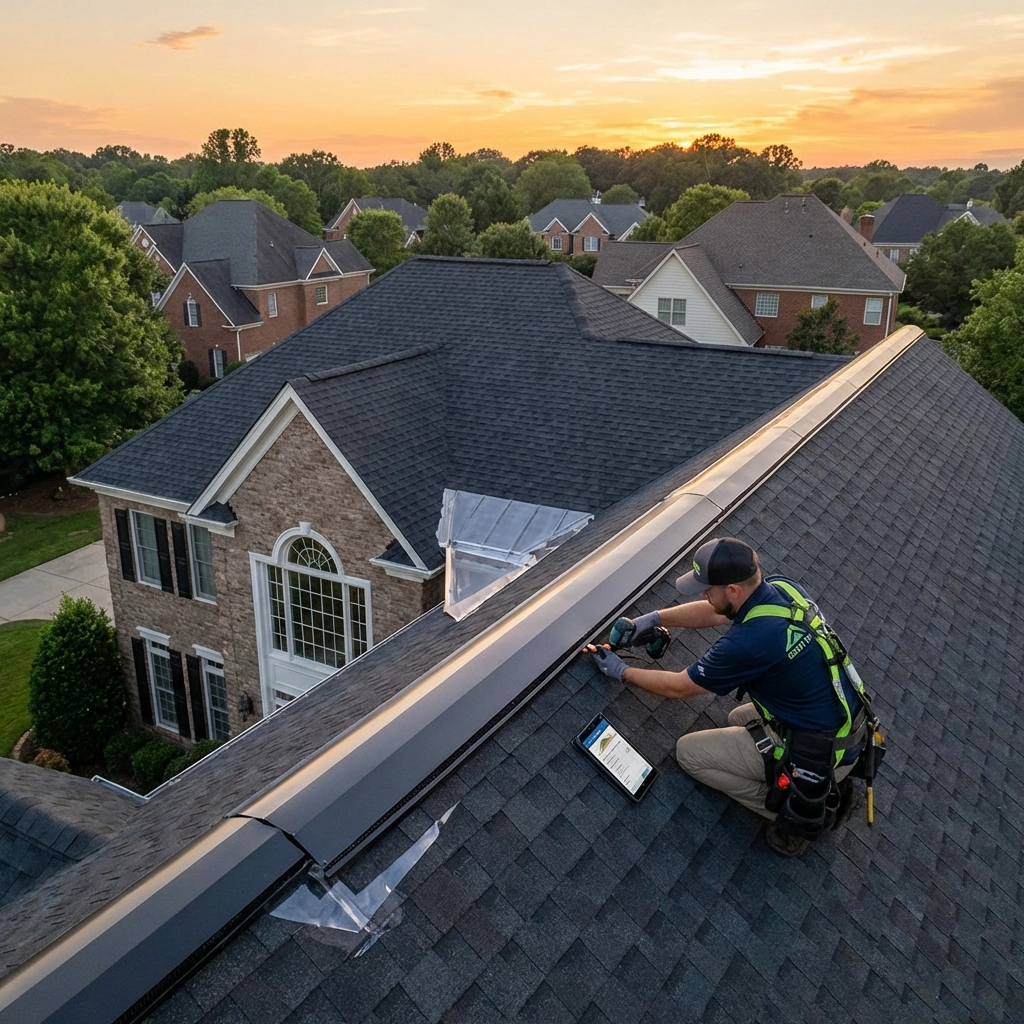
Your roof is more than just shingles. It's a system of parts working together. Two of the most important parts? The ridges and valleys.
If you've ever looked at your roof from the street, you've seen them. The ridge is that peak line at the very top. The valleys are the V-shaped channels where two roof slopes meet. Both play a huge role in keeping your home dry.
Here in the Charlotte and Lake Norman area, we get serious storms. Heavy rain. Wind. Even occasional snow. Your ridges and valleys take the brunt of it all. Understanding how they work helps you protect your biggest investment: your home.
Let's break it down in simple terms.
The roof ridge is the highest point of your roof. It's where two sloped sections come together at the top. Think of it like the spine of your roof.
When you look at a house from the side, you see that horizontal line running along the peak. That's the ridge. Every home with a pitched roof has at least one.

Ridges need special protection. We install ridge caps over them. These are specially shaped shingles that seal the gap between the two roof slopes. Without ridge caps, rain, snow, and wind would sneak right into your attic.
Many ridges also include ridge vents. These allow hot air to escape from your attic. This keeps your home cooler in summer and prevents moisture buildup year-round.
A roof valley is the opposite of a ridge. It's the internal angle where two roof slopes meet and point downward. Water flows down into these channels.
Valleys are like the gutters on your roof itself. They collect water from both slopes and direct it toward your actual gutters. From there, it flows safely away from your foundation.
Here's the thing about valleys: they handle more water than any other part of your roof. During a heavy Carolina thunderstorm, thousands of gallons rush through these channels. That's why proper valley installation matters so much.
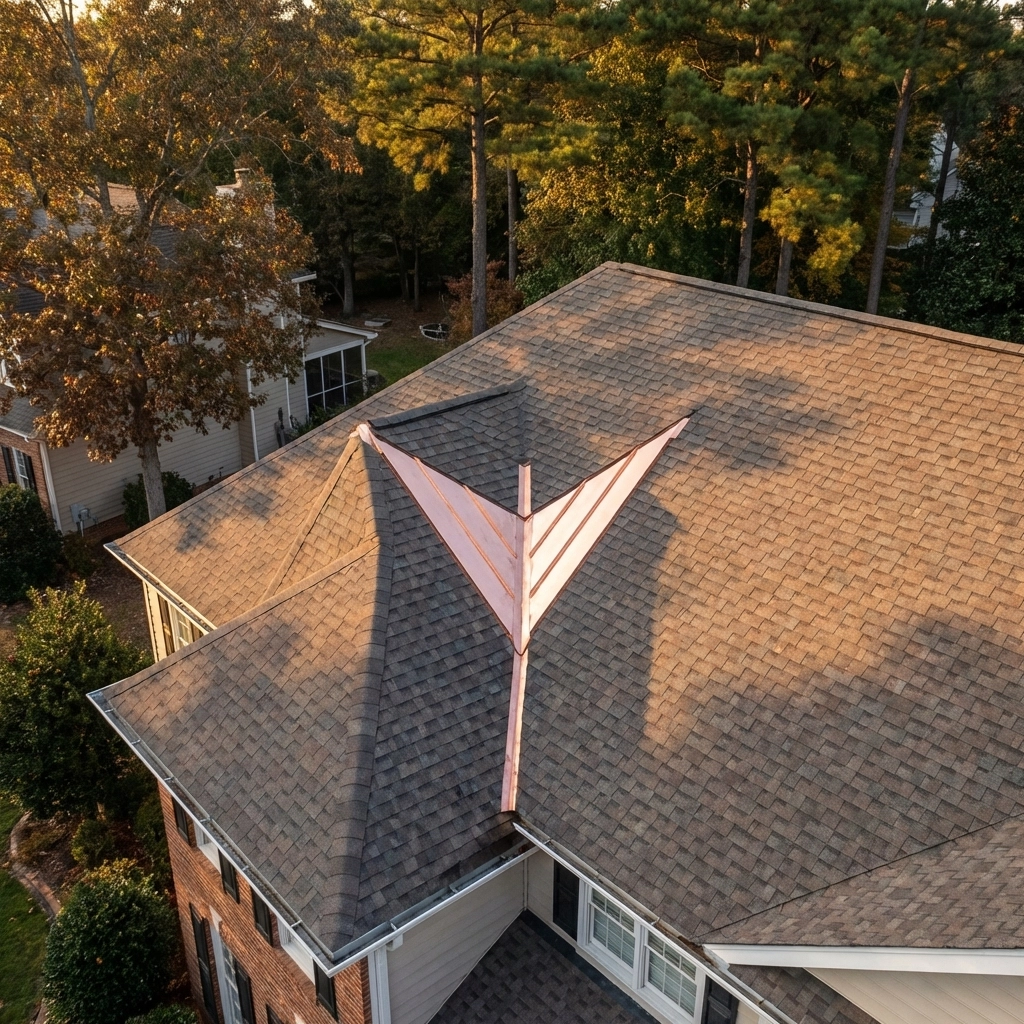
There are two main types of roof valleys:
Open valleys use metal flashing that stays visible. Water flows directly over the metal. These work great in areas with heavy rain or snow. They shed debris faster too.
Closed valleys have shingles that overlap and cover the metal underneath. They look cleaner but can trap debris more easily.
Both types work well when installed correctly. We often recommend open metal valleys for homes in the Lake Norman region. Our storms can dump a lot of water fast. Open valleys handle that volume better.
These features aren't just design elements. They serve real purposes that protect your home every single day.
This is the big one. The National Roofing Contractors Association emphasizes that proper water drainage is the primary function of any roofing system. Ridges direct water toward valleys. Valleys channel it to gutters. Gutters carry it away from your foundation.
When this system works, your home stays dry. When it fails? Water pools. It seeps under shingles. It rots wood. It grows mold. It damages ceilings and walls.
Your ridge isn't just a line on your roof. It's a structural element. The ridge board or ridge beam helps distribute the weight of your entire roof across all your walls. This prevents stress on any single area.
A properly built ridge keeps your roof stable for decades.
Ridge caps seal the most vulnerable point of your roof. Without them, every storm would send water and wind into your attic. They also block pests. Squirrels, birds, and insects look for any gap to enter your home. Good ridge caps keep them out.
Ridge vents are one of the best ways to ventilate your attic. Hot air naturally rises. Ridge vents let it escape at the highest point. Fresh air enters through soffit vents below.
This airflow prevents moisture buildup that causes mold and mildew. It also keeps your attic cooler in summer. According to roofing industry research, proper ridge ventilation can reduce energy bills by up to 25%.

Even the best roofs develop issues over time. Ridges and valleys see the most wear. Here's what can go wrong:
Temperature changes make roofing materials expand and contract. Over years, this can crack ridge caps. High winds can blow them off entirely. Once they're damaged, water has a direct path into your home.
Valleys are leak hotspots. The metal flashing can corrode. Shingles can lift at the edges. Debris can dam up water flow. Any of these issues leads to leaks.
And here's the frustrating part: valley leaks often show up far from the actual problem. Water travels along rafters before dripping through your ceiling. You might see a stain in your living room while the real issue is twenty feet away on your roof.
Leaves, twigs, and pine needles love to collect in valleys. They block water flow. Trapped moisture encourages algae and mold growth. In winter, debris can contribute to ice dams.
Charlotte homeowners with lots of trees should pay extra attention to this. Those beautiful oaks and pines? They drop debris year-round.
This is the most common cause of valley failures. Improper flashing installation. Insufficient overlap. Wrong materials. Cutting corners during original construction creates problems that show up years later.
Good news: basic maintenance goes a long way. Here's what we recommend:
At least twice a year: spring and fall: clear debris from your valleys. Use a roof rake or hire a professional. Don't walk on your roof unless you have proper safety equipment and experience.
After major storms, check for new debris buildup. Our Lake Norman customers deal with lots of pine needles. Those accumulate fast.
Heavy rain, hail, and high winds damage ridges and valleys. After serious weather, do a visual inspection from the ground. Look for missing or damaged ridge caps. Check for debris in valleys.
If you spot problems, call a professional for a closer look.

Some problems aren't visible from the ground. A professional roofer can safely examine your ridges and valleys up close. We check flashing condition, shingle adhesion, and sealant integrity.
Think of it like a checkup for your roof. Catching small issues early prevents expensive repairs later.
Trees near your roof cause constant debris problems. Branches also scrape shingles during wind. Keep limbs trimmed back at least six feet from your roof.
Clogged gutters back up water into your valleys. This defeats the whole purpose of your drainage system. Clean gutters at least twice yearly.
Some maintenance you can handle yourself. But certain situations require expert help:
⚠️ You see daylight in your attic – This means your ridge caps have failed. Water is getting in.
⚠️ Water stains appear on ceilings – Valley leaks are often the cause. A pro needs to trace the source.
⚠️ Shingles look lifted or curled near valleys – This indicates failing adhesion. Leaks are likely.
⚠️ You notice rust on valley flashing – Corroded metal needs replacement before it fails completely.
⚠️ Your roof is over 15 years old – Ridges and valleys show wear first. An inspection can catch problems early.
As building science expert Joseph Lstiburek often notes, "Water is the enemy of buildings. Managing water is the primary job of every roof system." Your ridges and valleys are the front line of that defense.
Roof ridges and valleys work hard every day. They direct water, support structure, and protect against weather. When they fail, your whole home suffers.
The good news? With regular maintenance and timely repairs, these features last for decades. A little attention now prevents major headaches later.
Here at Best Roofing Now, we've seen what happens when ridges and valleys get neglected. We've also seen how well they perform with proper care. Our team knows Charlotte and Lake Norman roofs inside and out.
✅ Ready to make sure your ridges and valleys are in top shape? Schedule a free roof inspection with us today. We'll check every inch of your roof and give you honest answers about its condition. No pressure, no surprises: just straight talk from local roofing experts who care about doing things right.
Best Roofing Now
Charlotte's trusted roofing experts since 2019
Based on this article, you may be interested in these services.
We proudly serve these Charlotte-area communities with professional roofing services.
View All Service Areas →See our recent roofing work across the Charlotte metro area.
Charlotte, NC
new roof

Charlotte, NC
new roof
Charlotte, NC
work in progress
Charlotte, NC
new roof
Get a free roof inspection and honest assessment from Charlotte's most trusted roofing company.


