
Roofing Tips & Guides
Expert Roofing Advice for Charlotte Homeowners
Learn from Charlotte's trusted roofing experts. Tips on maintenance, repair, replacement, and protecting your home from the elements.
Leak or wind damage from Isaias? 24/7 emergency tarping, free storm-damage inspections and insurance-claim help.
Learn from Charlotte's trusted roofing experts. Tips on maintenance, repair, replacement, and protecting your home from the elements.

Your roof does a lot more than just sit on top of your house. It protects your family from rain, wind, heat, and cold. But here's the thing: most homeowners have no idea what's actually up there.
And that's a problem.
When something goes wrong, you need to know what you're looking at. You need to talk to your roofer and understand what they're saying. Knowing your roof parts helps you spot trouble early. It saves you money. It keeps your home safe.
So let's break it down. Every part. Nice and simple. By the end of this article, you'll know your roof like a pro.
Before we get to the stuff you can see, let's talk about what holds everything up. Think of this as your roof's bones.
Rafters are the diagonal beams that run from the peak of your roof down to the edges. They create the slope. In older Charlotte homes, you'll often find traditional rafters.
Trusses are the modern version. They're pre-built triangular frames that offer more strength. Most homes built in the Lake Norman area over the last 30 years use trusses. They can handle heavier loads and span wider distances.
Both do the same basic job: they give your roof its shape and support everything above.
These are horizontal beams that connect the bottom of your rafters or trusses. They also support your ceiling below. You probably never think about them. But without them, your roof would push your walls outward.
Now we move up to the layers that sit on top of your structure. This is where waterproofing begins.
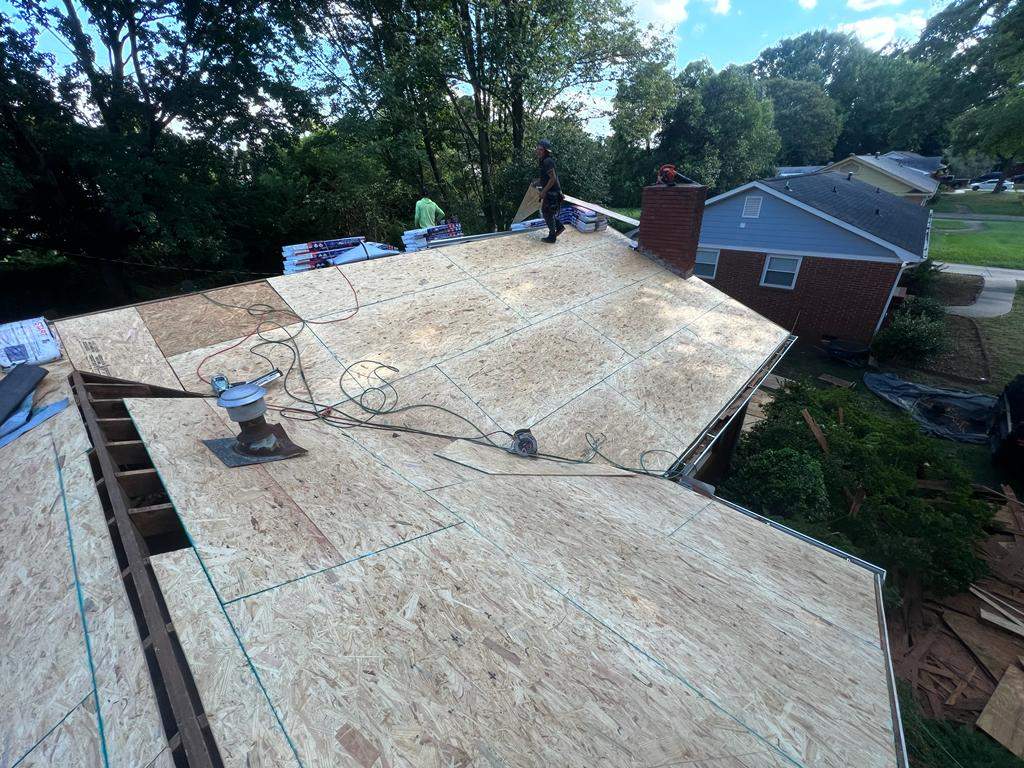
Decking is the flat surface that covers your rafters or trusses. It's usually made of plywood or OSB (oriented strand board). Think of it as the "floor" of your roof system.
Everything else attaches to this layer. If your decking gets water damage or rot, you've got a serious problem. During our roof inspections in Charlotte, we check decking carefully. Soft spots or sagging often mean hidden water damage underneath.
This is a layer most homeowners never see. It sits between your decking and your shingles.
Underlayment is your backup waterproof barrier. If water gets past your shingles, the underlayment stops it from reaching your wood decking.
There are three main types:
Here in Charlotte, we don't get tons of ice. But we do get heavy rains and the occasional winter storm. Proper underlayment matters.
This is the part most people think of when they picture a roof.

Shingles are the overlapping pieces that cover your roof surface. They're your first line of defense against weather.
Most homes in the Lake Norman region have asphalt shingles. They're affordable, durable, and come in lots of colors. Architectural shingles (the thicker, layered kind) are the most popular choice today.
Other options include:
Each has pros and cons. But for most Charlotte homeowners, architectural asphalt shingles hit the sweet spot of cost, looks, and performance.
These are special shingles installed along the very bottom edge and rake edges of your roof. They create a sealed base for your first row of regular shingles.
Without starter shingles, wind can lift your bottom row. Water can sneak underneath. It's a small detail that makes a big difference.
Your roof has peaks and angles. Ridge cap shingles cover the ridge (the very top peak where two roof planes meet). Hip cap shingles cover the hips (the angled edges where two roof faces come together and slope outward).
These areas take extra abuse from wind and weather. Special cap shingles are thicker and designed to handle it.
The edges of your roof have several important parts. Each one plays a role in keeping water out and directing it away from your home.
Eaves are the lower edges of your roof that overhang your walls. They're the part that sticks out past your house.
Eaves protect your siding and foundation from rain. They also provide a spot for gutters and soffit vents. In our humid Charlotte summers, proper eave ventilation helps prevent moisture buildup in your attic.
The fascia is the vertical board that runs behind your gutters. It's attached to the ends of your rafters.
Fascia gives your gutters something to attach to. It also seals off your attic from the outside. You see fascia when you look at your roofline from the ground: it's that finished edge.
Water damage to fascia is common. Clogged gutters overflow and soak the fascia over time. We see this a lot during roof inspections in older Lake Norman neighborhoods.
Look up at the underside of your eaves. That's your soffit.
Soffit panels often have small holes or vents. These allow air to flow into your attic. This airflow is crucial for ventilation: it keeps your attic from becoming a hot, humid mess.
The rake is the sloped edge of your roof that runs from the eave up to the ridge. It's the diagonal edge on the gable end of your house.
Drip edge is metal flashing installed along the eaves and rakes. It does exactly what it sounds like: it directs water away from your fascia and into your gutters.
Without drip edge, water runs down your shingles and then back under them along the edge. This causes rot, mold, and damage over time.
Your roof doesn't just block water. It moves water away from your home. Two systems handle this job.
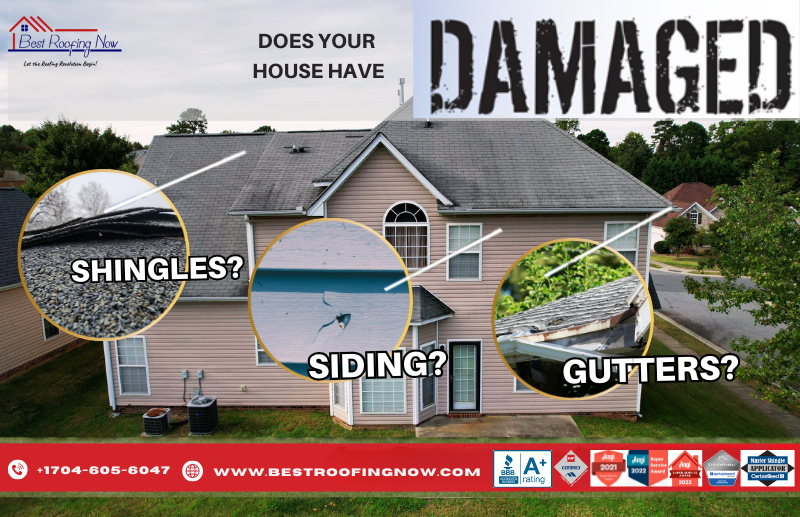
Gutters are the channels along your eaves that catch rainwater. Downspouts are the vertical pipes that carry that water down to ground level.
A good gutter system directs water away from your foundation. In Charlotte, where we get around 43 inches of rain per year, gutters work hard. Keep them clean. Clogged gutters cause more problems than you'd think.
Flashing is thin metal (usually aluminum or galvanized steel) installed at joints and penetrations. Anywhere your roof meets something else: a chimney, a skylight, a vent pipe, a wall: you'll find flashing.
Flashing seals these vulnerable spots. It's one of the most critical parts of your roof. And unfortunately, it's where a lot of leaks happen. Old, cracked, or improperly installed flashing is a top cause of roof leaks.
According to the National Roofing Contractors Association, "Proper flashing installation is essential to a watertight roof system. Many roof leaks can be traced back to flashing failures."
Your roof needs to breathe. Proper ventilation prevents moisture buildup, extends shingle life, and reduces cooling costs in summer.
A ridge vent runs along the peak of your roof. It allows hot, humid air to escape from your attic. From the ground, you might not even notice it: it blends in with your ridge cap shingles.
Ridge vents work best when paired with soffit vents. Cool air enters through the soffit. Hot air exits through the ridge. This creates natural airflow.
We mentioned soffit earlier. The vents in your soffit panels let fresh air into your attic. Without intake vents, your ridge vent can't do its job.
Some homes have additional vents:
Those pipes sticking up through your roof aren't for ventilation: at least not for your attic. Vent pipes allow air into your plumbing system so drains flow properly. They also release sewer gases safely above your roofline.
Each vent pipe needs a rubber boot and proper flashing around it. These boots wear out over time and become a common leak source.
A valley is where two roof planes meet and slope downward together, creating a V-shape. Water funnels down valleys, making them high-traffic areas for water flow.
Valleys need extra protection. We install ice and water shield in valleys and use either metal flashing or woven shingle techniques to handle the heavy water flow.
A cricket (also called a saddle) is a small peaked structure behind a chimney or other obstacle. It diverts water and debris around the obstruction.
Without a cricket, water pools behind your chimney. Leaves and debris pile up. Eventually, you get leaks. If your chimney is more than 30 inches wide, building codes often require a cricket.
Dormers are those small structures that project from a sloped roof, usually with their own small roof and window. They add light and space to upper floors.
Dormers have their own flashing needs. The joints where dormer meets main roof are potential leak points.
Here's the big picture. Your roof is a system. Each part depends on the others.
Your structure (rafters/trusses) supports your decking. Your decking holds your underlayment. Your underlayment protects your decking. Your shingles protect your underlayment.
Your flashing seals the gaps. Your gutters move water away. Your vents keep air flowing.
When one part fails, it affects everything else. A clogged gutter leads to fascia rot. Missing flashing leads to deck damage. Poor ventilation shortens shingle life.
That's why regular roof inspections matter. Catching small problems early prevents big repairs later.
Now you know your roof better than most homeowners. You can spot trouble signs. You can talk to roofers with confidence.
But there's no substitute for a professional eye. If you're in the Charlotte or Lake Norman area and want to know exactly what's happening on your roof, we're here to help.
Schedule your free roof inspection with Best Roofing Now today. We'll walk you through every part of your roof and show you exactly where you stand. No pressure. Just honest answers. Contact us here or give us a call.
Best Roofing Now
Charlotte's trusted roofing experts since 2019
Based on this article, you may be interested in these services.
We proudly serve these Charlotte-area communities with professional roofing services.
View All Service Areas →See our recent roofing work across the Charlotte metro area.
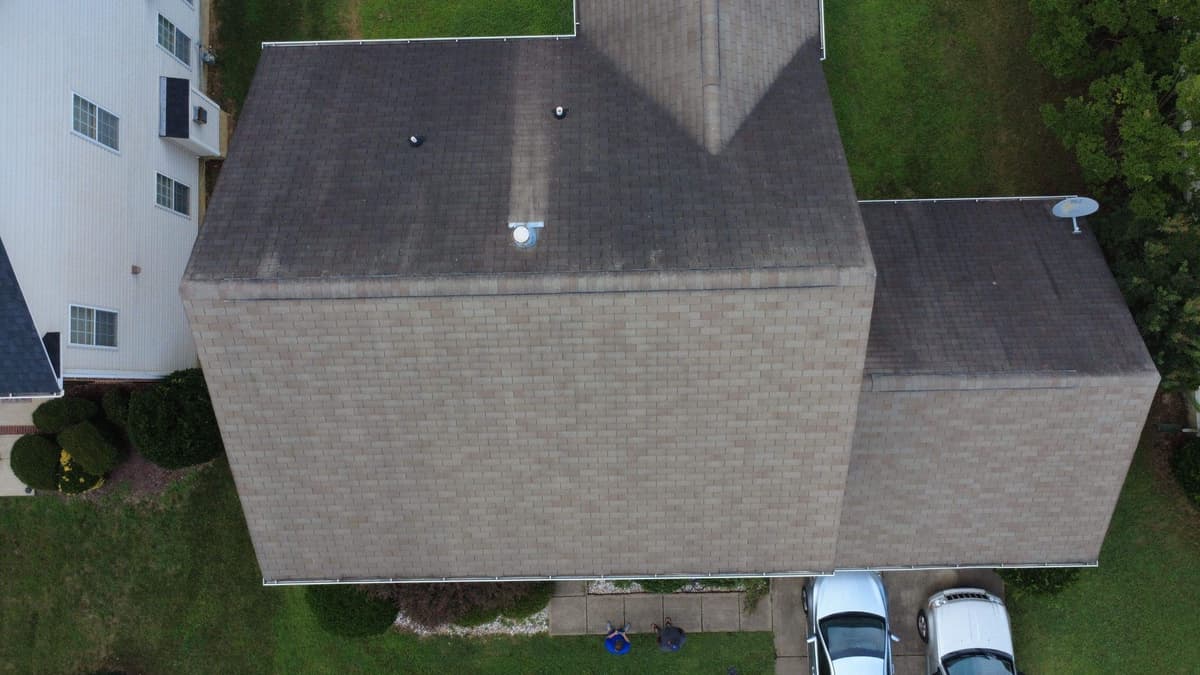
Charlotte, NC
work in progress
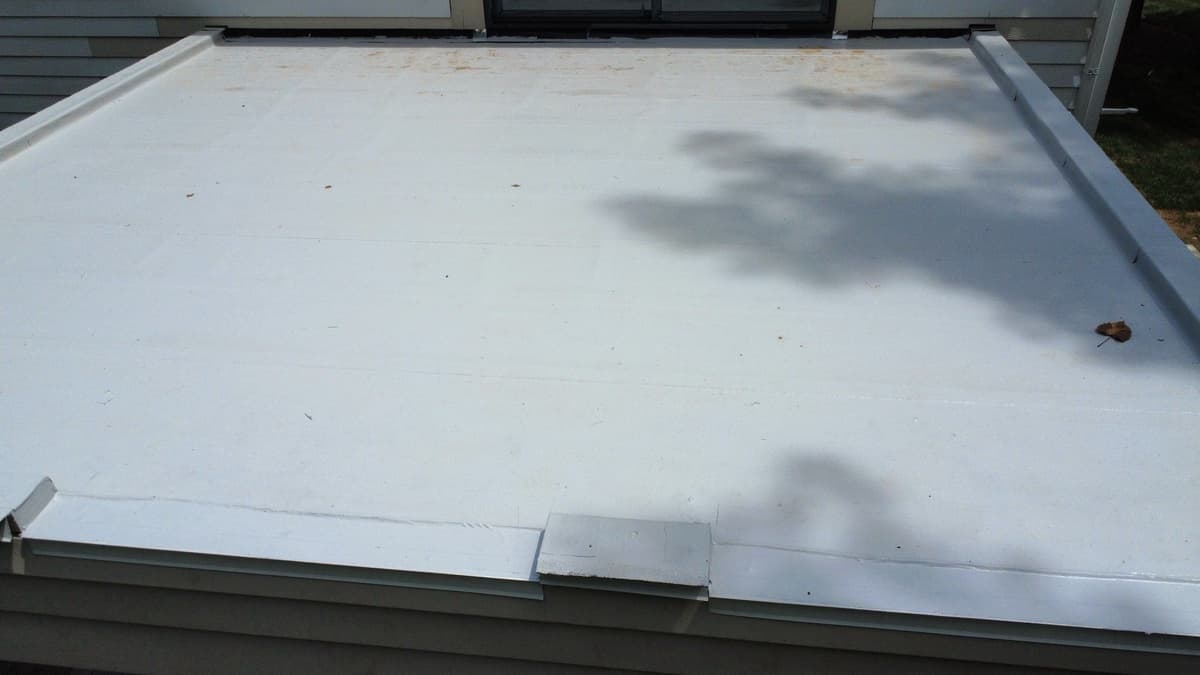
Charlotte, NC
new roof
Charlotte, NC
new roof
Charlotte, NC
new roof
Get a free roof inspection and honest assessment from Charlotte's most trusted roofing company.


