
Roofing Tips & Guides
Expert Roofing Advice for Charlotte Homeowners
Learn from Charlotte's trusted roofing experts. Tips on maintenance, repair, replacement, and protecting your home from the elements.
Leak or wind damage from Isaias? 24/7 emergency tarping, free storm-damage inspections and insurance-claim help.
Learn from Charlotte's trusted roofing experts. Tips on maintenance, repair, replacement, and protecting your home from the elements.
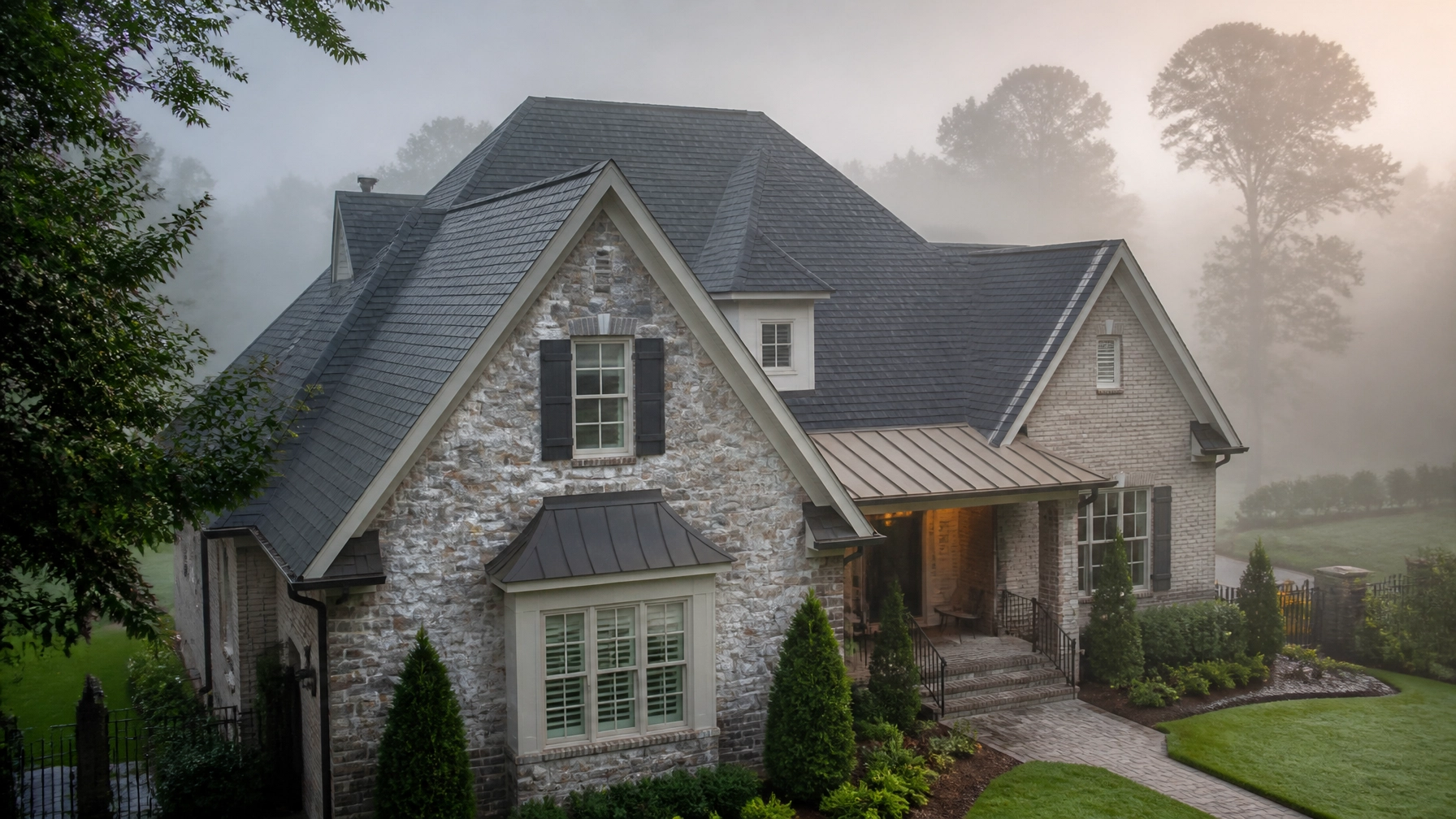
If you live in Charlotte, you know the "Queen City" humidity all too well. It is that thick, heavy air that hits you the second you step outside in July. While we are busy cranking up the AC and finding a cold glass of sweet tea, your roof is fighting a silent battle.
In North Carolina, our average relative humidity sits right around 67%. That sounds like a statistic, but for your roof, it is a recipe for disaster. Most homeowners think of roof damage as something that happens during a big storm or a hail event. But in reality, the slow, steady creep of humidity causes just as much: if not more: damage over time.
As a veteran-owned company, we see the aftermath of these mistakes every day. We see good roofs that should have lasted 25 years failing at year 12. Why? Because the humidity wasn't managed correctly.
Here are the 7 biggest mistakes we see Charlotte and Lake Norman homeowners making with their roofs and the local humidity.
Most people think that if they have vents on their roof, they are good to go. But ventilation is a two-way street. It requires a balance of intake and exhaust.
In our humid climate, many homes have plenty of exhaust (the vents at the top) but no intake (the vents under the eaves). When you only have exhaust, the hot, moist air gets stuck. It just sits there against the underside of your roof deck. This creates a "greenhouse effect" in your attic.
When moisture stays trapped, it condenses. This turns into actual water droplets on your plywood. Over time, this water leads to wood rot, sagging, and a weakened structure. If your attic is hitting 150°F in the summer: which is common in Charlotte: your shingles are essentially being "baked" from both sides. This leads to premature aging and granule loss.
We follow the 1:150 rule. This means you need 1 square foot of ventilation for every 150 square feet of attic space. But the key is balance. You want 50% of that to be intake (soffit vents) and 50% to be exhaust (ridge vents). We often install baffles (plastic channels) to ensure your insulation isn't blocking those soffit vents.

Have you ever looked at a roof in neighborhoods like Ballantyne or Huntersville and noticed long, dark streaks running down the shingles? Most people assume it is soot or dirt. It isn't.
That is Gloeocapsa magma. It is a type of hardy blue-green algae that thrives in the North Carolina humidity. It loves the limestone filler used in modern asphalt shingles. Essentially, the algae is eating your roof.
Beyond looking bad, these streaks are dangerous. Algae holds onto moisture. When the humidity is high, the algae stays damp. This prevents your shingles from drying out, which leads to rot and mold. It also darkens your roof, causing it to absorb more heat. This makes your AC work harder and drives up your Duke Energy bill.
Don't just pressure wash it! High-pressure water will blast the protective granules right off your shingles. Instead, we recommend using shingles with algae-resistant technology. Brands like GAF and CertainTeed offer shingles with copper-infused granules. These release copper ions when it rains, which kills algae before it can start. For existing streaks, a professional "soft wash" with the right chemicals is the way to go.

This is one of the most common "builder grade" mistakes we find during our free roof inspections. It happens when a bathroom exhaust fan, a kitchen hood, or even a dryer is vented directly into the attic space instead of outside.
When you take a hot shower, that fan pulls all that steam up. If it dumps it into your attic, you are essentially creating a rainforest inside your home. In our already humid climate, this extra moisture has nowhere to go. It settles into your insulation and onto your roof trusses. This is the fastest way to grow mold in your attic, which can become a major health hazard for your family.
All exhaust fans must vent directly to the outside through a dedicated roof vent or a gable wall. If we find a fan "dumping" into your attic, we can easily install a proper vent hood to ensure that moist air leaves the house for good.
We get it: roofing is a big investment. It is tempting to go with the cheapest 3-tab shingles to save a few thousand dollars. But in the Charlotte and Lake Norman area, 3-tab shingles are often a mistake.
Basic shingles are thinner and more prone to "moisture loading." When they get hit with our high humidity and intense UV rays, they curl and lift much faster than architectural shingles. Once a shingle curls, moisture gets underneath it. This creates a cycle of rot that can destroy your roof deck in just a few years.
We almost always recommend high-quality architectural shingles. Brands like CertainTeed Landmark or GAF Timberline HDZ are designed for our climate. They are thicker, have better wind ratings, and include specialized coatings that reflect heat and resist moisture. The ROI on a better shingle is massive because it can last 10-15 years longer in this environment.
Moisture doesn't just come from the outside. It comes from inside your home. Every time you boil water, take a shower, or even breathe, you are adding humidity to your living space. Because warm air rises, that humid air wants to get into your attic.
If you have gaps around your recessed lights, attic hatch, or plumbing pipes, that humid air leaks into the attic. This is called "bypass air." When that warm, wet air hits the underside of your relatively cool roof deck, it hits the "dew point." It turns into liquid water. You might think you have a roof leak, but you actually have a "home leak."
Proper attic insulation is only half the battle. You need to air seal the floor of your attic. Using spray foam or caulk to seal those gaps keeps the humidity in your living space where your dehumidifier or AC can handle it. This protects your roof deck from rotting from the bottom up.

Charlotte is famous for its beautiful trees. But those trees drop leaves, pine needles, and "helicopter" seeds year-round. If your gutters are clogged, they hold water.
A clogged gutter is basically a wet sponge sitting against your roof's edge. This constant moisture travels up into your shingles through a process called capillary action. It rots your fascia boards, your soffits, and the very edge of your roof decking. If you see "tiger stripes" (dark vertical lines) on the front of your gutters, it is a sign that water is overflowing and moisture is dwelling where it shouldn't.
Clean your gutters at least twice a year: once in the spring and once in the late fall. If you live in a heavily wooded area like Lake Norman, you might need it quarterly. We also recommend high-quality gutter guards to keep the debris out and the water moving away from your foundation and roofline.
Most homeowners never go into their attic. But your attic tells the truth about your roof's health. If you see rusted nail heads sticking through the roof deck, you have a major humidity problem.
Nails should be clean and silver. If they are rusted, it means the humidity in your attic has been high enough for long enough to corrode metal. Rusted nails lose their grip. This means your shingles aren't held down as securely as they should be. In a high-wind storm, those shingles are much more likely to blow off.
Check your attic once a season. Look for rusted nails, dark water stains on the wood, or a musty smell. If you see these signs, call us for a professional inspection. We can identify if the moisture is coming from a leak or a ventilation failure.
Fixing humidity issues isn't just about hammering down a new shingle. It is about "Building Science." As a veteran-owned business, we approach roofing with the same discipline and attention to detail we learned in the service. We don't just look at the shingles; we look at the whole system.
"A roof is not just a lid on a box. It is a breathing organism. If you don't let it breathe, it will die prematurely." : James Turner, Owner of Best Roofing Now
In Charlotte, a full roof replacement can cost between $10,000 and $25,000 depending on the size and material. If you can extend the life of your roof by just 5 years by fixing these humidity mistakes, you are effectively saving thousands of dollars. Not to mention the savings on your monthly energy bills.
Don't wait for the black streaks to cover your roof or for the nails in your attic to rust away. The best time to fix a humidity problem is before it becomes a leak.
At Best Roofing Now, we provide a consultation-based approach. We aren't here to pressure you into a sale. We are here to educate you and help you make the best decision for your home. Whether you are in Uptown Charlotte, the shores of Lake Norman, or the quiet streets of Fort Mill, we’ve got you covered.
Click here to schedule your FREE High-Humidity Roof Audit today!
Let’s make sure your roof is ready for whatever the Carolina summer throws at it. 🛡️
How do I know if my attic has poor ventilation?
If your second floor is significantly hotter than your first floor, or if you see mold or "frosting" on your attic insulation, your ventilation is likely failing.
Are black streaks on my roof a sign of a leak?
Not necessarily. They are usually algae. However, the algae holds moisture which can cause a leak over time by rotting the shingles and decking.
Can I fix attic humidity by just adding a fan?
Sometimes, but a powered fan can actually cause more problems if not balanced correctly. It can pull conditioned air out of your house, making your AC work harder. We prefer passive, balanced systems like ridge and soffit vents.
{“@type”:”BlogPosting”,”image”:”https://cdn.marblism.com/KaYpsvdHHPN.webp”,”author”:{“name”:”James Turner”,”@type”:”Person”},”hasPart”:[{“name”:”How to Fix Roof Ventilation”,”step”:[{“text”:”Calculate the 1:150 ratio for attic space.”,”@type”:”HowToStep”},{“text”:”Install balanced intake and exhaust vents.”,”@type”:”HowToStep”},{“text”:”Clear any insulation blocking soffit vents using baffles.”,”@type”:”HowToStep”}],”@type”:”HowTo”}],”@context”:”https://schema.org”,”headline”:”7 Mistakes You’re Making with Charlotte Humidity & Your Roof (and How to Fix Them)”,”keywords”:”Charlotte roofing, attic ventilation, roof humidity, algae on roof, roof maintenance NC”,”publisher”:{“logo”:{“url”:”https://www.bestroofingnow.com/logo.png”,”@type”:”ImageObject”},”name”:”Best Roofing Now”,”@type”:”Organization”},”description”:”Learn the 7 most common roofing mistakes Charlotte homeowners make regarding humidity and how to fix them to save money and extend roof life.”,”datePublished”:”2026-06-03″,”articleSection”:”Maintenance & Climate”,”mainEntityOfPage”:{“@id”:”https://www.bestroofingnow.com/blog/charlotte-humidity-roofing-mistakes”,”@type”:”WebPage”}}
Best Roofing Now
Charlotte's trusted roofing experts since 2019
Based on this article, you may be interested in these services.
We proudly serve these Charlotte-area communities with professional roofing services.
View All Service Areas →See our recent roofing work across the Charlotte metro area.
Charlotte, NC
new roof
Charlotte, NC
work in progress
Charlotte, NC
new roof
Charlotte, NC
storm damage
Get a free roof inspection and honest assessment from Charlotte's most trusted roofing company.


