
Roofing Tips & Guides
Expert Roofing Advice for Charlotte Homeowners
Learn from Charlotte's trusted roofing experts. Tips on maintenance, repair, replacement, and protecting your home from the elements.
Leak or wind damage from Isaias? 24/7 emergency tarping, free storm-damage inspections and insurance-claim help.
Learn from Charlotte's trusted roofing experts. Tips on maintenance, repair, replacement, and protecting your home from the elements.
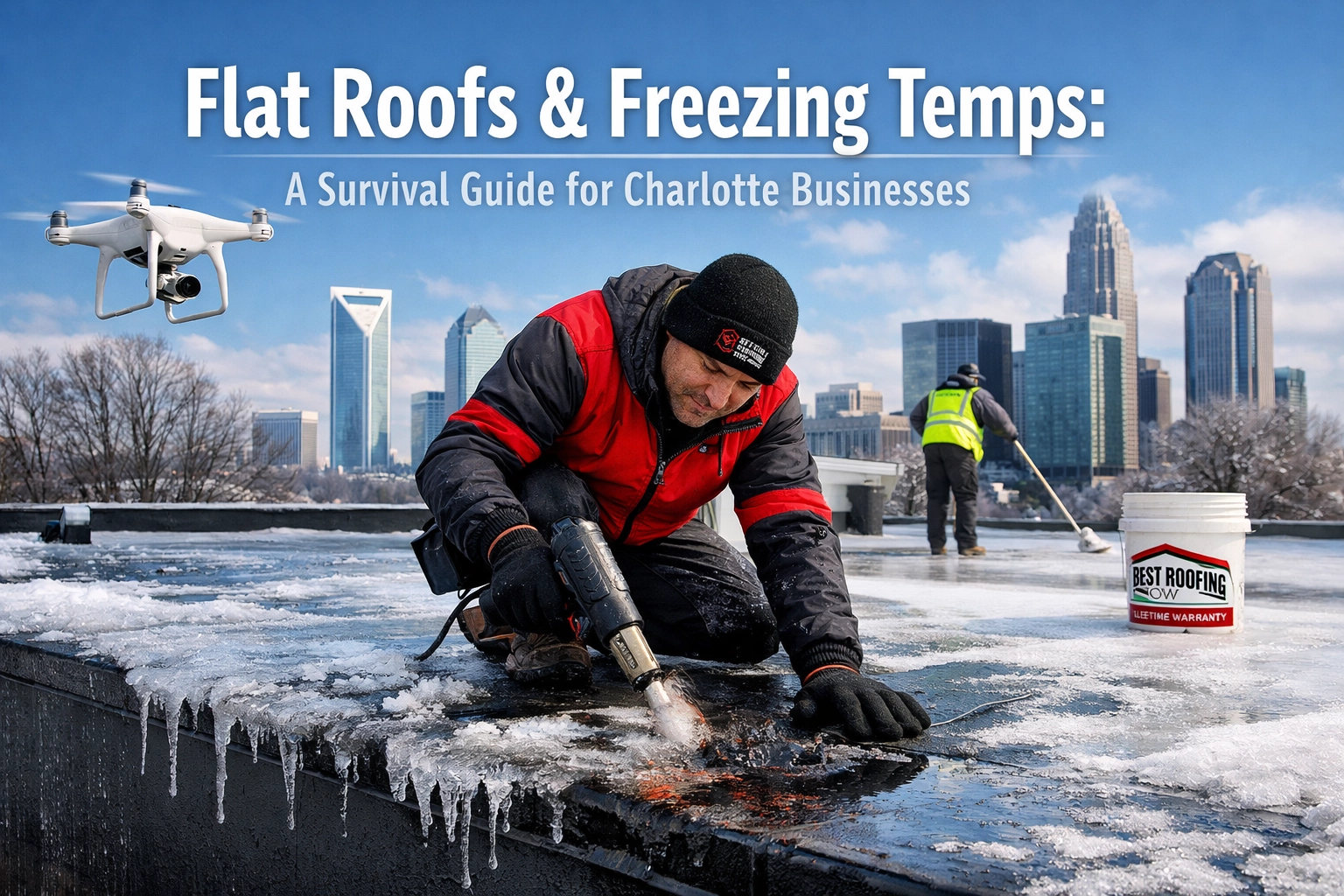
If you own a commercial building in Charlotte, the February 2026 snowstorm probably got your attention. We're seeing snowfall amounts we haven't seen in decades. And while your employees got a snow day, your flat roof is working overtime.
Here's the thing about flat roofs: they don't shed snow and ice like residential sloped roofs do. Every pound of frozen precipitation stays right where it lands. That means your building is carrying weight it doesn't normally carry. And when that snow starts to melt, which it will, because this is Charlotte, you've got a whole new set of problems.
I've spent the last three days inspecting commercial roofs across the Charlotte metro area. What I'm seeing tells me we need to have a serious conversation about flat roof survival during freezing temps. Not to scare you. To prepare you.
Residential roofs shed water by design. The slope does the work. But commercial flat roofs (which aren't actually flat, they have a slight pitch) rely entirely on drainage systems to move water off the surface.
When temperatures drop below freezing, those drainage systems can fail. Drains freeze. Water can't flow. And suddenly you've got standing water that turns into standing ice.
That ice adds weight. It blocks the path for new meltwater. And it creates what we call "ponding", standing water that won't drain even after temperatures warm up.
According to the National Roofing Contractors Association, flat roofs are significantly more susceptible to snow and ice buildup than sloped roofs. The weight isn't the only issue. The constant freeze-thaw cycle we get here in Charlotte creates stress on every part of your roofing system.
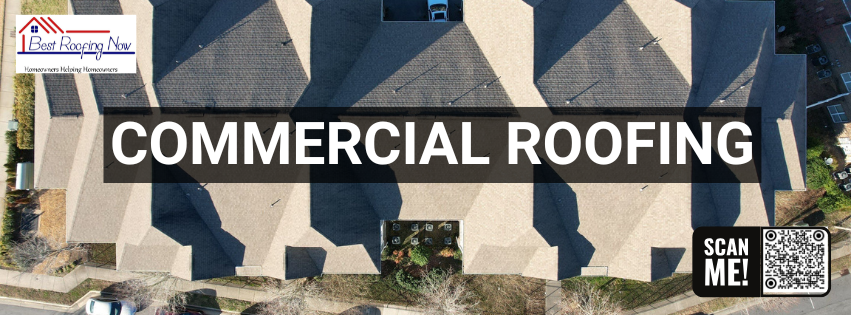
You know what makes Charlotte winters particularly brutal for flat roofs? The temperature swings.
We don't get consistent cold like Chicago or Boston. We get something worse: wild fluctuations. It's 28 degrees at night, then 55 degrees by 2 p.m. the next day.
Your roof expands when it warms. It contracts when it cools. Do that cycle enough times in a single week, and you're stressing every seam, every membrane joint, every flashing connection.
One commercial roofing expert put it this way: "North Carolina can swing from freezing to 70 degrees in a single day during winter months. This constant expansion and contraction stresses roofing materials more than consistent cold ever could."
Ice storms compound the problem. Charlotte gets more ice storms than heavy snow events. Ice weighs more than snow. And ice doesn't compress, it just adds load.
Let's talk about weight for a minute. Because this matters.
Structural engineers design flat roofs to handle a specific load. That load is calculated based on building codes for your area. But those calculations assume normal conditions.
A cubic foot of fresh snow weighs about 7 pounds. That same cubic foot of wet, compact snow? Closer to 20 pounds. Ice weighs even more, about 57 pounds per cubic foot.
After three days of snow sitting on your roof, compacting under its own weight, you're not dealing with 7 pounds per cubic foot anymore. You're dealing with something much heavier.
And here's what worries me: most building owners have no idea what their roof's maximum load capacity is. They've never asked. They've never had to think about it.
Until now.
If you don't know your roof's load rating, you need to find out. Your original building plans should have this information. If you can't find them, a structural engineer can assess it.

Ponding is what keeps me up at night during these freeze-thaw cycles.
Here's how it happens. Snow melts during the day. Water flows toward your drains. But if those drains are partially blocked, maybe with ice, maybe with debris from fall that you didn't clear out, the water doesn't drain completely.
When temperatures drop that night, that standing water freezes. Now you've got ice sitting in a low spot on your roof. The next day, more snow melts. More water flows to that same low spot, because water follows the path of least resistance.
But now that low spot is blocked with ice. So the new water pools around it. Freezes again that night. The pool gets bigger.
After a week of this cycle, you can have ponding areas that are several inches deep and several feet wide. And they're not going anywhere fast.
The American Society of Civil Engineers defines ponding as water that remains on a roof 48 hours after rainfall (or snowmelt) ends. That standing water creates constant stress on your roof membrane. It accelerates deterioration. It finds weak spots you didn't know existed.
And in freezing temps? That ponding water becomes ponding ice, which weighs more and causes even more membrane stress.
We've seen commercial roofs in the Charlotte area with ponding problems that started as minor drainage issues. One winter later, those "minor issues" turned into major leak sources that required complete roof replacement.
Your drains are the lifeline of your flat roof. Everything else can be perfect, but if your drains fail, your roof fails.
Before winter hits, you need to clear every drain of debris. Leaves, dirt, branches, trash, anything that can block water flow needs to come out. We're talking about complete cleaning, not just surface level.
During winter, you need to monitor those drains. Are they flowing? Are they freezing shut? Do you see ice building up around the drain opening?
Most commercial buildings have internal drains that connect to your building's plumbing system. When those freeze, you can't see the problem from ground level. You need to get on the roof and check them physically.
Here's what we do for our commercial maintenance clients: We install drain guards before winter arrives. These prevent large debris from entering the drain system. They don't stop ice formation, but they reduce the variables.
We also recommend heat trace cable for critical drain lines. These are electrical heating elements that keep your drain pipes above freezing. They're not expensive to install, and they're significantly cheaper than repairing water damage from a backed-up drain.
But even with heat trace, you need to verify that your drains are functioning during and after winter weather events. Not just assume they're working. Verify it.
You might think ice dams only happen on sloped residential roofs. Wrong.
Flat roofs get ice dams too. They form at the edges, around scuppers (those overflow drains on the side of your building), and around any penetration through the roof surface.
The cause is the same as residential ice dams: heat escaping from inside your building melts snow on the roof surface. That meltwater flows toward the edge. When it hits a colder section, typically the overhang or parapet wall, it refreezes.
Over time, that ice builds up. It creates a barrier. New meltwater can't flow past it. So it backs up under your roof membrane. And suddenly you've got an interior leak that has nothing to do with a hole in your roof.
Preventing ice dams on flat roofs requires proper insulation and ventilation. Your building's interior heat shouldn't be warming the roof deck enough to melt snow. If it is, you're wasting energy and creating ice dam conditions.
We inspect the thermal envelope of commercial buildings as part of our winter maintenance service. We use thermal imaging cameras to identify areas where heat is escaping through the roof deck. Those are your future problem spots.
Here's our recommended maintenance schedule for Charlotte-area commercial buildings with flat roofs:
November inspection – Before winter weather arrives. We clear drains, check flashing, inspect membrane condition, and identify vulnerabilities.
February/March inspection – After winter weather passes. We assess any damage from freeze-thaw cycles and address it before spring rain season starts.
Why two inspections instead of one annual checkup? Because Charlotte's weather demands it. The temperature swings between November and March cause different types of stress than summer heat. And catching winter damage in early spring means you're not dealing with leaks during April thunderstorms.
Studies show that regular preventative maintenance can extend a commercial roof's lifespan by up to 50%. That's not a small number. That's tens of thousands of dollars in avoided replacement costs over the life of your building.
For a typical 10,000-square-foot commercial flat roof in Charlotte, replacement costs run between $40,000 and $80,000 depending on the roofing system. Extending that roof's life from 20 years to 30 years through proper maintenance saves you $2,000 to $4,000 per year.
Semi-annual inspections cost a fraction of that. Usually $200 to $400 per visit for a basic commercial building. The return on investment is obvious.

If you're reading this and you've got snow sitting on your commercial building right now, here's your action plan:
Step 1: Assess from inside. Walk your top floor. Look at the ceiling. Do you see any sagging? Any water stains? Any signs of stress? If yes, you need professional help immediately.
Step 2: Check your drains from inside. If your building has interior roof drains, verify that they're functioning. Look for water backing up or unusual sounds in the drain pipes.
Step 3: Don't try to remove the snow yourself. I know it's tempting. Don't do it. Commercial flat roofs aren't designed for foot traffic in the best conditions. Add snow and ice, and you're creating fall hazards and potential membrane damage.
Step 4: Call a commercial roofing contractor. We have the proper equipment and training to safely remove snow from flat roofs when necessary. We know how much snow to leave (removing all snow can sometimes cause problems), and we know how to avoid damaging your roof membrane in the process.
Step 5: Document everything. Take photos of the snow accumulation. Note the date and time. If you do end up with damage, this documentation will be valuable for insurance claims.
Here's what we're telling our commercial clients right now in early February 2026: If your roof has more than 12 inches of snow accumulation, get it inspected. If you're seeing any signs of structural stress, sagging, unusual creaking sounds, ceiling cracks, call us immediately. Don't wait.
Some situations require immediate professional response. Here's what to watch for:
Visible sagging or dipping in the roof deck. This means structural stress is exceeding design limits.
Interior water leaks during or after snowmelt. This isn't "wait until spring" territory. Active leaks cause damage every hour they continue.
Cracking sounds from the roof structure. Your building is talking to you. Listen.
Doors or windows that suddenly won't close properly. This can indicate structural movement from roof loading.
Ponding water deeper than 2 inches that persists more than 48 hours after weather clears. This is a drainage failure that will only get worse.
Ice buildup at roof edges thicker than 6 inches. This is an ice dam in formation.
If you're seeing any of these signs, contact us immediately. We provide 24/7 emergency commercial roofing services for situations exactly like this. We'll assess the situation, determine the urgency level, and take appropriate action to protect your building.
You can reach our emergency line at the number on our website, or if you're unsure whether your situation qualifies as an emergency, check our emergency repair guide for more details.

We created our commercial maintenance program specifically for Charlotte-area businesses dealing with flat roof challenges.
Here's what's included:
Semi-annual inspections timed for Charlotte's weather patterns (pre-winter and post-winter). We document everything with photos and detailed condition reports.
Priority emergency service. Our maintenance clients get priority scheduling during weather emergencies. When everyone's calling because of a storm, our maintenance clients get first response.
Drain cleaning and monitoring. We keep your drainage systems clear and functioning year-round, not just when there's a problem.
Preventive repairs. Small issues get addressed before they become big problems. A $200 flashing repair today prevents a $5,000 leak repair next year.
Thermal imaging surveys. We identify heat loss and potential ice dam formation areas before winter arrives.
Detailed maintenance history. Every inspection, every repair, every observation gets documented. This history is invaluable for insurance claims, property sales, and long-term planning.
Our commercial clients in Huntersville, Cornelius, Davidson, and throughout the Charlotte metro area rely on this program to protect their buildings and their businesses. Because roof problems don't just cost money to fix, they disrupt operations, damage inventory, and create liability issues.
You can learn more about our Charlotte commercial roofing services and coverage in areas like Huntersville, Cornelius, and Davidson.
Sometimes the best answer isn't just better maintenance. Sometimes your roof system needs an upgrade to handle Charlotte's weather challenges.
We're seeing more commercial building owners invest in modern roofing systems designed specifically for our climate. These systems include:
Improved drainage design with more drains per square foot and larger drain openings that resist freezing.
Enhanced insulation that prevents interior heat from reaching the roof deck and creating ice dam conditions.
Reflective roof coatings that reduce thermal stress during summer but don't compromise winter performance.
Tapered insulation systems that eliminate the low spots where ponding occurs. These systems create positive slope to your drains, so water can't pool even if drainage is partially compromised.
Is it expensive? Compared to patch repairs, yes. Compared to emergency roof replacement after a winter structural failure, no.
We recently completed a commercial roof renovation for a warehouse in Charlotte that had chronic ponding problems. The building was only 15 years old, but poor drainage design meant the owner was dealing with leaks after every heavy rain or snow event.
We installed a tapered insulation system that created positive drainage to all roof drains. We upgraded the membrane to a 60-mil TPO system with enhanced puncture resistance. And we installed heat trace on all drain lines.
Total cost was about 60% of what a full tear-off and replacement would have been. But it solved the problems permanently. That building has now weathered two winters and multiple heavy rain events without a single leak.
We handle both residential and commercial roofing, but commercial work requires different expertise. You're not just protecting a home: you're protecting a business, employees, inventory, and in some cases, your customers' operations.
I started Best Roofing Now with the vision that roofing should be done right, with integrity, and with a focus on long-term solutions instead of short-term fixes. That vision applies even more to commercial work, where the stakes are higher.
We're veteran-owned, which means we understand discipline, preparation, and attention to detail. We don't cut corners. We don't rush jobs to get to the next one. We do it right the first time.
When we inspect your commercial roof, we're thinking about the next 20 years, not just the next repair. We'll tell you honestly what needs immediate attention and what can wait. We'll give you options at different price points. And we'll never pressure you into work you don't need.
That's not just a marketing promise. That's how we operate every day on every job.
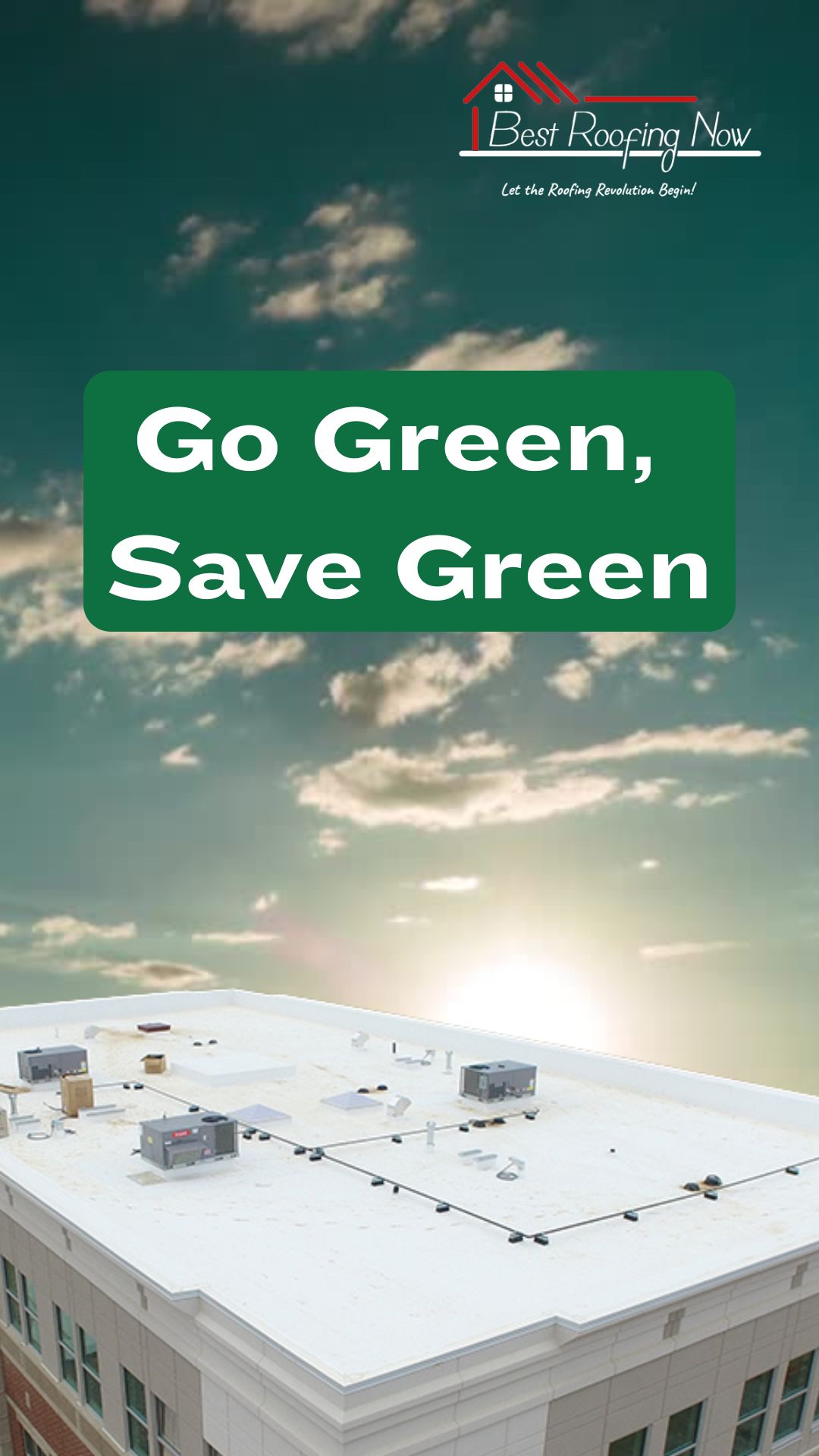
If you own or manage a commercial building in Charlotte with a flat roof, the February 2026 snowstorm was a warning shot. Our winters are changing. The "once in a decade" snow events are happening more frequently. And your roof needs to be ready.
Here's what I recommend: Schedule a comprehensive flat roof assessment before next winter arrives. Don't wait until you have an emergency. Be proactive.
During that assessment, we'll:
Call us today at the number on our website or visit bestroofingnow.com to schedule your commercial roof assessment. We serve the entire Charlotte metro area, including Huntersville, Cornelius, Davidson, and Lake Norman communities.
Your flat roof survived this snowstorm. Let's make sure it's ready for the next one.
Because in Charlotte, there's always another winter storm coming. The only question is whether your roof will be ready.
Best Roofing Now
Charlotte's trusted roofing experts since 2019
Based on this article, you may be interested in these services.
We proudly serve these Charlotte-area communities with professional roofing services.
View All Service Areas →See our recent roofing work across the Charlotte metro area.
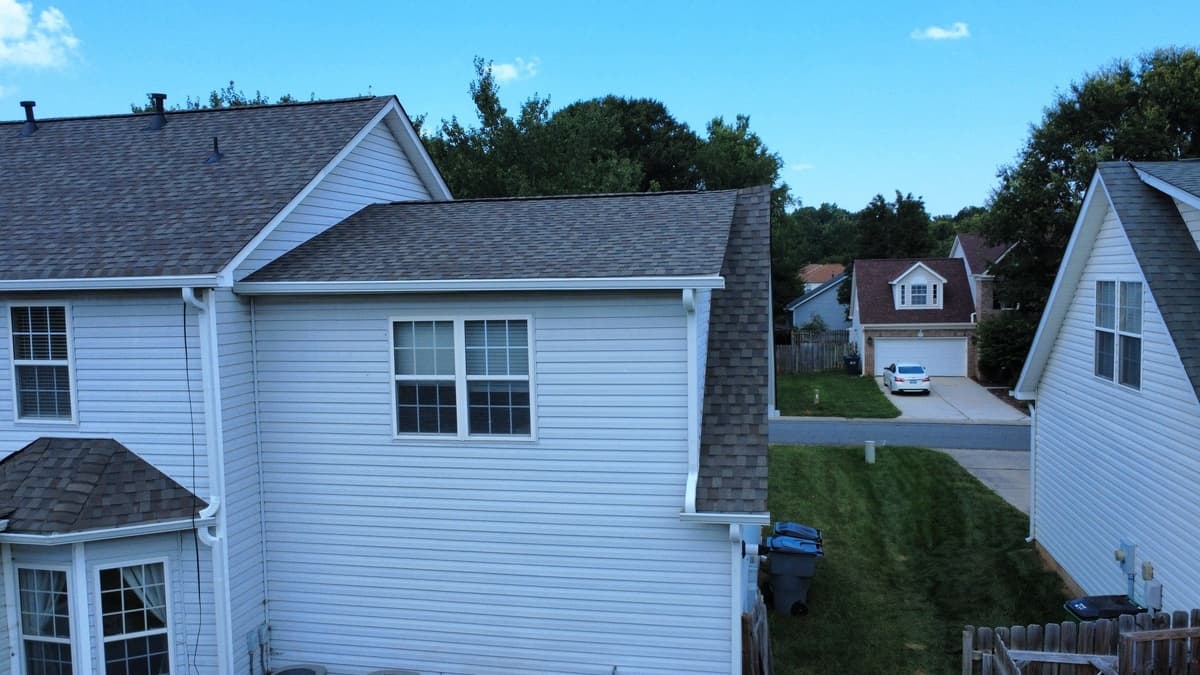
Charlotte, NC
new roof
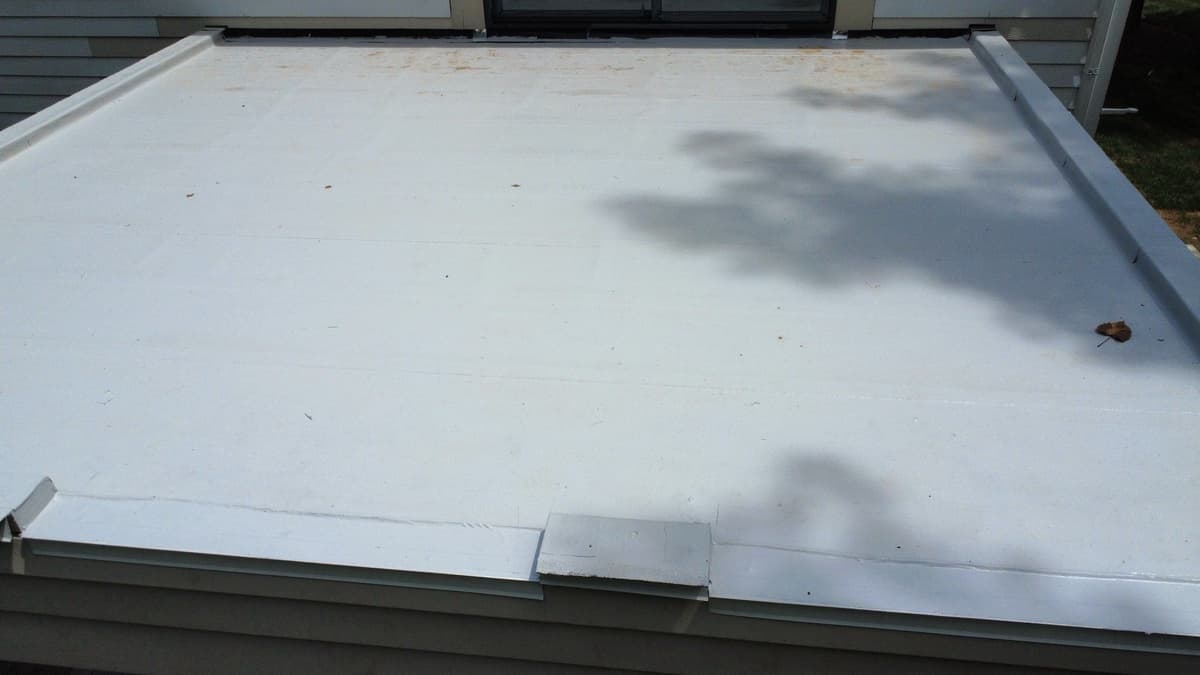
Charlotte, NC
work in progress
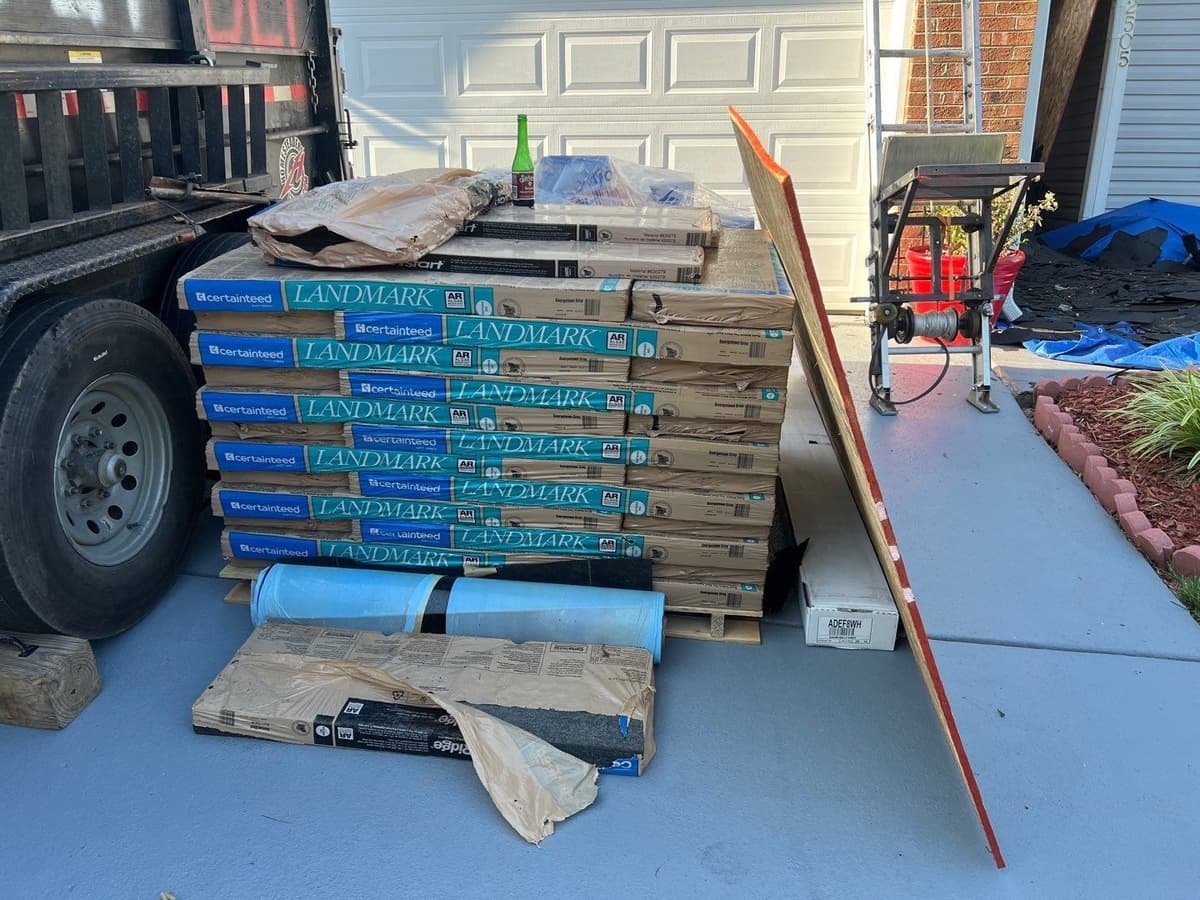
Charlotte, NC
completed exterior
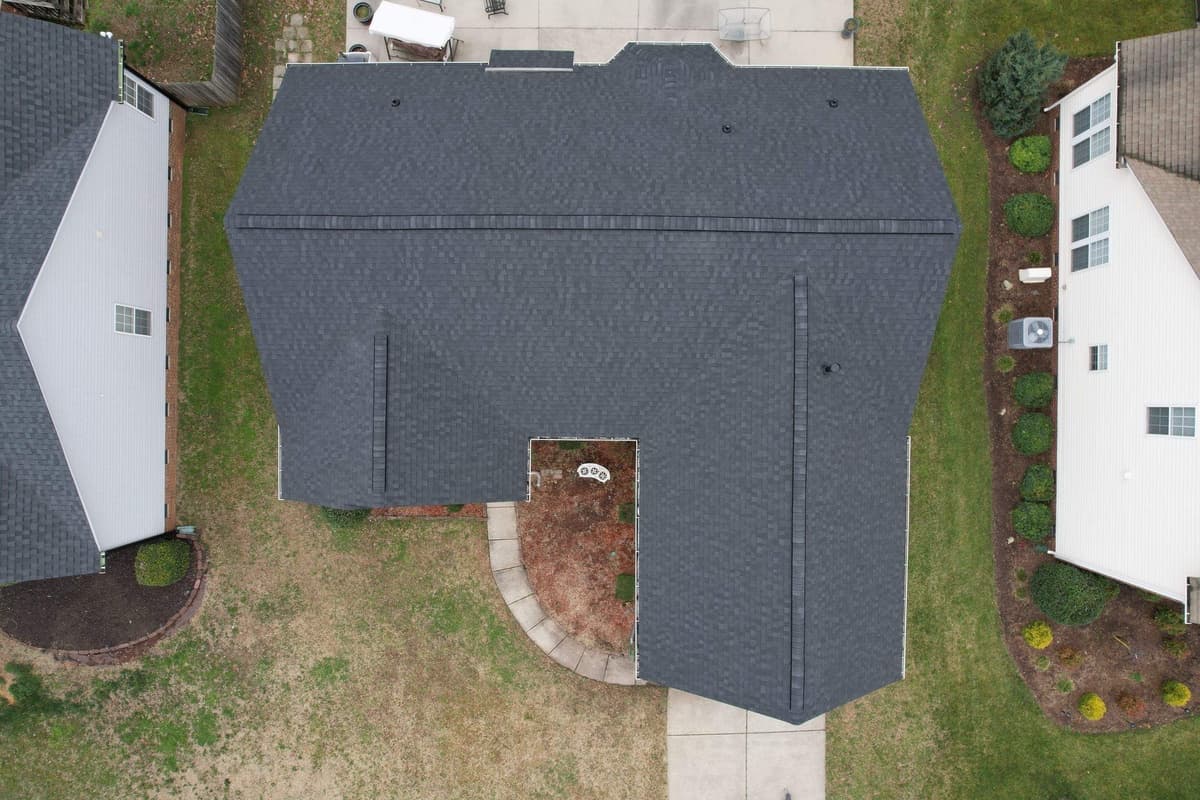
Charlotte, NC
new roof
Get a free roof inspection and honest assessment from Charlotte's most trusted roofing company.


