
Chimney Flashing Repair
Types, Materials & Process
Step, counter, base, apron flashing — what each one does and how leaks happen. For local Charlotte installation, see our Charlotte chimney flashing page.
Chimney flashing is the #1 leak source we diagnose on Charlotte roofs. Best Roofing Now repairs every flashing type — step flashing, counter flashing, base/apron flashing, cricket saddles on 24"+ chimneys, and mortar joint repointing. Aluminum (our default), lead (historic), and copper (premium) options. Historic chimney experienced across Matthews, Davidson, Dilworth, Fourth Ward, and Myers Park.
Chimney Flashing Services
Complete chimney flashing repair and replacement with manufacturer-approved materials.
Step Flashing Repair
Replace damaged, lifted, or missing step flashing tucked under each shingle course along chimney sides.
Counter Flashing Repair
Cut new reglet into mortar joint and install lead or aluminum counter flashing over step flashing.
Base Flashing Repair
Replace L-shaped front-apron base flashing with peel-and-stick ice shield underlayment beneath.
Cricket / Saddle Install
Build code-required water-diverting cricket for any chimney 24"+ wide measured perpendicular to roof slope.
Mortar Joint Repointing
Grind and repoint deteriorated mortar joints before flashing install — flashing in bad mortar fails early.
Emergency Leak Repair
24/7 response for active chimney leaks with same-day tarping and weather-tight temporary seal.
Signs Your Chimney Flashing Needs Repair
Don't ignore these warning signs of chimney flashing failure:
- Water stains on ceiling or walls near chimney
- Damp or musty smell in attic near chimney
- Visible rust on flashing
- Gaps between flashing and chimney masonry
- Missing or lifted step flashing
- Cracked or deteriorated caulk/sealant
- Water pooling behind chimney on roof
- Efflorescence (white staining) on chimney brick
10-Point Chimney Flashing Diagnostic
What our inspectors check on every Charlotte chimney before quoting the repair.
Count and inspect each step flashing piece along both sides of chimney
Check counter-flashing reglet depth and mortar joint condition
Inspect base (front apron) flashing for lifting and sealant cracks
Measure chimney width perpendicular to slope — confirm cricket presence if 24"+
Inspect cricket saddle flashing tie-ins if present
Test mortar joints with pick — soft or crumbling indicates repoint needed
Look for efflorescence (white staining) — indicates trapped moisture in brick
Check chimney crown/cap for cracks that allow water into flue
Examine roof decking in attic around chimney for staining and rot
Evaluate previous caulk/tar repairs — these fail at 3–5 years and are often the leak source
Flashing Material Decision Guide
Three flashing material tiers — match to home style, budget, and expected service life.
Aluminum (Standard)
Our default spec
20–25 year life, corrosion-resistant, widely available. Cost-effective for typical Charlotte residential work. Baked-enamel color match to roofing.
Lead (Historic)
Period-correct for historic homes
75+ year life, malleable for detailed custom work. Being phased out but still code-compliant. Typically specified for pre-1960 Charlotte chimneys.
Copper (Premium)
Historic + luxury spec
75+ year life, develops natural patina over 5–10 years. Typical for Historic Davidson, Historic Matthews, Dilworth, Myers Park, and custom lakefront builds.
Related services: Roof Repair · Roof Inspection · Roof Replacement · Skylight Install · Roof Ventilation · Soffit & Fascia
Chimney Leaking?
Get a free inspection and permanent repair — not another caulk-and-pray fix.
Chimney Flashing Projects
Browse completed chimney flashing repairs.
Charlotte, NC
new roof
Charlotte, NC
new roof
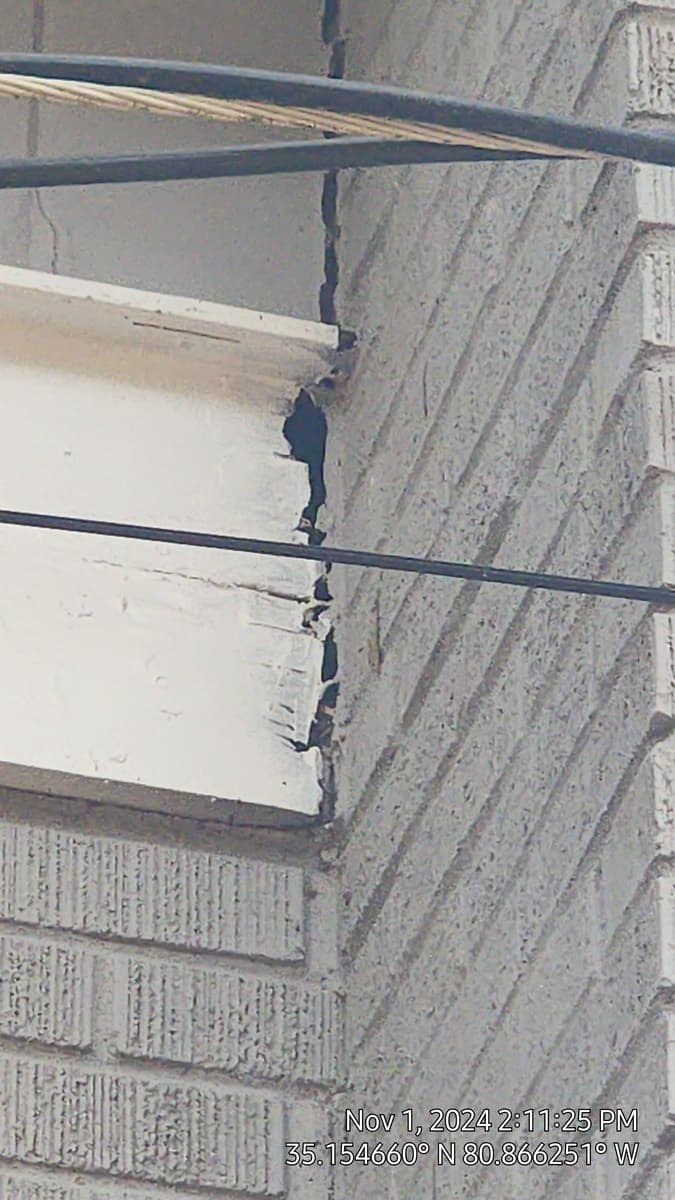
Charlotte, NC
new roof
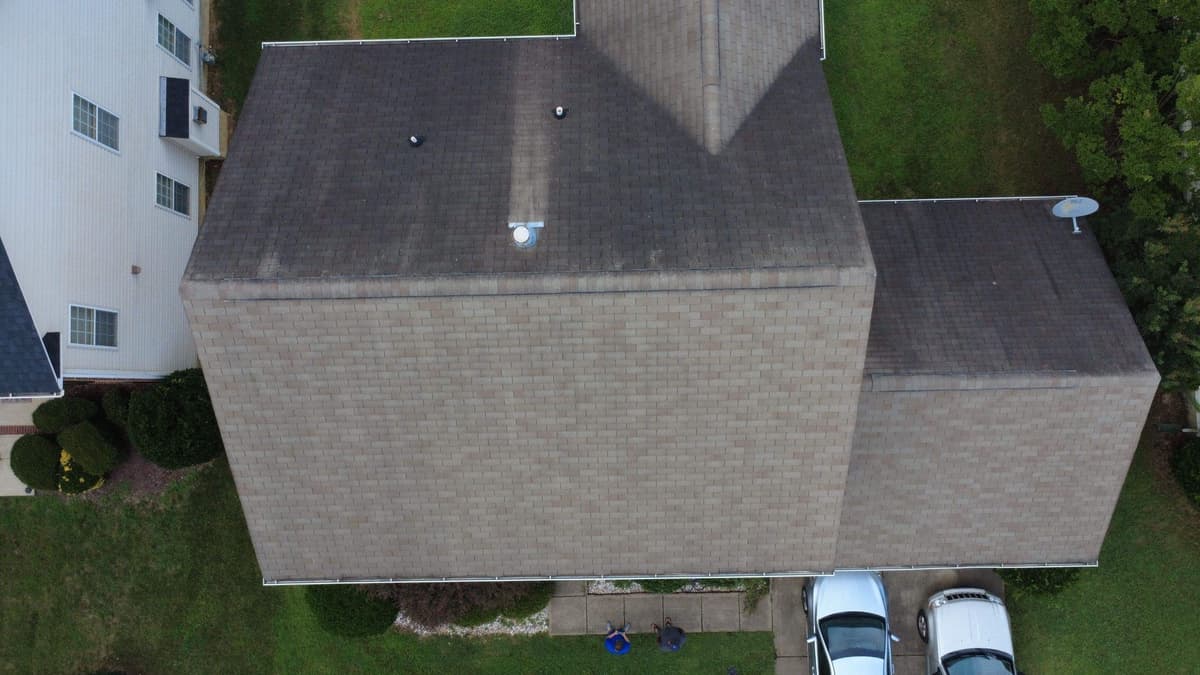
Charlotte, NC
work in progress
Chimney Flashing FAQs
What causes chimney flashing to fail in Charlotte NC?
Five common causes: (1) age — most flashing lasts 15–25 years in our climate before failing; (2) deteriorated mortar joints — counter flashing pulls out when mortar crumbles; (3) improper caulk/tar repairs from previous "handyman" patches (the #1 cause we see); (4) thermal expansion and contraction cycling loose fasteners and separating sealants; (5) home settling that opens gaps between chimney and roof plane. Storm damage and ice accumulation are secondary but meaningful in Piedmont NC.
How much does chimney flashing repair cost in Charlotte?
2026 Charlotte market ranges: minor repair (re-seal caulk, re-set one course of step flashing) $275–$550, moderate repair (partial step and counter flashing replacement) $650–$1,100, full flashing replacement (all four sides, new counter flashing with fresh reglet) $900–$1,800, cricket/saddle installation $450–$1,200 depending on chimney width, mortar repointing add-on $350–$900, copper flashing upgrade adds 40–70% over aluminum. Historic or masonry-sensitive chimneys with lead flashing can run 25–40% higher.
Can you repair flashing without replacing my roof?
Yes — chimney flashing repair is a standalone service. We carefully pry up the 2–3 shingle courses surrounding the chimney, remove old flashing, grind new counter-flashing reglet into mortar joints, install new step flashing under each shingle course, seat counter flashing into reglet with lead-free flashing tape or proprietary sealant, and re-nail the shingles back down. The job is contained to the chimney area — no other roof work required.
What is a chimney cricket and does my Charlotte home need one?
A cricket (or "saddle") is a small peaked ridge behind wide chimneys that diverts water around the chimney instead of letting it dam against the upslope face. NC building code and IRC R1003.20 require a cricket for any chimney measuring 30"+ perpendicular to the roof slope — and we recommend them at 24"+ regardless. Without a cricket, water pools at the chimney's upslope face, saturates flashing from behind, and causes the #1 leak pattern we see on Charlotte wide-chimney homes.
How long does chimney flashing repair take?
Typical job times: minor caulk and re-set 2–4 hours, standard flashing replacement 4–6 hours, full replacement with new counter flashing reglet 6–8 hours, cricket install adds 3–5 hours, mortar repointing adds 2–4 hours. Most Charlotte homes are done in a single day. Weather delays — active rain, freezing temperatures — push into a second visit. We plan flashing work outside of active storms and freeze-thaw days.
Should I use a roofer or mason for chimney flashing?
A roofer (us) for the flashing work, a mason if the brick or mortar itself has failed. Simple flashing replacement — including cutting a new counter-flashing reglet into sound mortar — is roofer scope. If mortar joints are crumbling beyond patching, or the chimney crown is cracked, or bricks are spalling, a mason should handle masonry first and then we handle flashing. We refer to local Charlotte masons when needed and coordinate scheduling.
What flashing material should I choose — aluminum, lead, or copper?
Aluminum is our default for Charlotte residential work — affordable, corrosion-resistant, and 20–25 year life. Lead is the longest-lasting traditional choice (75+ years) but is being phased out; we still install it for historic homes and where code allows. Copper is the premium option — 75+ year life, beautiful natural patina, typically specified for Historic Davidson, Historic Matthews, Dilworth, and custom lakefront homes. Avoid bare steel flashing — it rusts through in 8–12 years.
Do you handle historic chimney flashing in Charlotte?
Yes. We work regularly on pre-1960 chimneys across Historic Matthews, Historic Davidson, Dilworth, Fourth Ward, Elizabeth, Plaza Midwood, and Myers Park. Historic work often requires: (1) lead or copper flashing to match original detailing, (2) lime-based mortar repointing (not Portland cement), (3) coordination with Historic Preservation Boards in Davidson and Charlotte, (4) preservation of visible corbel brickwork. We photograph historic conditions before starting and use period-correct methods where possible.
Can you fix the leak without tearing off the chimney?
Almost always yes. Chimney leaks are rarely structural — they are flashing, mortar, or crown failures. Full chimney teardown and rebuild is reserved for severe mortar deterioration, leaning, or structural frost damage. For the vast majority of Charlotte chimney leaks, we solve the problem with flashing replacement, mortar repointing, and crown/cap repair — no brick removal required. If teardown is genuinely needed, we refer to a specialty mason.
Do you handle insurance claims for chimney flashing damage?
Yes, when the flashing failure is storm-driven (hail-dented counter flashing, wind-lifted step flashing, tree-fallen chimney damage). We provide photo documentation, Xactimate-compatible estimates, and meet your adjuster on-site. Age-related flashing wear is not usually covered by homeowner policies — we tell you up front before filing, to protect your insurance relationship and prevent claim denial.
Stop Your Chimney Leak
Get a free inspection and professional chimney flashing repair.
No pressure. No obligation. Just honest advice from a family-owned business.