

Ridge Vent Installation
Types, Sizing & Code
Vent types, balanced 1:300 sizing, and IRC §R806 compliance. For local Charlotte installation, see our Charlotte ridge vent page.
Ridge vent installation across Charlotte NC and Lake Norman — external-baffle shingle-over design (GAF Cobra Snow Country, Air Vent ShingleVent II, Owens Corning VentSure) balanced 50/50 with matched soffit intake to achieve NC code IRC §R806 1:300 NFVA ratio. Drops Charlotte attic temps 20–40°F in summer, cuts cooling bills 10–15%, extends shingle life 3–7 years, and preserves manufacturer warranty compliance. Retrofit or bundled with re-roof.
Benefits of Ridge Vents
Why ridge vents are the best choice for Charlotte attic ventilation.
Reduces Attic Heat 20–40°F
Hot air exits through ridge, dramatically cooler attic in Charlotte summers when attics hit 140–160°F with inadequate ventilation.
Lowers Summer Energy Bills 10–15%
Cooler attic reduces AC load — Charlotte summer savings typically $200–$450/year on 2,000–3,000 sq ft homes.
Extends Shingle Life 3–7 Years
Underventilated attics cook shingles from below, accelerating granule loss and cracking — ventilation is the #1 preventable cause of premature shingle failure.
Prevents Moisture & Mold
Winter condensation in attics causes mold, rotted decking, and drywall damage. Ridge vent exhausts moisture year-round.
Invisible Clean Profile
Shingle-over ridge vent is nearly invisible from street level — no box vents or turbines to clutter the roofline.
External Baffle Weather Protection
Quality vents (GAF Cobra, Air Vent ShingleVent II) include external baffle that blocks wind-driven rain and snow infiltration.
How Balanced Ventilation Works
Air Enters Soffit
Fresh air enters through perforated or vented soffit panels at the eaves (intake).
Air Rises via Stack Effect
As attic air warms, natural buoyancy drives it up toward the roof peak.
Air Exits Ridge Vent
Warm, moist air escapes through the continuous ridge vent along the roof peak (exhaust).
Continuous Balanced Flow
50/50 intake-to-exhaust ratio creates constant year-round airflow that keeps the attic dry and cool.
NC Code Formula: 1 sq ft NFVA per 300 sq ft attic (balanced 50/50) — or 1:150 unbalanced. A 1,500 sq ft attic needs 5 sq ft NFVA total (720 sq in), split evenly between soffit intake and ridge exhaust.
Ridge Vent Types & 2026 Pricing
Four vent systems — shingle-over external baffle is our Charlotte default.
Shingle-Over Ridge Vent (External Baffle)
Our default spec. External baffle deflects wind-driven rain. Covered by matching ridge-cap shingles for seamless look. GAF Cobra Snow Country, Air Vent ShingleVent II, Owens Corning VentSure.
Price: $10–$18/linear ft installed
Best For: Asphalt shingle roofs (95% of Charlotte homes)
Internal Baffle Ridge Vent
Older design with internal baffle only. Lower cost but less weather resistant than external-baffle products. Discontinued by most major manufacturers.
Price: $7–$12/linear ft installed
Best For: Budget retrofits, simple roof geometries
Aluminum Strip Ridge Vent
Metal ridge vent for standing seam and exposed-fastener metal roofs. Integrates with panel ridge cap system.
Price: $14–$22/linear ft installed
Best For: Metal roofs
Low-Profile Continuous Ridge Vent
Ultra-low-profile design for architectural sensitivity (historic districts, HOAs with visible-ridge restrictions).
Price: $13–$20/linear ft installed
Best For: Historic Davidson, Historic Matthews, Dilworth, Myers Park
10 Common Ridge Vent Failure Modes
What we check on every Charlotte ventilation assessment — fixing root causes, not just installing more vent.
Intake soffit vents blocked by insulation (attic blown over vent chutes)
Ridge slot cut too narrow (under 1.5" per side of ridge board)
Ridge slot cut too wide — compromises structural integrity
No matching soffit intake — ridge vent alone does not work
Painted-over or paint-clogged soffit vents
Ridge vent installed over gable roof without ridge (impossible)
Undersized net free vent area (NFVA) vs attic square footage
Cap shingles nailed through the ridge vent body (blocks airflow)
Competing ventilation (box vents + ridge vent short-circuits airflow)
Bugs, bird nests, or debris accumulated in vent channel over time
Related services: Roof Ventilation Overview · Soffit Repair & Vented Soffit · Free Roof Inspection · Roof Replacement · Architectural Shingles
Improve Your Attic Ventilation
Free NFVA calculation and ventilation assessment — shingle warranty depends on it.
Ridge Vent Projects
Browse completed ridge vent installations.
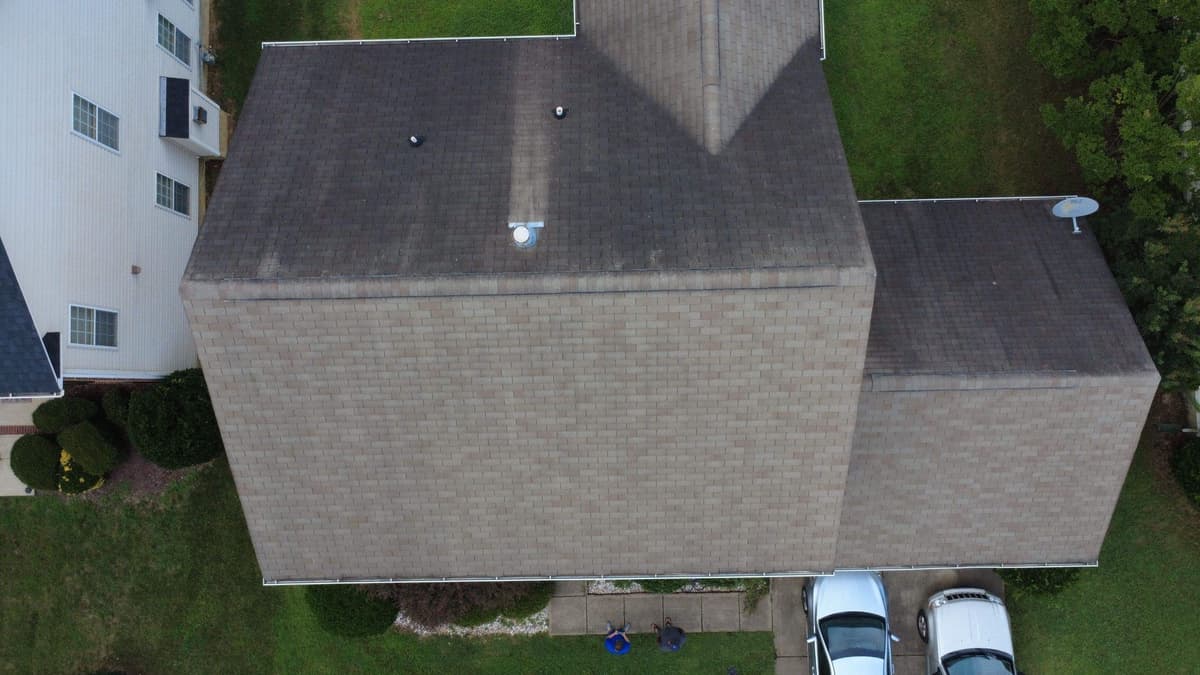
Charlotte, NC
work in progress
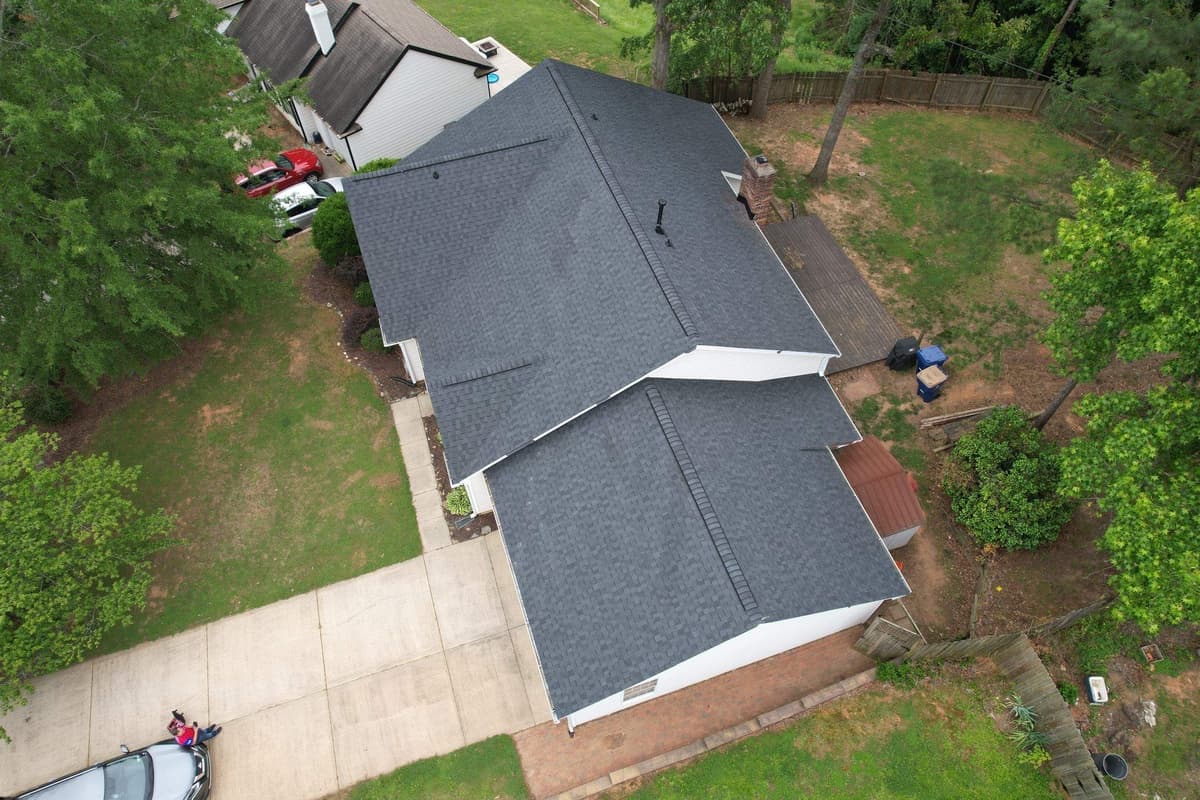
Charlotte, NC
new roof
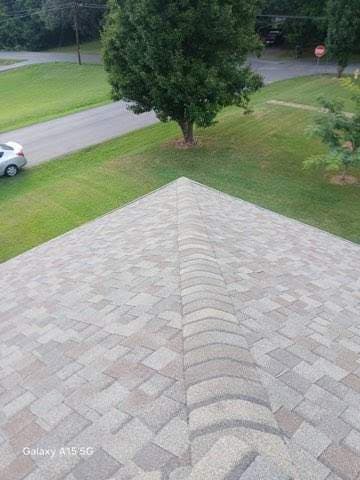
Charlotte, NC
new roof
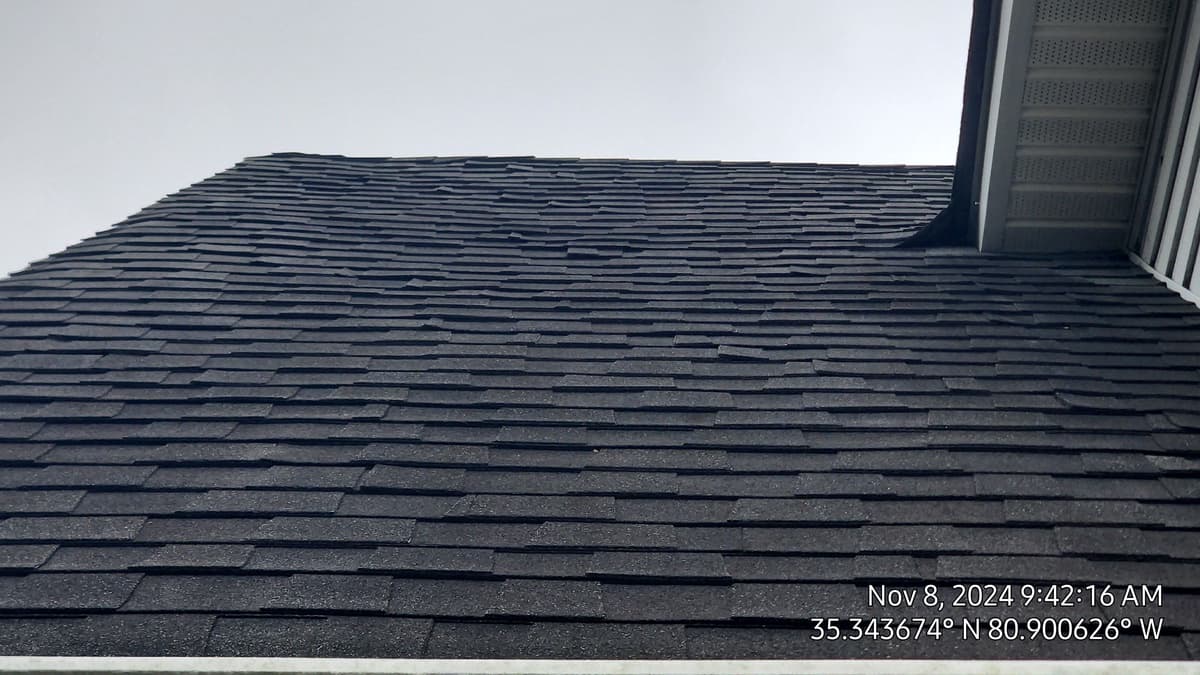
Charlotte, NC
new roof
Ridge Vent FAQs
What is a ridge vent and why does my Charlotte home need one?
A ridge vent is a continuous exhaust vent installed along the peak of your roof, allowing warm moist attic air to escape. Paired with matching soffit intake vents, it creates the balanced ventilation required by NC code (IRC §R806) to prevent moisture damage, shingle deterioration, and summer heat buildup. Charlotte attics without balanced ventilation commonly reach 140–160°F in summer — this cooks shingles from below, cutting roof life 25–40% and adding 10–15% to summer cooling bills.
How much does ridge vent installation cost in Charlotte NC?
2026 installed pricing: shingle-over external-baffle vent $10–$18/linear ft (our default), aluminum strip for metal roofs $14–$22/ft, low-profile architectural $13–$20/ft. A typical Charlotte home has 30–50 linear feet of ridge, so expect $400–$900 retrofit installation. Bundled with a re-roof project the install is often $300–$600 extra (labor overlap). Ventilation inspection and NFVA calculation are included with every estimate at no cost.
What does NC code require for attic ventilation?
NC building code follows IRC §R806: 1 square foot of net free vent area (NFVA) per 150 square feet of attic floor (unbalanced), OR 1:300 with balanced 50/50 split between intake (soffit) and exhaust (ridge). The 1:300 balanced spec is modern standard. Example: 1,500 sq ft attic needs 5 sq ft NFVA total (720 sq in) split 50/50 between soffit intake and ridge exhaust. We calculate this on every Charlotte estimate — underventilation voids most shingle manufacturer warranties.
Can ridge vents be retrofitted to my existing Charlotte roof?
Yes, on any gable, hip, or dutch-gable roof with a continuous ridge. We cut a 1.5"–2" slot along each side of the ridge board, remove existing cap shingles, install the ridge vent, and replace with matching cap shingles. Typical retrofit is 1–2 days on a standard 2,400 sq ft Charlotte home. Cannot retrofit to: flat roofs (use commercial exhaust systems), shed roofs without a ridge line, or homes with severely inadequate soffit intake (soffit fix comes first).
Do I need both ridge vents and soffit vents?
Yes, always. Ridge vent alone does nothing without matching soffit intake — air has nowhere to enter the attic, so there is no pressure differential to drive exhaust. This is the #1 ventilation failure mode we diagnose on older Charlotte homes: a ridge vent exists but soffits are painted over, blocked by insulation, or missing. We inspect both intake and exhaust during every estimate and recommend balancing if one is undersized.
Are ridge vents better than box vents or turbines?
Generally yes. Ridge vents provide uniform ventilation across the entire attic (continuous along the peak) vs box vents (discrete points that create ventilation "dead zones"). No moving parts to fail (turbines bearings fail at year 10–15). Lower visual profile. Better weather protection with external-baffle design. The one exception: very short ridge lengths (under 15 ft) may not provide adequate NFVA — we add box vents as supplemental exhaust in those cases, but NEVER mix ridge vent with turbines (they short-circuit each other).
Will ridge vents leak during Charlotte thunderstorms?
Not when properly specified and installed. Quality external-baffle ridge vents (GAF Cobra Snow Country, Air Vent ShingleVent II, Owens Corning VentSure) are specifically engineered to block wind-driven rain at up to 110 MPH. Leaks trace to: (1) improper slot cut — too wide or too close to edges; (2) missing or incorrectly installed cap shingles; (3) paint-clogged baffles; (4) cheap internal-baffle products in high-exposure locations. We spec external-baffle products on every Charlotte job and install per manufacturer instructions.
Shingle-over vs exposed ridge cap — which is better?
Shingle-over (covered by matching cap shingles) wins on every axis for residential roofs: (1) seamless appearance blending with the roofline; (2) better UV protection of the vent body (plastic baffles degrade when exposed); (3) warranty-compliant with most shingle manufacturers; (4) price parity with exposed-ridge products. Exposed aluminum ridge caps are appropriate on metal roofs and commercial shed designs but uncommon for residential.
Does my shingle warranty require balanced ventilation?
Yes — every major shingle warranty (GAF, CertainTeed, Owens Corning, Malarkey, Atlas) explicitly requires ventilation meeting NC code IRC §R806. Inadequate ventilation is the #1 manufacturer warranty denial reason. Specifically: a 20-year-old shingle warranty claim can be denied because an attic was underventilated from year 1. Our ridge vent installation includes written NFVA calculation documentation kept on file to support future warranty claims.
Can ridge vents be added during a re-roof?
Yes — this is the ideal time. During tear-off we: (1) expose the ridge board for clean slot cutting; (2) verify soffit intake before installing exhaust (avoiding the mismatch problem); (3) integrate ridge vent flashing with new underlayment for weather-tight seal; (4) install matching ridge-cap shingles per manufacturer spec. Adding ridge vent during a re-roof costs $300–$600 incremental — significantly cheaper than retrofitting later. We always recommend the upgrade when re-roofing a ventilation-lacking home.
What if my existing soffit vents are inadequate for a ridge vent install?
We fix soffits first. Common Charlotte issues: (1) solid soffit with no vents — we install continuous perforated or center-strip venting; (2) vented soffit painted over — we clean or replace; (3) attic insulation blocking soffit intake from inside — we install insulation baffles (ProperVent, DuraBaffle) to maintain clearance; (4) undersized vents — we upsize to code-required NFVA. Soffit work is quoted separately but almost always required before ridge vent to avoid the #1 failure mode. See our /fascia-soffit-repair page for specifics.
Ventilate Your Attic Properly
Get a free NFVA calculation and ridge vent installation estimate.
No pressure. No obligation. Just honest advice from a family-owned business.