
Roofing Tips & Guides
Expert Roofing Advice for Charlotte Homeowners
Learn from Charlotte's trusted roofing experts. Tips on maintenance, repair, replacement, and protecting your home from the elements.
Ice & Snow Damage? Get 10% off repairs with a free inspection.
Learn from Charlotte's trusted roofing experts. Tips on maintenance, repair, replacement, and protecting your home from the elements.
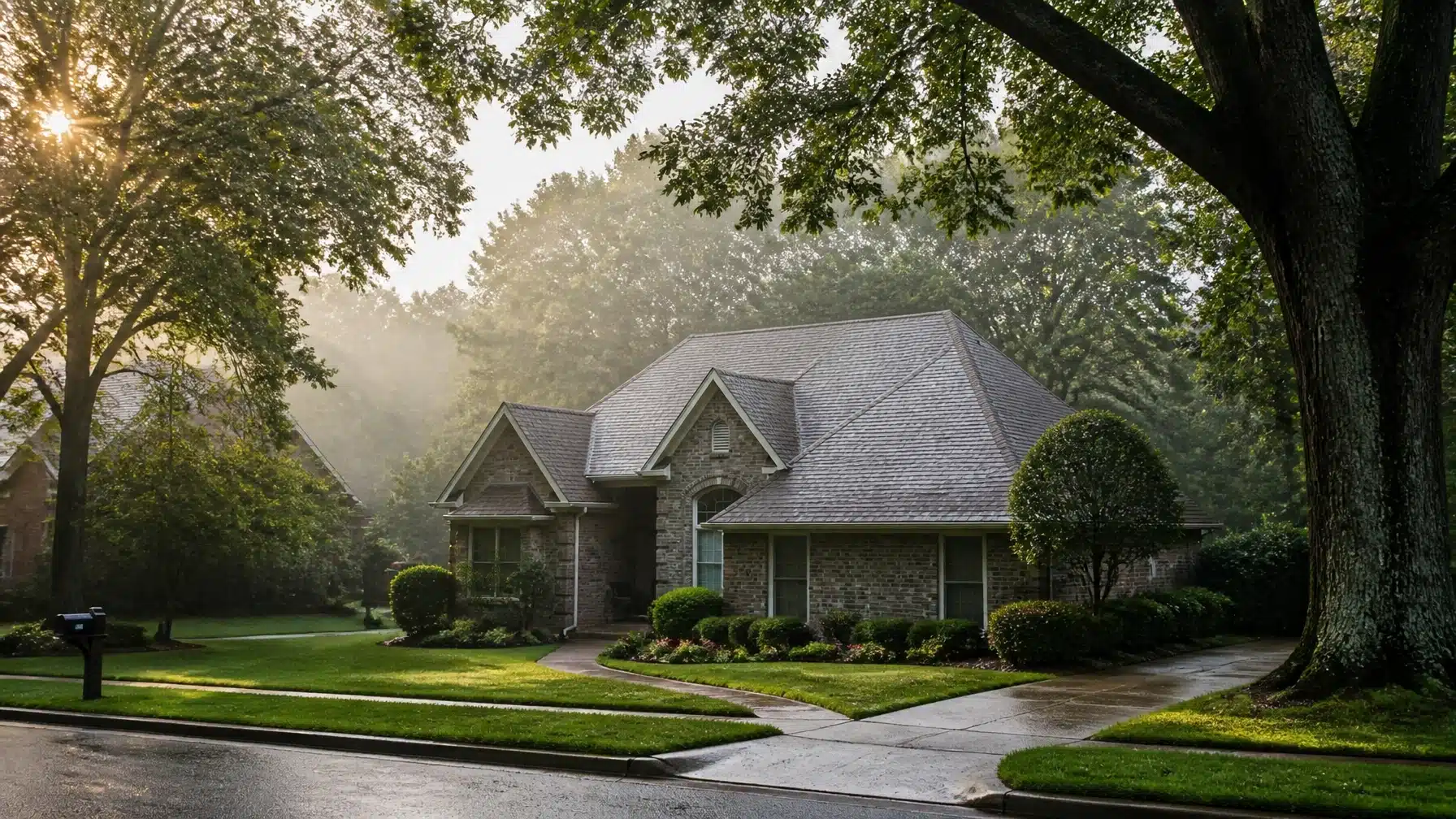
If you live in Charlotte, you know the feeling. You walk outside in July, and the air feels like a warm, wet blanket. We call it "The Queen City Humidity." It makes our gardens grow and our hair frizz. But while you’re cooling off in the AC, your roof is fighting a silent battle.
In North Carolina, the average humidity stays around 67% all year. That means your roof is almost always damp. It never gets a chance to fully dry out. This moisture is the biggest enemy of your home. It eats away at shingles. It rots wood. It even makes your energy bills go up.
At Best Roofing Now, we see the results of this humidity every day. We’ve climbed on thousands of roofs from Lake Norman to Ballantyne. We’ve seen brand-new roofs fail in just ten years because of these common mistakes.
Here are the 7 biggest mistakes Charlotte homeowners make with humidity and how you can fix them.
Have you noticed dark green or black streaks on your roof? Many homeowners think it’s just dirt or soot from the city. They ignore it for years. This is mistake number one.
Those streaks are usually an algae called Gloeocapsa magma. In a humid place like Charlotte, this algae thrives. It loves the moisture, and it loves to eat the limestone filler in your asphalt shingles.
When algae grows on your roof, it holds onto moisture. It turns your shingles into a wet sponge. This leads to several problems:
Don't reach for the pressure washer! High-pressure water will blast the granules off your shingles and ruin your roof. Instead, look for shingles that have "StainGuard" or copper-infused granules. Copper is a natural enemy of algae. If you already have streaks, call a professional for a "soft wash" cleaning.

Go into your attic right now. Look at the edges where the roof meets the floor. Do you see pink or white insulation packed tightly into the corners? If you do, you’ve made a big mistake.
Soffit vents are the "intake" for your roof’s breathing system. They let cool, fresh air into the attic. If you block them with insulation, the air cannot move.
In Charlotte’s humidity, your attic needs to "breathe." If the soffit vents are blocked, humid air gets trapped. It sits in your attic and turns into condensation.
As the expert team at CertainTeed says, "A balanced ventilation system is critical. Without intake at the eaves, your exhaust vents at the top won't work correctly."
You need to install "baffles." These are plastic or foam trays that keep the insulation away from the vents. They create a clear path for air to flow from the outside into your attic. If you aren't sure if your vents are clear, we can check them during a free roof inspection.

This is one of the most common mistakes we see in older Charlotte homes. When a contractor installs a bathroom vent, they sometimes just stick the pipe into the attic. They don't run it all the way to the outside.
Think about your hot morning shower. All that steam is pure humidity. If that steam goes into your attic, it hits the cold wood of your roof deck. It turns back into water instantly.
This leads to:
Your bathroom and kitchen fans must vent directly to the outside. This usually involves cutting a small hole in the roof or a side wall and installing a proper vent cap. It’s a simple fix that saves your roof from rotting from the inside out.
Most people only look at their roof from the ground. They wait for a leak to call a roofer. But in a humid climate, the damage often starts under the shingles.
When humidity levels are high, your attic can actually "sweat." This happens when the warm air inside hits the underside of your roof.
When your attic sweats, the first sign is usually rusted nails. If you see orange or brown streaks on the wood in your attic, you have a humidity problem. Eventually, this moisture causes the plywood decking to swell and rot.
If your decking is soft, your shingles won't stay attached. During a roof replacement, we often have to replace the wood because it’s been ruined by years of hidden humidity.
Check your attic twice a year. Look for water droplets on the wood or dark spots that look like mold. If the air feels "heavy" or smells musty, you need better ventilation. We use quality plywood decking on all our replacements to ensure a strong foundation.

Some homeowners think that if a little ventilation is good, a lot must be better. They might have a ridge vent, gable vents, and a powered fan all on the same roof. This is a mistake called "short-circuiting."
Roof ventilation works on a specific path. Air should come in the bottom (soffits) and go out the top (ridge). If you have too many different types of vents, they start fighting each other.
For example, a powered fan might pull air from the ridge vent instead of the soffit. This means the bottom of your roof never gets fresh air. The humid air stays trapped in the corners, leading to rot.
Stick to one system. Usually, a combination of soffit vents and a continuous ridge vent is the best for Charlotte homes. It uses natural physics to move air without needing electricity.
According to the NRCA (National Roofing Contractors Association), "A balanced system of intake and exhaust is the only way to ensure the entire attic space is ventilated."
Even if you have the best vents in the world, your roof can still fail if your house is "leaky." Many homes have small gaps around light fixtures, attic hatches, and plumbing pipes.
In the summer, you run your AC. In the winter, you run your heat. If your ceiling isn't sealed, that air leaks into the attic. When cool AC air meets the hot, humid Charlotte air in your attic, it creates moisture. It’s like a cold soda can sweating on a hot day.
Before you add more insulation or vents, you should "air seal" your attic. This involves using spray foam or caulk to close the gaps between your living space and your attic. This keeps the humidity in your house (where the AC can handle it) and out of your roof system.
You might think gutters only matter when it rains. But in Charlotte, gutters can affect your roof even when the sun is out. If your gutters are full of leaves and pine needles, they hold onto water.
Full gutters act like a wet rag sitting against the edge of your roof. This moisture seeps into the "fascia" boards and the edge of your shingles. Over time, this leads to "wicking," where water travels up into your roof.
In our humid weather, wet leaves don't dry out. They stay damp for weeks, inviting bugs and rot to your roofline.
Clean your gutters at least twice a year. If you have a lot of trees, like many neighborhoods in Myers Park or Matthews, you might need it four times a year. Or, consider gutter installation with leaf guards to keep the water flowing.
At Best Roofing Now, we don't just "slap on shingles." We look at your whole roof as a system. We understand the science of humidity because we live and work right here in the Charlotte area.
When we do a residential roofing project, we follow a strict process:
Being veteran-owned means we care about the details. We don't use high-pressure sales tactics. We just give you the facts so you can protect your biggest investment.
Your roof is your home's first line of defense. In Charlotte, that defense is under attack every single day by moisture. If you haven't had your roof checked in the last two years, now is the time.
Mistakes are expensive. A phone call is free.
Contact Best Roofing Now today for a Free Inspection and Consultation. We’ll climb up there, take the photos, and show you exactly how your roof is handling the Charlotte humidity.
✅ Free Inspections
✅ Lifetime Warranties
✅ Veteran Owned & Operated
Schedule Your Free Inspection Now
{“@type”:”BlogPosting”,”image”:”https://cdn.marblism.com/uHrigTgzvtH.webp”,”author”:{“name”:”James Turner”,”@type”:”Person”},”@context”:”https://schema.org”,”headline”:”7 Mistakes You’re Making with Charlotte Humidity (and How to Protect Your Roof)”,”publisher”:{“logo”:{“url”:”https://bestroofingnow.com/logo.png”,”@type”:”ImageObject”},”name”:”Best Roofing Now”,”@type”:”Organization”},”articleBody”:”If you live in Charlotte, you know the feeling. You walk outside in July, and the air feels like a warm, wet blanket. We call it ‘The Queen City Humidity.’ It makes our gardens grow and our hair frizz. But while you’re cooling off in the AC, your roof is fighting a silent battle… [Content continues with the 7 mistakes and solutions]”,”description”:”Learn the most common roofing mistakes homeowners in Charlotte and Lake Norman make regarding humidity, and how to fix them to prevent mold, rot, and high energy bills.”,”datePublished”:”2026-06-07″}
Best Roofing Now
Charlotte's trusted roofing experts since 2019
Based on this article, you may be interested in these services.
We proudly serve these Charlotte-area communities with professional roofing services.
View All Service Areas →See our recent roofing work across the Charlotte metro area.

Charlotte, NC
storm damage

Charlotte, NC
new roof

Charlotte, NC
new roof

Charlotte, NC
new roof
Get a free roof inspection and honest assessment from Charlotte's most trusted roofing company.


