
Roofing Tips & Guides
Expert Roofing Advice for Charlotte Homeowners
Learn from Charlotte's trusted roofing experts. Tips on maintenance, repair, replacement, and protecting your home from the elements.
Ice & Snow Damage? Get 10% off repairs with a free inspection.
Learn from Charlotte's trusted roofing experts. Tips on maintenance, repair, replacement, and protecting your home from the elements.
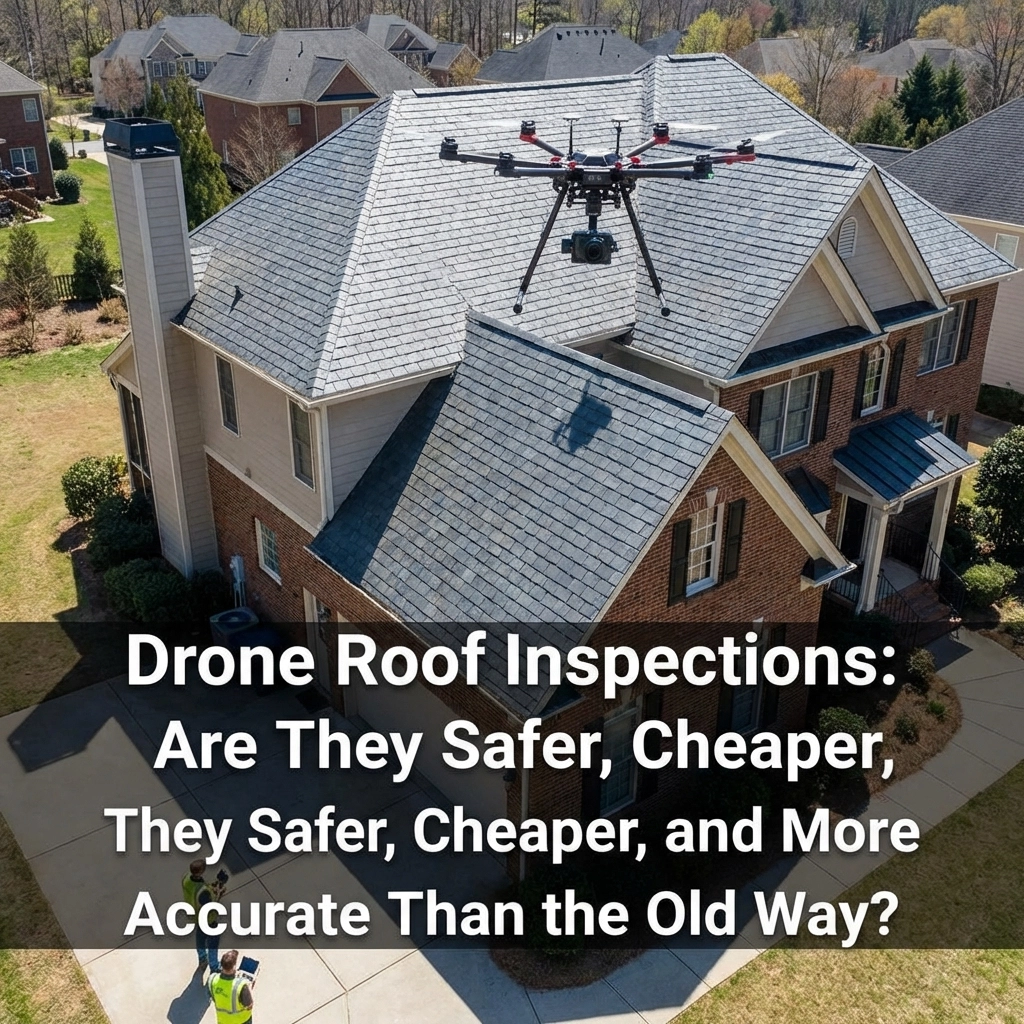
Picture this: It's a typical Tuesday morning in Charlotte, and you need your roof inspected after last week's hailstorm. Two contractors show up at your door.
The first contractor grabs a ladder and starts climbing onto your potentially damaged roof. He's walking around up there, stepping on shingles that might be loose, checking gutters by hand, and taking notes on a clipboard.
The second contractor pulls out what looks like a small helicopter, fires it up, and sends it soaring over your house. Within 10 minutes, she's got high-definition photos of every square inch of your roof displayed on her tablet.
Which approach would you choose?
If you're like most Lake Norman homeowners we work with, you're probably thinking the drone option sounds pretty amazing. And you'd be right.
Let's be honest about traditional roof inspections. They've worked for decades, but that doesn't mean they're perfect.
When we inspect roofs the old-fashioned way, here's what typically happens:
First, we set up ladders and climb onto your roof. This immediately puts our inspector at risk of falls – and according to the Occupational Safety and Health Administration, roofers face a fatality rate more than ten times higher than workers in other industries.
Then we walk around your roof, looking for problems with our eyes and checking things by hand. We might poke at soft spots, lift shingles to check underneath, and take photos with a regular camera.
The whole process takes 45 minutes to an hour for most homes. And here's the kicker: We can only inspect what we can safely reach and see clearly.
Traditional inspections have some serious blind spots:
Hidden damage in roof valleys. These are the V-shaped areas where two roof slopes meet. They're critical for water drainage, but they're often hard to access safely.
Small cracks and hairline damage. When you're looking at shingles from ground level or while balancing on a roof, subtle damage gets missed.
Structural issues that aren't visible from below. Things like sagging decking or compromised roof support can be tough to spot during a standard walkthrough.
Areas blocked by satellite dishes or HVAC units. We can work around them, but it's not always safe or thorough.
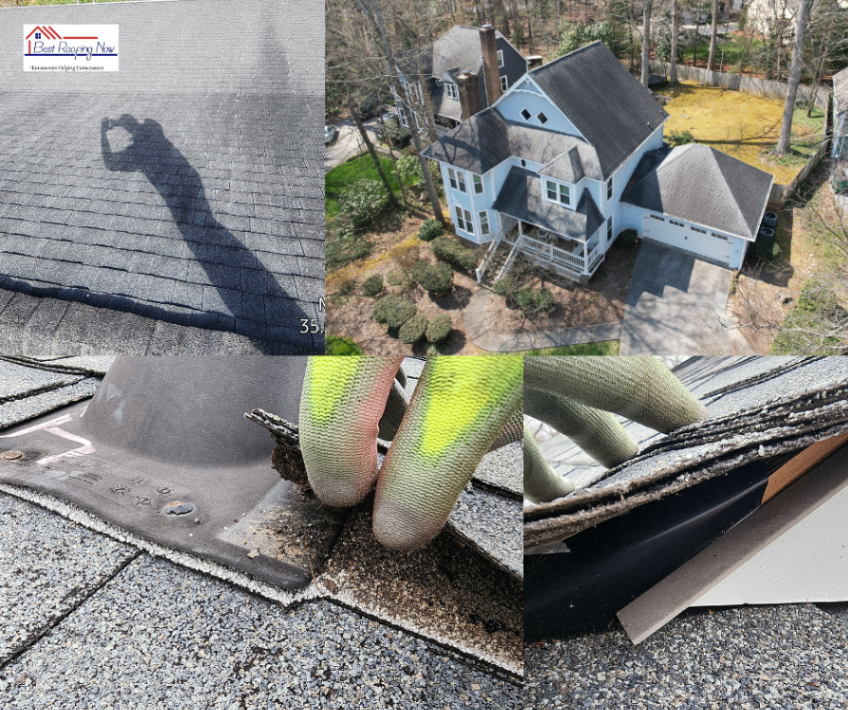
In Charlotte's climate, these missed problems can turn into major headaches fast. Our summer thunderstorms and winter freeze-thaw cycles don't give damaged roofs any breaks.
Now let's talk about how drone technology changes everything.
Modern roof inspection drones aren't toys – they're sophisticated pieces of equipment with 4K cameras, thermal imaging capabilities, and GPS precision that can hover steady in 15-mile-per-hour winds.
Here's how a typical drone inspection works at Best Roofing Now:
We arrive at your property and set up our drone equipment. The whole setup takes about 5 minutes.
Our certified drone pilot (yes, we're FAA licensed) launches the aircraft and flies a pre-planned route around your house. The drone captures hundreds of high-resolution photos from multiple angles.
While the drone is flying, we're watching live footage on our tablet and can spot issues in real-time. If we see something concerning, we can direct the drone to take additional close-up shots.
The entire flight usually takes 10-15 minutes. Then we spend time with you, reviewing the footage and explaining what we found.
Let's cut to the chase – drone inspections are dramatically safer than traditional methods.
With traditional inspections, we're climbing ladders and walking on potentially damaged roofs. Every year, roofing professionals get injured or worse from falls. And it's not just the pros at risk. Homeowners sometimes get hurt too when contractors accidentally kick debris off the roof or damage gutters that later fail.

Drone inspections eliminate these risks completely. Our inspector never leaves the ground. There's no risk of falls, no chance of accidentally damaging weak roof materials, and no worry about someone getting hurt from falling debris.
This is especially important here in the Charlotte metro area, where many of our Lake Norman homes have steep rooflines, multiple levels, and complex architectural features that make traditional inspections particularly risky.
Here's where drones really shine – they see things human eyes miss.
High-resolution drone cameras capture details that are impossible to spot from ground level or even while walking on the roof. We're talking about hairline cracks in shingles, subtle color variations that indicate water damage, and missing granules that signal aging.
The thermal imaging capability is a game-changer. It can detect temperature variations that indicate moisture infiltration, air leaks, or insulation problems – issues that are completely invisible to the naked eye.
Plus, we get a complete photographic record of your entire roof. Every photo is timestamped and GPS-tagged, so we know exactly where each image was taken. This documentation is invaluable for insurance claims, warranty work, or tracking how problems develop over time.
Let's be transparent here – drone inspections have limitations.
They excel at visual assessment, but they can't do everything a hands-on inspection can. For example:
This is why the best approach often combines both methods. We use drones for comprehensive visual documentation and safety, then follow up with targeted hands-on inspection of specific problem areas we've identified.
Now let's talk money – because that's probably on your mind.
Drone roof inspections in the Charlotte area typically cost between $200 and $350. Traditional inspections run about the same range.
But here's where it gets interesting. Drone inspections often provide better value because:
They're faster. What takes an hour with traditional methods takes 15 minutes with a drone. Less time on-site means lower labor costs.
They're more thorough. You get photos of 100% of your roof, not just the areas that are safely accessible.
They provide better documentation. Those high-res photos are incredibly valuable for insurance claims, contractor bids, or future reference.
They reduce follow-up costs. When we catch problems early with detailed drone footage, repairs are typically less expensive than waiting until issues get worse.

Living in Charlotte and the Lake Norman area means dealing with some serious weather challenges:
Summer thunderstorms can produce hail, high winds, and heavy rain that damage roofs in ways that aren't immediately obvious.
Hurricane season brings the potential for significant roof damage, often in areas that are hard to inspect safely after a storm.
Winter ice storms can cause ice dams and freeze-thaw damage that's subtle but serious.
High humidity year-round creates conditions for mold and algae growth that can compromise roofing materials.
Drone inspections are particularly valuable in our climate because they can document storm damage immediately after severe weather, when it's often unsafe for inspectors to climb on potentially damaged roofs.
So when should you choose drone inspection versus traditional inspection?
Choose drone inspection when:
Choose traditional inspection when:
Choose both when:
Drone technology for roof inspections is advancing rapidly. Here's what we're seeing:
Better cameras with higher resolution and improved zoom capabilities
Advanced thermal imaging that can detect moisture and insulation issues more accurately
Artificial intelligence that can automatically identify and flag potential problems
3D mapping that creates detailed models of your roof structure
Real-time data processing that provides instant analysis during the inspection
At Best Roofing Now, we're constantly upgrading our equipment to provide the best possible service to our Charlotte and Lake Norman clients.
We've been using drone inspections for over two years now, and the feedback from homeowners has been overwhelmingly positive.
"I was amazed at how quickly they could show me exactly what was wrong with my roof," said Jennifer from Cornelius. "The photos were so clear, I could see every damaged shingle."
Mark from Huntersville told us, "After that hailstorm last spring, I was nervous about having someone climb up on my potentially damaged roof. The drone inspection gave us all the information we needed without any risk."
Here's something that might surprise you – insurance companies are increasingly embracing drone inspections.
Why? Because the detailed photographic documentation drones provide makes claims processing faster and more accurate. Insurance adjusters can review high-resolution photos of your entire roof without having to schedule site visits or climb on potentially dangerous damaged roofs themselves.
Many insurance companies now accept drone inspection reports for claims processing, and some even prefer them over traditional inspection methods.

When you schedule a drone inspection with us, here's exactly what happens:
Day of Inspection:
We arrive with our certified drone pilot and inspector. We explain the process and address any questions you have.
Pre-flight Setup:
We check weather conditions, battery levels, and flight restrictions. Safety is always our first priority.
The Flight:
Our drone captures hundreds of high-resolution photos from multiple angles and elevations. This typically takes 10-15 minutes.
Immediate Review:
While the drone is in the air, we're watching live footage and can spot issues in real-time.
Detailed Analysis:
After the flight, we review all footage with you, explaining what we found and what it means for your roof.
Written Report:
Within 24 hours, you receive a comprehensive written report with photos, findings, and recommendations.
Follow-up:
If we found issues that need hands-on assessment, we schedule a follow-up traditional inspection for those specific areas.
The bottom line? Drone inspections offer significant advantages in safety, speed, and visual accuracy. They're not more expensive than traditional inspections, and they often provide better value through improved documentation and efficiency.
But they're not a complete replacement for traditional inspections in every situation. The best approach depends on your specific needs, your roof's condition, and what questions you're trying to answer.
At Best Roofing Now, we use both methods strategically to give our Charlotte and Lake Norman clients the most comprehensive roof assessment possible.
If you're curious about what a drone inspection could reveal about your roof, we'd love to show you. Our FAA-certified drone pilots and roofing experts are ready to give you a bird's-eye view of your home's most important protection system.
Whether you're dealing with storm damage, planning a roof replacement, or just want peace of mind about your roof's condition, a drone inspection can provide answers quickly and safely.
Schedule your drone roof inspection today by calling Best Roofing Now or visiting bestroofingnow.com. We serve Charlotte, Lake Norman, and all surrounding communities with the most advanced roof inspection technology available.
Your roof protects everything you value. Isn't it time to inspect it with the precision and safety it deserves?
Best Roofing Now
Charlotte's trusted roofing experts since 2019
Based on this article, you may be interested in these services.
We proudly serve these Charlotte-area communities with professional roofing services.
View All Service Areas →See our recent roofing work across the Charlotte metro area.

Charlotte, NC
new roof

Charlotte, NC
work in progress

Charlotte, NC
new roof

Charlotte, NC
work in progress
Get a free roof inspection and honest assessment from Charlotte's most trusted roofing company.


