
Roofing Tips & Guides
Expert Roofing Advice for Charlotte Homeowners
Learn from Charlotte's trusted roofing experts. Tips on maintenance, repair, replacement, and protecting your home from the elements.
Leak or wind damage from Isaias? 24/7 emergency tarping, free storm-damage inspections and insurance-claim help.
Learn from Charlotte's trusted roofing experts. Tips on maintenance, repair, replacement, and protecting your home from the elements.

Living in the Lake Norman area means dealing with hot, humid summers and unpredictable weather patterns. Your energy bills probably spike every July when the AC runs non-stop. But what if your roof could actually help cut those costs?
Modern energy-efficient roofing materials are changing the game for homeowners across Charlotte and Lake Norman. We're talking about real savings – not just a few dollars here and there, but meaningful reductions in your monthly utility bills.
After installing thousands of roofs in Cornelius, Davidson, Huntersville, and throughout the LKN area, we've seen firsthand how the right roofing materials can slash cooling costs by 15-30%. Some of our customers save over $500 per year just by upgrading to energy-efficient options.
Here's everything you need to know about how modern roofing materials work, which ones deliver the best results in our climate, and what kind of savings you can expect.
Most traditional roofs absorb heat like a sponge soaks up water. Dark asphalt shingles can reach temperatures of 160°F or higher during our Carolina summers. All that heat gets transferred into your attic, making your AC work overtime.
Energy-efficient roofing flips this problem on its head. Instead of absorbing heat, these materials reflect it away from your home.
The science is surprisingly simple. Light-colored and specially coated materials bounce solar radiation back into the atmosphere. This is called "solar reflectance," and it's measured on a scale from 0 to 1. A material with 0.3 reflectance bounces back 30% of the sun's energy.
But reflection is only half the story. The best energy-efficient materials also have high "thermal emittance" – meaning they release heat quickly after the sun goes down. This prevents your roof from radiating stored heat into your home all night long.

According to the Cool Roof Rating Council, roofs with high reflectance and emittance can be 50-60°F cooler than traditional materials on the same day. That temperature difference translates directly to lower cooling costs.
Dr. Hashem Akbari from the Lawrence Berkeley National Laboratory explains: "For every 1°F reduction in roof surface temperature, you can expect about a 1-2% decrease in cooling energy use."
In practical terms for Lake Norman homeowners, this means switching from a standard dark roof to a reflective one can cut your summer cooling bills by 10-25%.
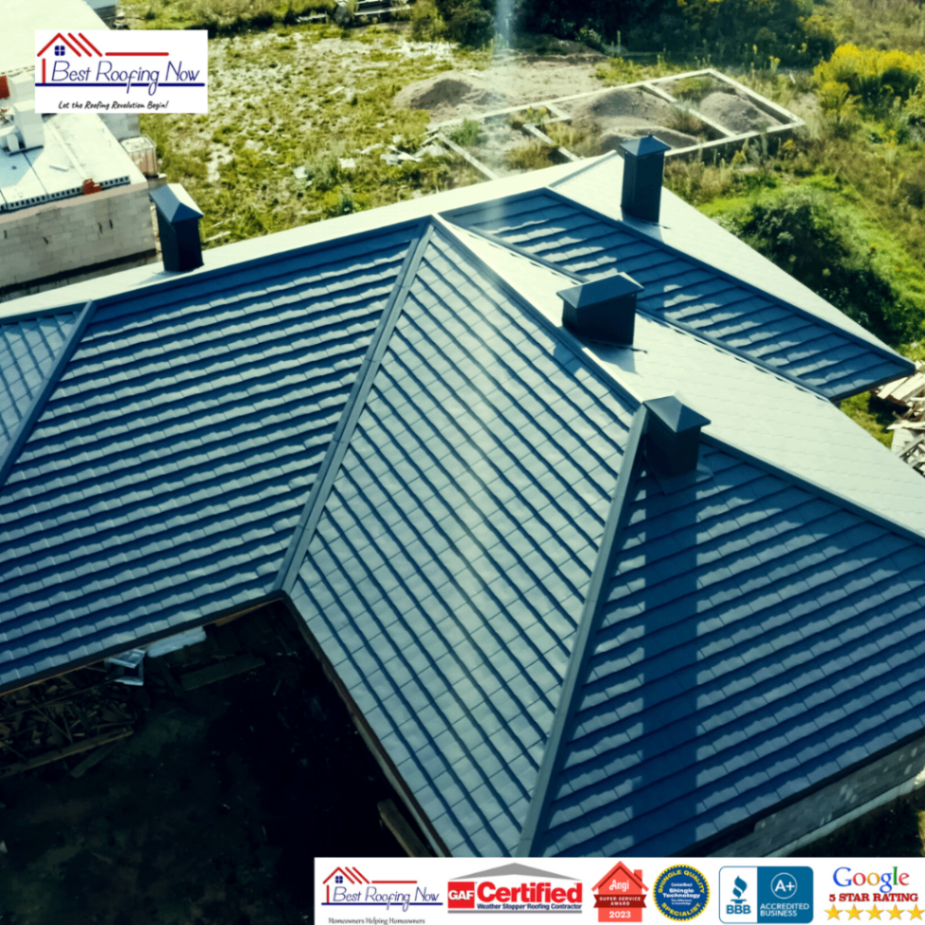
Metal roofing is the gold standard for energy efficiency in our region. A properly coated metal roof can reflect up to 70% of solar energy – compared to just 5-25% for traditional asphalt shingles.
We install a lot of steel and aluminum roofing with factory-applied reflective coatings in Davidson and Cornelius. These coatings are baked on during manufacturing, so they won't peel or fade like paint.
Metal roofs also excel at thermal emittance. They release heat quickly once the sun sets, keeping your home cooler through those sticky summer nights we know so well around Lake Norman.
The durability factor matters too. While asphalt shingles might need replacement every 15-20 years, a quality metal roof lasts 50+ years. That's decades of energy savings without worrying about re-roofing costs.
One of our Mooresville customers switched from dark shingles to a reflective metal roof last year. Their August electric bill dropped from $280 to $195 – a $85 monthly savings during peak cooling season.
Not everyone wants metal roofing, and that's fine. The asphalt shingle industry has made huge improvements in energy efficiency over the past decade.
Modern "cool" shingles use specially engineered granules that reflect more sunlight than traditional versions. These granules are often white or light-colored ceramic materials designed to maintain their reflective properties for decades.
Energy Star certified cool shingles must meet strict performance standards. They typically reflect 25-30% of solar energy – not as high as metal, but significantly better than older shingle technology.
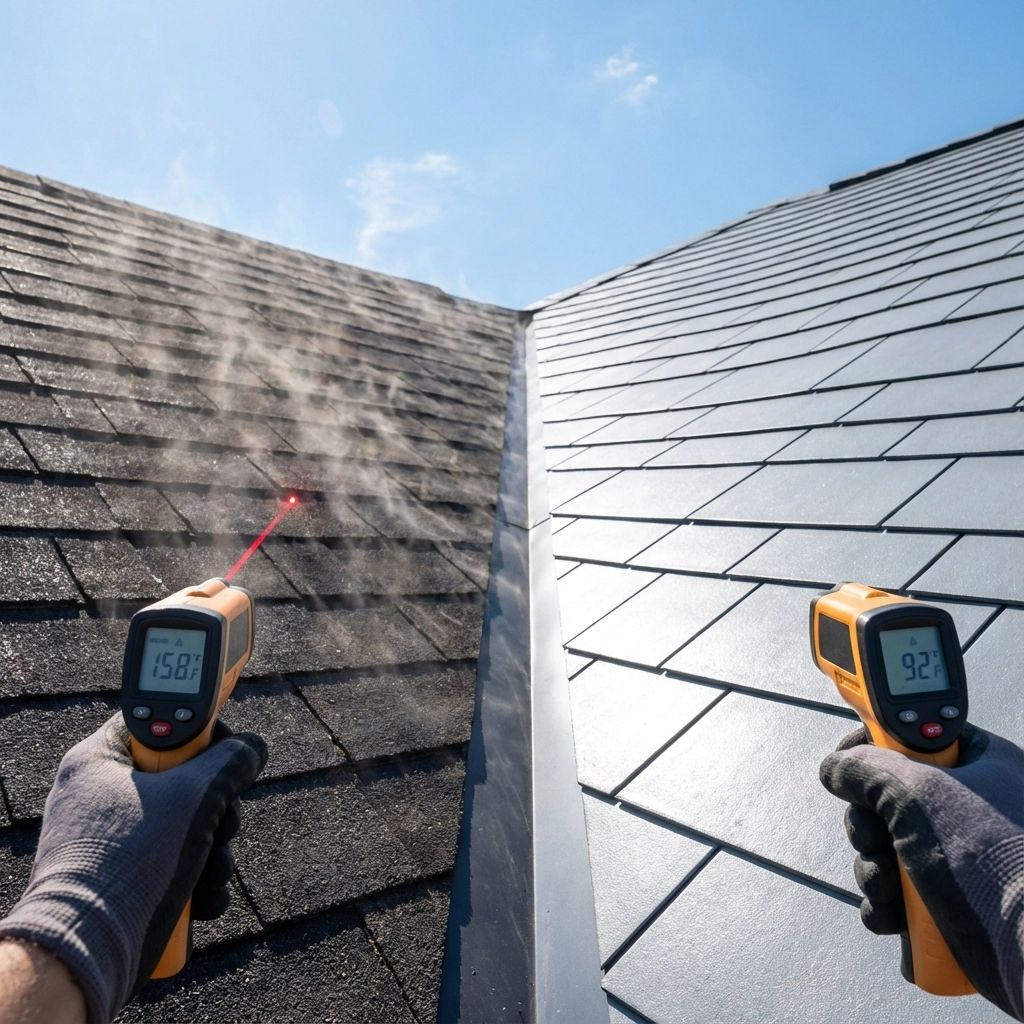
We've installed thousands of cool shingles throughout the Lake Norman area. The cost premium is usually just $0.50-$1.00 per square foot over standard shingles, but the energy savings start immediately.
For flat or low-slope roofs – common on modern homes and commercial buildings – single-ply membrane systems offer excellent energy performance.
TPO (Thermoplastic Polyolefin) membranes typically reflect 80-85% of solar radiation. PVC membranes perform similarly. Both materials are white or light gray, which helps maintain their reflective properties.
These membranes work particularly well in our humid climate because they resist moisture absorption and mold growth. We see them frequently on contemporary homes in newer Lake Norman developments.
Architectural (dimensional) shingles combine the traditional look homeowners want with modern energy efficiency features. They're thicker than standard 3-tab shingles, providing better insulation properties.
Many manufacturers now offer architectural shingles with cool roofing technology. Brands like GAF, Owens Corning, and CertainTeed have lines specifically designed for energy savings in hot climates.
The multi-layered construction of architectural shingles creates small air pockets that provide additional insulation. This helps reduce both summer cooling costs and winter heating expenses.
Our location brings unique challenges that make energy-efficient roofing especially valuable.
Charlotte and Lake Norman sit in IECC Climate Zone 3A. That means hot, humid summers with high cooling loads and mild winters with moderate heating needs. We average 85-90°F highs from June through September, with humidity levels often above 70%.
The combination of heat and humidity is brutal on traditional roofing materials. Dark shingles absorb massive amounts of solar energy, then struggle to release that heat in our muggy air.
We also get intense afternoon thunderstorms during summer months. These storms bring brief cooling, but humidity levels spike afterward. Energy-efficient roofing helps maintain comfortable indoor temperatures through these weather swings.

Local weather data shows Lake Norman area homes use 40-60% more electricity during July and August compared to spring months. Most of that increase goes to air conditioning. An energy-efficient roof directly attacks your biggest seasonal expense.
Another factor: our trees. Lake Norman has beautiful mature oak and pine trees, but they create shaded microclimates that trap heat and humidity around homes. Reflective roofing helps counteract this effect.
Numbers matter when you're making a roofing investment. Here's what we typically see for energy savings in our area:
Single-story ranch homes (1,500-2,000 sq ft): Switching from dark shingles to cool roofing materials usually saves $200-400 annually on cooling costs.
Two-story homes (2,500-3,500 sq ft): Annual savings range from $350-600, with the highest savings on homes with bonus rooms or finished attics.
Larger homes (4,000+ sq ft): We've documented savings exceeding $750 per year on executive homes around Lake Norman.
The exact amount depends on several factors:
One of our Cornelius customers replaced a 20-year-old dark gray shingle roof with Energy Star architectural shingles in light colors. Their Duke Energy bills showed consistent 18% reductions during cooling season – about $45 per month from May through October.
But energy savings aren't the only financial benefit. Energy-efficient roofing typically adds 2-4% to home resale value. On a $400,000 Lake Norman home, that's $8,000-16,000 in added value.
Insurance companies are starting to offer discounts for energy-efficient upgrades too. Some insurers reduce premiums by 5-10% for homes with qualified cool roofing systems.
Getting the full energy benefits requires proper installation. This isn't a DIY project – the details matter too much.
Ventilation is Critical
Even the best reflective materials won't perform properly without adequate attic ventilation. We install ridge vents, soffit vents, and sometimes powered exhaust fans to maintain airflow.
Poor ventilation traps hot air in your attic, negating much of the benefit from reflective roofing. We calculate the exact ventilation requirements based on your attic square footage and roof pitch.
Insulation Works With Your Roof
Energy-efficient roofing and proper insulation work as a team. If your attic insulation is old or insufficient, you won't see maximum savings from a new cool roof.
We often recommend upgrading to R-38 or R-49 insulation when installing energy-efficient roofing. The combined effect dramatically reduces both summer and winter energy costs.
Color Selection Strategy
Lighter colors reflect more heat, but you don't have to choose stark white. Today's cool roofing materials come in dozens of attractive colors that maintain high reflectance.
Medium grays, tans, and even some darker blues now meet Energy Star requirements. We help customers choose colors that complement their home's style while maximizing energy performance.
Timing Matters
Installing energy-efficient roofing before cooling season starts maximizes your first-year savings. We recommend scheduling installations in late winter or early spring.
This timing also helps us work around Lake Norman's summer storm season. Nobody wants a roof replacement interrupted by afternoon thunderstorms.
Some homes benefit from radiant barrier installation under energy-efficient roofing materials. These reflective barriers block radiant heat transfer into living spaces.
Radiant barriers work particularly well on homes with cathedral ceilings or bonus rooms directly under the roof deck. We see 5-10% additional cooling cost reductions when combining barriers with reflective roofing.
Metal roofing provides an excellent foundation for solar panel installation. The structural strength and longevity make it ideal for supporting solar arrays.
Several Lake Norman customers have combined reflective metal roofing with solar panels. The roof handles daytime heat reflection while the panels generate electricity. It's a powerful combination for energy independence.
For homes with existing roofs in good structural condition, reflective coatings offer an affordable efficiency upgrade. These acrylic or silicone coatings can boost reflectance by 50-70%.
Coatings work best on metal roofs or single-ply membranes. They typically last 10-15 years and cost much less than full roof replacement.
The cheapest energy-efficient option isn't always the best value. A slightly more expensive material that lasts longer and performs better often provides greater lifetime savings.
We help customers calculate the total cost of ownership, including material costs, installation, maintenance, and energy savings over the roof's expected lifespan.
Energy-efficient roofing materials maintain their performance best with regular maintenance. Keeping surfaces clean and free of algae or debris preserves reflective properties.
We recommend annual inspections and cleaning for most energy-efficient roofing systems. The small maintenance cost protects your energy savings investment.
Poor installation can eliminate the benefits of premium energy-efficient materials. Gaps, inadequate fastening, or improper ventilation defeat the purpose.
Always choose contractors with specific experience installing energy-efficient roofing systems. The installation quality matters as much as the material choice.

Energy-efficient roofing typically costs 10-20% more than standard materials upfront. For most Lake Norman homeowners, the energy savings pay back this premium within 5-8 years.
After the payback period, you're essentially getting free money every month through reduced utility bills. Over a 20-year period, total savings often exceed the initial investment by 200-300%.
The non-financial benefits matter too:
Some homeowners worry that reflective roofing will increase heating costs in winter. Research shows this isn't a significant concern in our climate zone.
The heating penalty from reflective roofing is minimal in Charlotte and Lake Norman because:
Studies by Oak Ridge National Laboratory found that cool roofing increases winter heating costs by less than $25 annually for homes in our region. The summer cooling savings far outweigh this small winter increase.
The first step is understanding your current roof's performance and your home's specific needs. Every house is different, and the best energy-efficient solution depends on factors like:
We provide free energy assessments that calculate potential savings based on your specific situation. This includes reviewing your recent utility bills and using thermal imaging to identify heat loss areas.
The assessment helps you make an informed decision about which energy-efficient materials will deliver the best return on investment for your Lake Norman home.
Ready to start cutting your utility bills with modern energy-efficient roofing? Schedule your free assessment today by calling Best Roofing Now or visiting our website. We'll show you exactly how much you could save and help you choose the perfect materials for your home and budget.
Best Roofing Now
Charlotte's trusted roofing experts since 2019
Based on this article, you may be interested in these services.
We proudly serve these Charlotte-area communities with professional roofing services.
View All Service Areas →See our recent roofing work across the Charlotte metro area.
Charlotte, NC
repair
Charlotte, NC
new roof
Charlotte, NC
before after
Charlotte, NC
new roof
Get a free roof inspection and honest assessment from Charlotte's most trusted roofing company.


