
Roofing Tips & Guides
Expert Roofing Advice for Charlotte Homeowners
Learn from Charlotte's trusted roofing experts. Tips on maintenance, repair, replacement, and protecting your home from the elements.
Leak or wind damage from Isaias? 24/7 emergency tarping, free storm-damage inspections and insurance-claim help.
Learn from Charlotte's trusted roofing experts. Tips on maintenance, repair, replacement, and protecting your home from the elements.
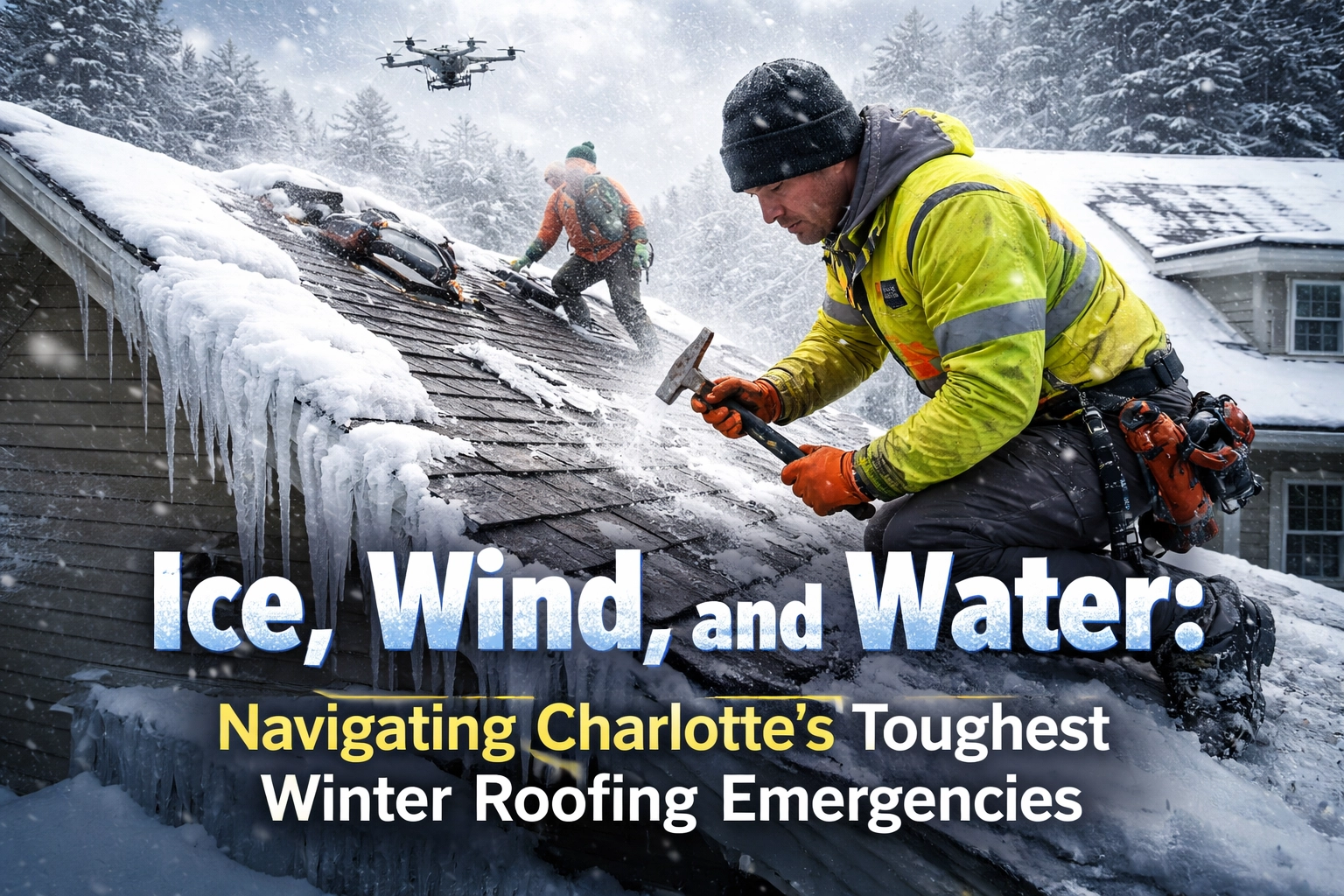
The phone rang at 3 AM during the ice storm of February 2024. A homeowner in Dilworth was watching water drip through her ceiling fan. By the time I got there, ice had built up on her roof so thick you could hear it cracking. That's Charlotte winter weather for you: unpredictable, intense, and brutal on roofs.
Most people think of Charlotte as a mild Southern city. And sure, we don't get Minnesota winters. But what we do get is almost worse for roofs. We get rapid temperature swings. We get ice storms that coat everything in a heavy frozen shell. We get wind gusts that rip shingles clean off. And we get it all mixed together in ways that stress roofing systems to their absolute limits.
After fifteen years of emergency calls during Charlotte winters, I've seen what works and what doesn't. This guide covers the real challenges our roofs face during the cold months: and what you can do when things go wrong.
Charlotte sits in a weird weather zone. We're far enough south to avoid deep freezes most of the time. But we're far enough north to get hit by winter storms pushing down from the mountains. That combination creates a specific set of problems that roofing companies in other regions rarely deal with.
The biggest issue is the freeze-thaw cycle. During a typical Charlotte winter, temperatures might swing from 55°F during the day to 25°F at night. That happens over and over, sometimes for weeks at a time. Every time water gets into a crack or under a shingle and then freezes, it expands. That expansion forces gaps open wider. Then it thaws, more water gets in, and the cycle repeats.

This is why roofs that seem fine in October can develop serious problems by February. The damage accumulates slowly, then reveals itself all at once: usually during the worst possible weather.
Ice storms are Charlotte's most dangerous winter roof threat. And they're sneaky about it.
When an ice storm hits, everything gets coated in a layer of ice. Trees, power lines, cars: and your roof. That ice layer can weigh thousands of pounds on a typical residential roof. Most roofs can handle it. But the weight isn't even the main problem.
The real danger comes from what happens after the ice forms. Ice dams build up along the edges of your roof. Here's how it works: heat escaping from your attic melts snow and ice on the upper portions of your roof. That water flows down toward the eaves, where it's colder. The water refreezes, creating a dam of ice along the edge.
Now you've got a problem. More meltwater flows down, hits that dam, and backs up under your shingles. Water goes places it was never meant to go. Into your roof deck. Into your attic. Into your walls. And you might not even know it's happening until you see water stains on your ceiling.
According to our research, ice storm damage sometimes requires immediate roof replacement rather than waiting until spring: especially when damage is significant enough that temporary fixes won't hold.
Watch for these warning signs during and after ice storms:
If you spot any of these during an ice storm, you're looking at potential emergency territory. The first 24-48 hours after damage occurs are critical. Properties that receive emergency protection within 24 hours experience 60% less secondary damage than those left exposed.
Charlotte doesn't get hurricanes often. But we get wind. Strong, sustained wind that comes with winter storms, cold fronts, and those weird spring-like days in February when warm air crashes into cold air.
Wind damages roofs in ways most homeowners don't expect. It doesn't just blow shingles off: though it definitely does that. Wind creates uplift. It gets under the edges of shingles and pulls them up from the roof deck. Once a shingle lifts, water gets underneath. And once water gets underneath, everything goes downhill fast.
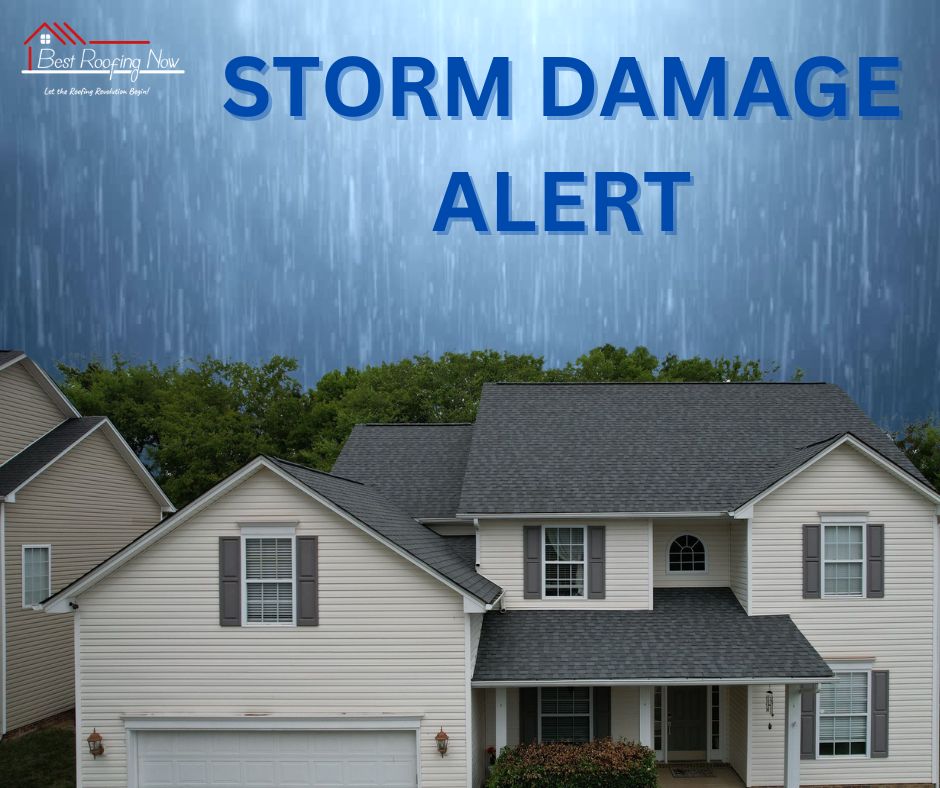
Here's something most people don't realize: wind damage often happens in patterns. The corners and edges of your roof take the worst hits. The ridgeline is vulnerable. Any areas where two roof planes meet are weak points. After a wind event, these are the spots we check first.
High winds during winter storms require roofing systems with reinforced installation and secure fastening to withstand the forces. This is why proper roof installation matters so much in Charlotte. Cheap installation with too few nails or improper technique might look fine for years: until that first serious wind event exposes every shortcut.
Walk around your property after any significant wind event. Look for:
Don't climb up there yourself unless you know what you're doing. A quick visual check from the ground tells you whether you need to call for a professional inspection.
Ice and wind create the openings. Water does the damage.
A sudden leak can quickly escalate from a minor nuisance to a major problem, especially during heavy downpours. Without proper protection, water infiltration spreads throughout your structure. What starts as a small drip through a lifted shingle becomes soaked insulation, damaged drywall, ruined belongings, and: worst of all: mold growth in places you can't see.
I've walked into attics where the homeowner thought they had a tiny leak. Turned out they'd had water coming in for weeks. The insulation was soaked. The roof deck was starting to rot. Mold was already spreading. And they had no idea until the ceiling started sagging.

This is why emergency roofing response matters so much. Quick response helps maintain your insurance coverage: many policies require you to take reasonable steps to prevent further damage after the initial loss. If you let water pour into your house for three days before calling anyone, your insurance company might have questions about that.
When a winter emergency hits, here's what a professional response looks like.
Most Charlotte emergency roofing services: including ours: offer 24/7 rapid response with 60-minute response times. We know that at 3 AM during an ice storm, you're not looking for a sales pitch. You're looking for someone who will show up, assess the damage, and stop the bleeding.
The first step is always a rapid roof damage assessment. We need to understand what we're dealing with before we can fix it. Is this a single lifted shingle or a section of missing roofing? Is ice damming causing the leak, or did wind create an opening? The answer determines our approach.
For most winter emergencies, the immediate solution is emergency roof tarping. This provides weather protection while we plan permanent repairs. We use professional-grade materials: weather-resistant barriers, heavy-duty plastic sheeting, caulks, and sealants that prevent water infiltration around the installation.
Tarping isn't a permanent fix. But it stops the damage from getting worse, which is the whole point of emergency response. It buys you time to get a proper repair scheduled without watching your house flood.
Winter installations require special considerations. Our teams account for heating system protection and ventilation requirements. Improper emergency installation can create carbon monoxide hazards or frozen pipes. We maintain adequate building ventilation to prevent pipe freezing while protecting your roof.
Part of emergency response is documentation. We photograph everything. The damage, the conditions, the temporary repairs. This documentation matters for your insurance claim.
Working with insurance companies after winter storm damage is its own skill. We provide insurance claim assistance as part of our emergency response package. We know what information insurers need, how to present it, and how to advocate for fair treatment.
The best emergency is the one that never happens. And a lot of winter roof problems are preventable with proper preparation.
Before winter arrives:
Get a professional inspection. Have someone who knows what they're looking at check your roof for vulnerable spots: lifted shingles, damaged flashing, compromised seals around penetrations. Fix small problems before they become winter emergencies.
Check your attic ventilation. Proper ventilation keeps your attic temperature closer to outside temperatures, which reduces the freeze-thaw cycling that causes ice dams. Poor ventilation means warm air gets trapped, melts snow unevenly, and creates all those ice dam problems we talked about.
Clean your gutters. Clogged gutters can't drain water properly. When gutters back up during winter, water sits against your fascia and can freeze, creating additional ice dam issues. Clean gutters before the first freeze.
Trim overhanging branches. Ice-coated branches are heavy. Wind-blown branches are dangerous. Either way, branches that hang over your roof are a winter hazard waiting to happen.
Know your roof's age and condition. A 20-year-old roof in marginal condition going into winter is a different situation than a 5-year-old roof in great shape. Be realistic about what your roof can handle and plan accordingly.
Sometimes the damage is too extensive for repair. This is a hard conversation, but it's one we have regularly after major winter storms.
When we assess emergency damage, we're looking at whether repairs make sense or whether you're better off with a complete roof replacement. The factors include:
We give you honest assessments. If repairs make sense, we recommend repairs. If replacement is the smarter investment, we tell you that too. Our job is to help you make the best decision for your situation, not to push you toward the most expensive option.
Not all roofing companies handle emergencies well. When you're evaluating options, look for:
24/7 availability. Winter storms don't check the calendar. Neither should your roofer.
Local presence. During a major winter event, companies from out of town won't be able to respond quickly. You need someone already here, already familiar with Charlotte conditions, already equipped to handle local emergencies.
Proper equipment. Winter work requires specific tools and safety equipment. Working on icy roofs is dangerous. Make sure whoever you call knows how to do it safely.
Insurance expertise. Winter storm damage almost always involves insurance claims. Your roofing company should understand that process and help you navigate it.
Permanent repair capability. Some companies specialize in temporary fixes and then disappear. You want a company that can handle both the emergency response and the follow-up repair or replacement.
Charlotte winters will keep testing our roofs. That's just reality. But you don't have to be caught off guard.
⚠️ Right now: Schedule a pre-winter inspection if you haven't already. Check your attic ventilation. Clean your gutters. Know your roof's condition.
During winter storms: Stay off your roof. Watch for warning signs inside your home: water stains, drips, sagging. If you see damage, call for emergency response immediately.
After damage occurs: Document everything with photos. Contain water inside if you can (buckets, towels). Don't wait: call within the first 24 hours for the best outcomes.
The homeowner in Dilworth during that 2024 ice storm? We had a temporary patch on her roof by 6 AM and a permanent repair completed the following week. Her insurance covered it. Her home was protected. And she didn't lose a single piece of furniture to water damage because she called when it mattered.
That's the difference between handling a winter emergency right and letting a small problem become a disaster.
Need emergency roof help right now? Call Best Roofing Now at any hour. We'll be there. For non-emergency inspections or questions about getting your roof ready for winter, contact our Charlotte team to schedule a free inspection.
Best Roofing Now
Charlotte's trusted roofing experts since 2019
Based on this article, you may be interested in these services.
We proudly serve these Charlotte-area communities with professional roofing services.
View All Service Areas →See our recent roofing work across the Charlotte metro area.
Charlotte, NC
completed exterior
Charlotte, NC
new roof
Charlotte, NC
new roof
Charlotte, NC
new roof
Get a free roof inspection and honest assessment from Charlotte's most trusted roofing company.


