
Roofing Tips & Guides
Expert Roofing Advice for Charlotte Homeowners
Learn from Charlotte's trusted roofing experts. Tips on maintenance, repair, replacement, and protecting your home from the elements.
Leak or wind damage from Isaias? 24/7 emergency tarping, free storm-damage inspections and insurance-claim help.
Learn from Charlotte's trusted roofing experts. Tips on maintenance, repair, replacement, and protecting your home from the elements.
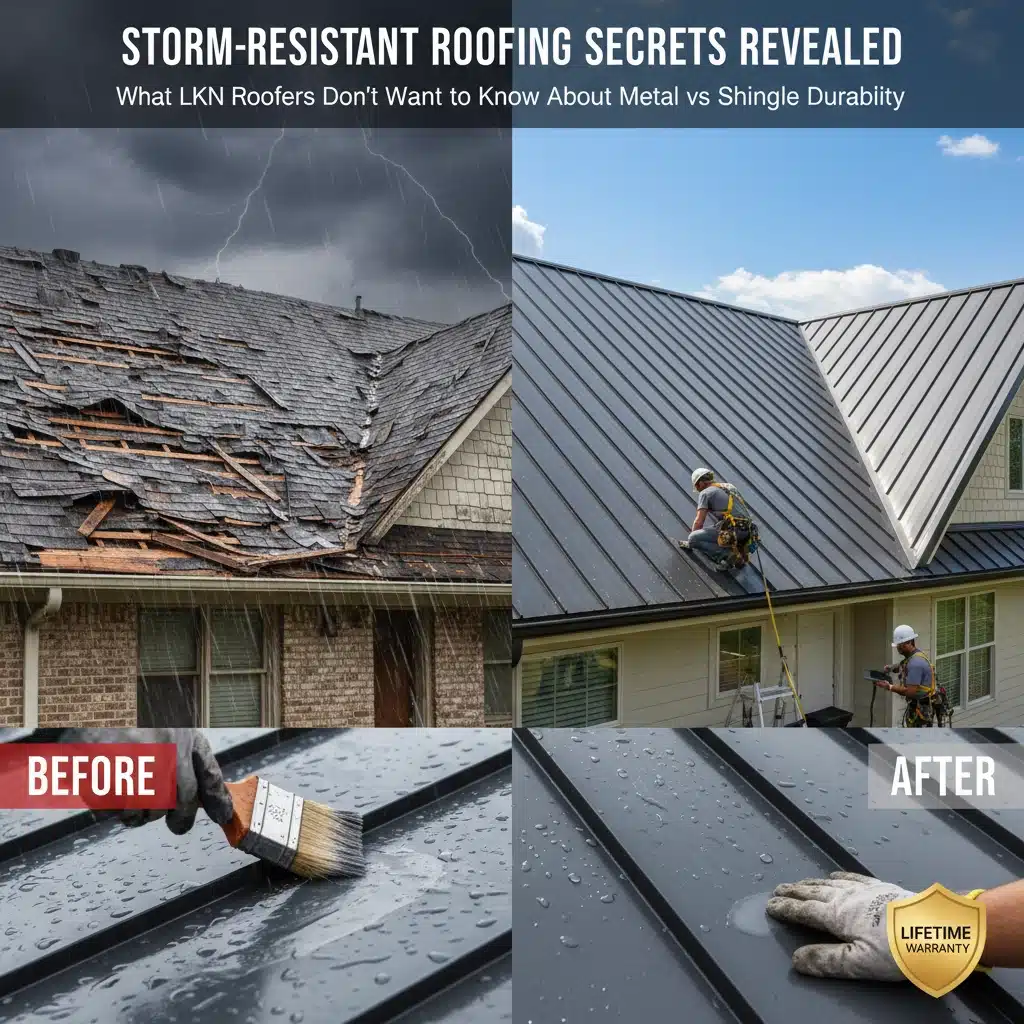
Living around Lake Norman means dealing with some serious weather. From summer thunderstorms packing 70+ mph winds to the occasional hurricane remnant, your roof takes a beating year after year. Here's what most roofers won't tell you upfront: the material choice you make today could mean the difference between minor storm cleanup and a complete roof replacement.
After working on hundreds of Lake Norman roofs through severe weather events, we've seen firsthand which materials actually hold up when nature unleashes its fury. The truth isn't complicated: it's just not always the most profitable answer for every contractor.
Metal roofing isn't just tough: it's engineered to laugh at storms that would devastate other materials. When properly installed, metal panels can withstand wind speeds of 140-160 mph. That covers everything from severe thunderstorms to Category 2 hurricanes.
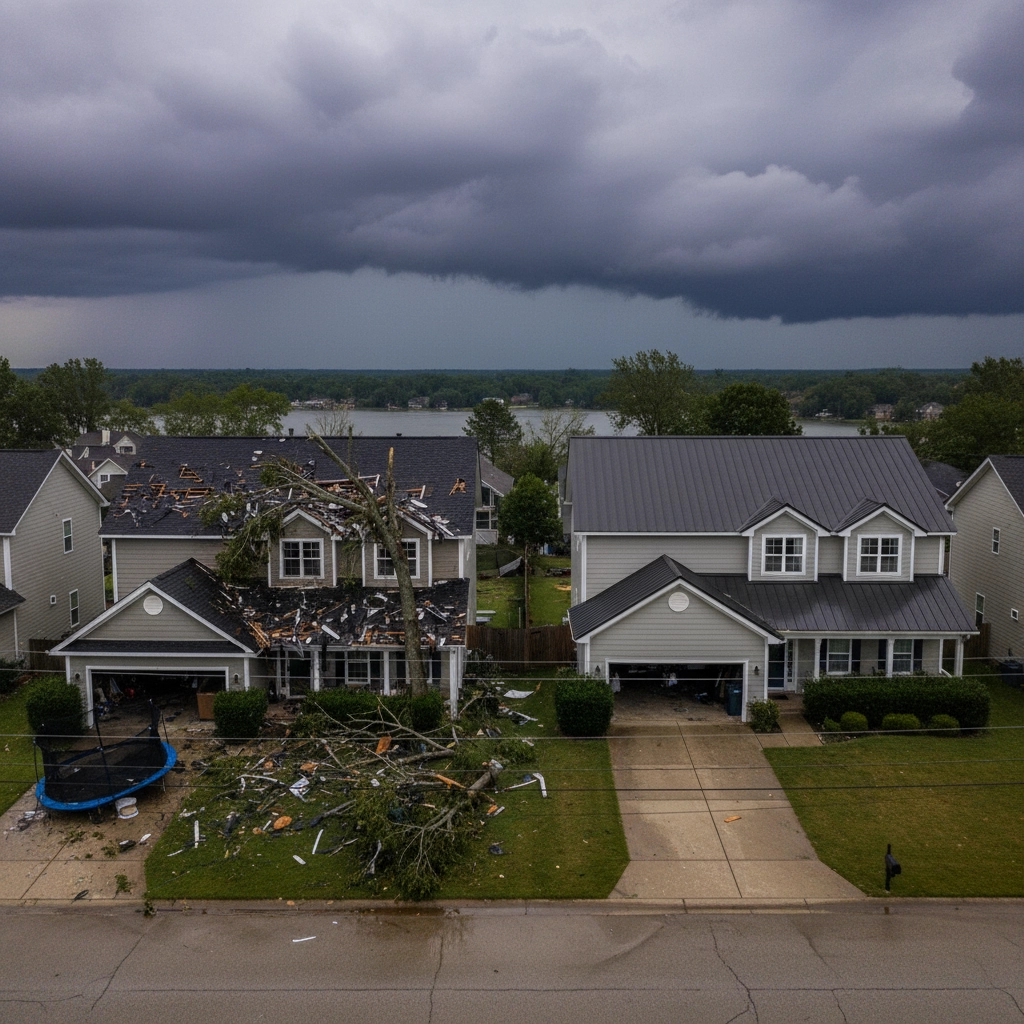
We've watched metal roofs in Cornelius and Davidson survive direct hits from microbursts that stripped shingles off neighboring homes. The secret lies in the installation system: metal panels interlock and fasten directly to the roof deck every 12-16 inches, creating a continuous shell rather than individual pieces that can lift and peel away.
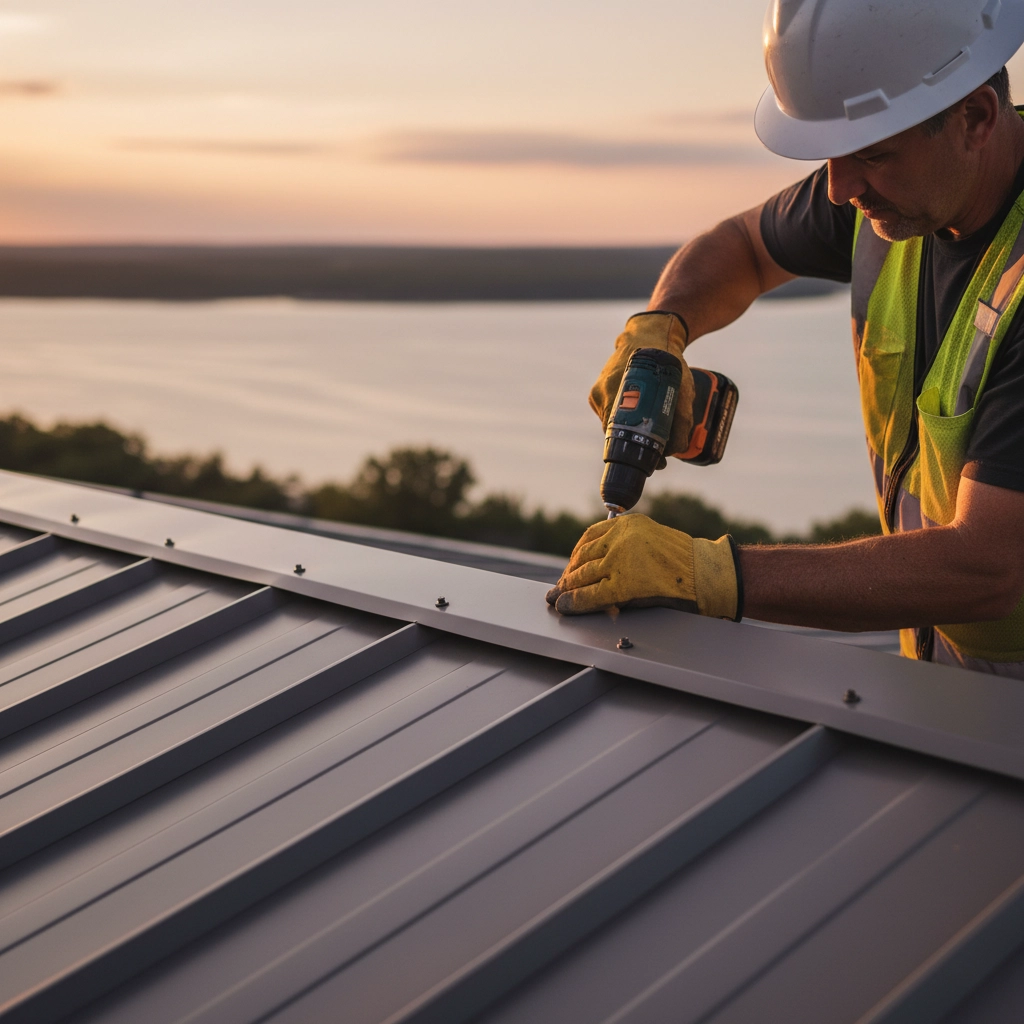
Here's what makes metal roofing virtually bulletproof:
Metal achieves a Class 4 impact rating: the highest possible for hail resistance. Those golf ball-sized hail stones that hammered Lake Norman in 2019? They bounced right off properly installed metal roofs while leaving crater-like damage in asphalt shingles.
The fire resistance is unmatched too. Metal roofing earns a Class A fire rating, which matters more than you might think. Lightning strikes around Lake Norman are common during summer storms, and metal roofing actually helps protect your home by providing a conductive path to ground.
Longevity that actually saves money:
Quality metal roofing lasts 40-70 years, often outlasting the homeowner. Compare that to asphalt shingles at 15-25 years in our North Carolina climate. When you factor in replacement costs, insurance savings, and reduced maintenance, metal roofing becomes the economical choice over time.
But here's the part many contractors won't emphasize: metal roofing requires skilled installation to reach its full potential. Improper fastening or inadequate ventilation can create problems that give metal roofing a bad reputation.
Asphalt shingles dominate Lake Norman neighborhoods, and there's good reason: they're affordable upfront and familiar to most contractors. But storm resistance tells a different story.
Standard architectural shingles are rated for winds around 110-130 mph. That sounds impressive until you realize summer thunderstorms regularly exceed 70 mph, and microbursts can hit 100+ mph. Once you lose even a few shingles, the exposed areas create uplift points where wind can grab and peel away larger sections.

The reality of shingle performance:
We've replaced countless shingle roofs around Lake Norman after storms that barely touched properly installed metal roofs on the same street. Shingles become brittle from UV exposure and thermal cycling: those hot summer days followed by cool nights gradually weaken the asphalt binder.
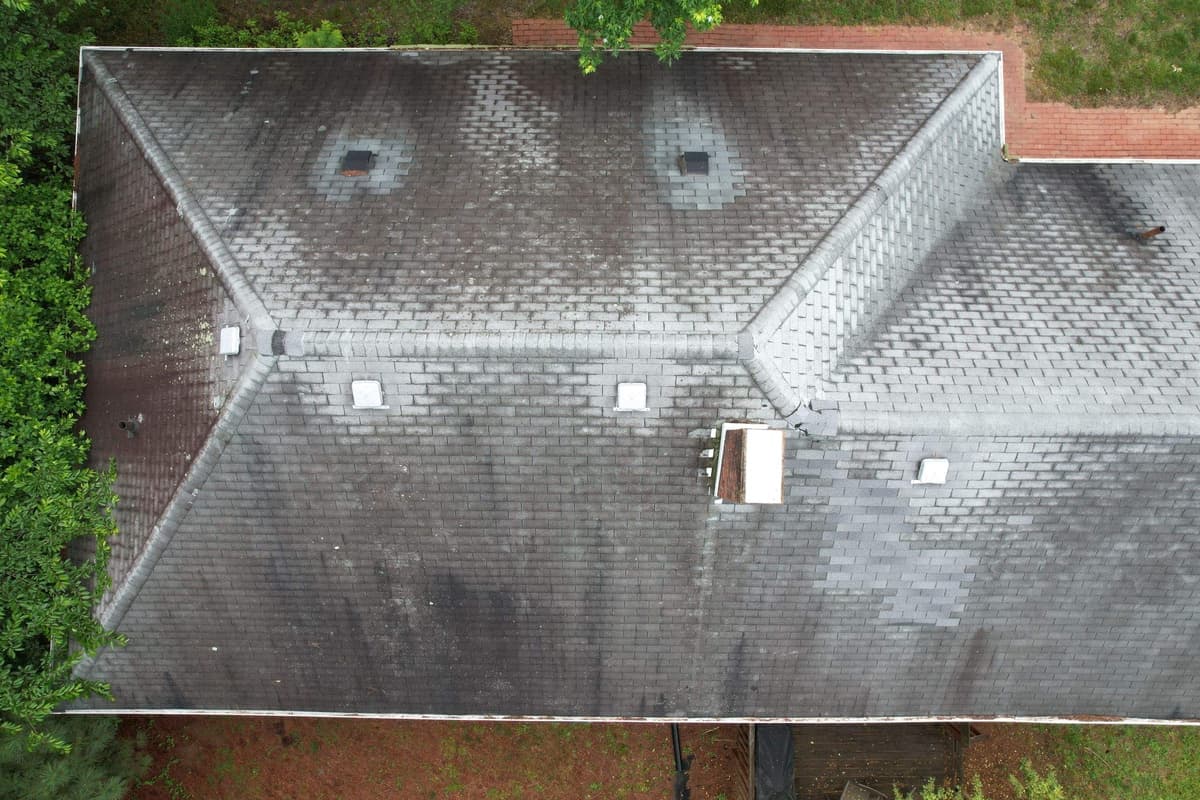
In our North Carolina climate, architectural shingles typically last 20-25 years instead of the 30-year rating you'll see on the package. The constant sun exposure and humidity accelerate aging, causing granule loss and eventual curl or crack formation.
Maintenance demands add up:
Shingle roofs require twice-yearly inspections and ongoing maintenance. Missing or damaged shingles need immediate replacement to prevent water infiltration. Clogged gutters, moss growth, and debris buildup all contribute to premature shingle failure.
The hidden costs accumulate: storm repairs, periodic partial replacements, increased insurance claims, and eventually complete roof replacement decades sooner than metal alternatives.
When severe weather hits Lake Norman, the performance gap becomes obvious:
Wind Resistance: Metal roofing consistently outperforms shingles by 20-40 mph in wind ratings. Real-world performance shows even greater differences during actual storm events.
Hail Impact: Metal roofing dents but doesn't break. Shingles crack, lose granules, and often require replacement after significant hail events.
Water Infiltration: Interlocking metal panels create continuous weather barriers. Shingles rely on overlapping layers that can separate or lift during storms.
Fire Protection: Metal roofing won't ignite from lightning strikes or flying embers. Asphalt shingles can burn, especially when aged and brittle.
Our local climate creates unique challenges that many generic roofing advice articles miss:
Humidity and Heat: Lake Norman's summer humidity accelerates asphalt shingle aging. Metal roofing reflects heat and resists moisture-related problems like algae growth and granule loss.
Storm Patterns: We get hit by severe thunderstorms from multiple directions throughout summer. The consistent high winds and hail exposure favor materials designed for repeated impact.
Microclimate Effects: Properties near the lake experience different wind patterns and moisture levels than inland homes. Metal roofing adapts better to these varying conditions.
Building Codes: Mecklenburg and Iredell counties have specific wind load requirements that metal roofing exceeds more comfortably than standard shingles.
Here's the uncomfortable truth: many roofing contractors prefer selling shingle jobs. They're familiar, require less specialized training, and generate more frequent replacement business. Metal roofing installation requires additional skills and certification that not every contractor maintains.
The profit margins also differ significantly. A shingle job might generate repeat business in 20 years, while a properly installed metal roof could last 50+ years without major repairs.
We've seen contractors discourage metal roofing by emphasizing only the higher upfront costs while downplaying the long-term value and superior storm protection. That's not serving homeowners' best interests.
Choose metal roofing if:
Consider quality shingles if:
The "secret" isn't really secret: it's just honest evaluation of performance data and real-world results. Metal roofing delivers superior storm protection, longevity, and total cost of ownership in our Lake Norman climate.
Don't let another storm season catch you unprepared with an inadequate roof. The difference in protection and performance is too significant to ignore, especially when severe weather is becoming more frequent and intense.
Schedule a free roof assessment to evaluate your current situation and explore your options. We'll provide honest recommendations based on your home's specific needs, not what generates the highest profit margin.
Ready to protect your Lake Norman home with storm-resistant roofing? Contact Best Roofing Now for a comprehensive roof evaluation and detailed comparison of materials suited to your property. Your family's safety and your home's protection deserve the full truth about roofing performance( not just the sales pitch.)
Best Roofing Now
Charlotte's trusted roofing experts since 2019
Based on this article, you may be interested in these services.
We proudly serve these Charlotte-area communities with professional roofing services.
View All Service Areas →See our recent roofing work across the Charlotte metro area.
Charlotte, NC
new roof
Charlotte, NC
new roof
Charlotte, NC
work in progress
Charlotte, NC
new roof
Get a free roof inspection and honest assessment from Charlotte's most trusted roofing company.


