
Roofing Tips & Guides
Expert Roofing Advice for Charlotte Homeowners
Learn from Charlotte's trusted roofing experts. Tips on maintenance, repair, replacement, and protecting your home from the elements.
Ice & Snow Damage? Get 10% off repairs with a free inspection.
Learn from Charlotte's trusted roofing experts. Tips on maintenance, repair, replacement, and protecting your home from the elements.
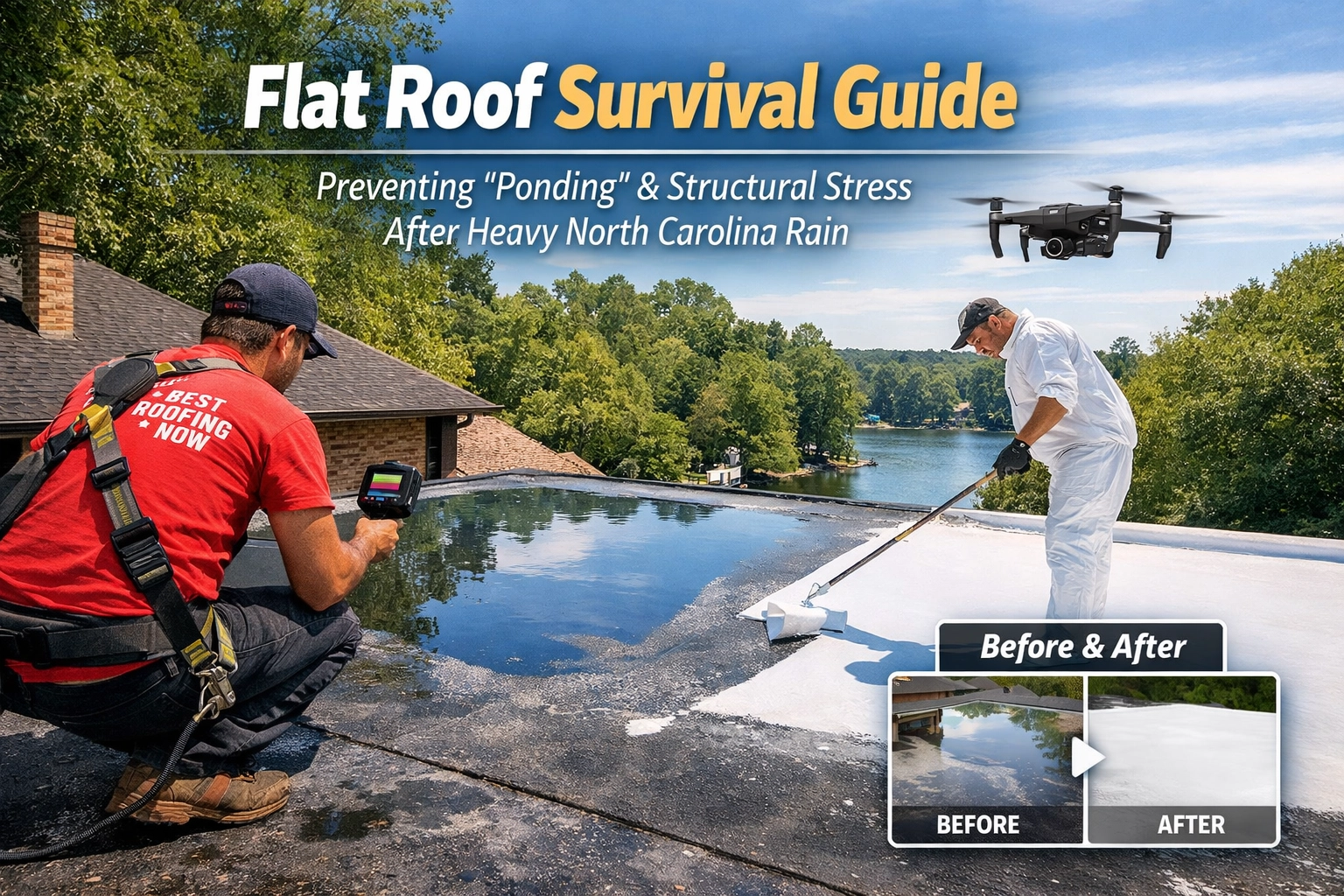
If you own or manage a commercial building in Charlotte or Lake Norman, you've probably noticed something after our spring storms. Water sits on your flat roof. Sometimes for days.
That's called ponding. And it's a problem.
Here's the thing most property managers don't realize: flat roofs aren't actually flat. They're supposed to have a slight slope. Water should move toward drains. When it doesn't, you're looking at serious damage down the road.
I've walked hundreds of commercial roofs after North Carolina rainstorms. The ones with standing water are the ones that end up needing replacement years before they should. We're talking about 48-hour puddles that turn into leaks, membrane damage, and structural stress.
But here's the good news. Most ponding problems are preventable. And if you already have them, they're fixable.
Let me walk you through exactly what causes water to pool on flat roofs, why it matters, and what actually works to fix it.
Ponding happens when water sits on your roof for more than 48 hours after rain stops. That timeframe matters because it's the industry standard for determining whether you have a drainage problem.
If water disappears within 48 hours through evaporation or slow drainage, you're usually okay. Not ideal, but okay.
When water sticks around longer, it starts causing damage. The weight stresses your roof structure. The moisture degrades your membrane. And here in North Carolina, that standing water heats up in the sun, accelerating the breakdown of your roofing materials.

A typical commercial flat roof in Charlotte should handle our 3-4 inch rain events without creating permanent puddles. When it doesn't, something's wrong with the slope, the drains, or the structure itself.
I've seen roofs with six inches of standing water after the heavy storms we get in spring. That's thousands of pounds of extra weight your building wasn't designed to carry long-term.
Before we talk about major fixes, let's talk about the simplest solution. Clean drains.
I know it sounds basic. But clogged drains cause about 70% of the ponding issues we see on commercial buildings around Lake Norman and Charlotte.
Leaves, roof gravel, dirt, and debris pile up around drain openings. Water can't get through. It backs up and pools.
Here's what we tell our commercial clients: inspect your drains quarterly. Not once a year. Every three months. If you have trees near your building, check them monthly during fall.
Look for these specific problems:
We had a warehouse client in Huntersville with persistent ponding. Turned out their internal drain pipes had partially collapsed. Water was going into the drain but backing up inside the pipe. We only found it with a camera inspection.
Sometimes you need more drains. If your roof is larger than about 10,000 square feet, you probably need multiple drainage points. North Carolina building codes require secondary overflow drains or scuppers as backup systems.
If heavy rain overwhelms your primary drains, those secondary drains save your roof. And your ceiling below.
This is where we get into real solutions. Not temporary fixes. Not band-aids. Actual long-term prevention.
Tapered insulation systems create positive slope on your flat roof without tearing everything down to the structure. It's one of the most effective investments you can make in a commercial roof.
Here's how it works. We install insulation boards that gradually increase in thickness. They create a gentle slope that directs water toward your drains. Think of it like building a ski slope, but reversed. Water flows downhill to where you want it.
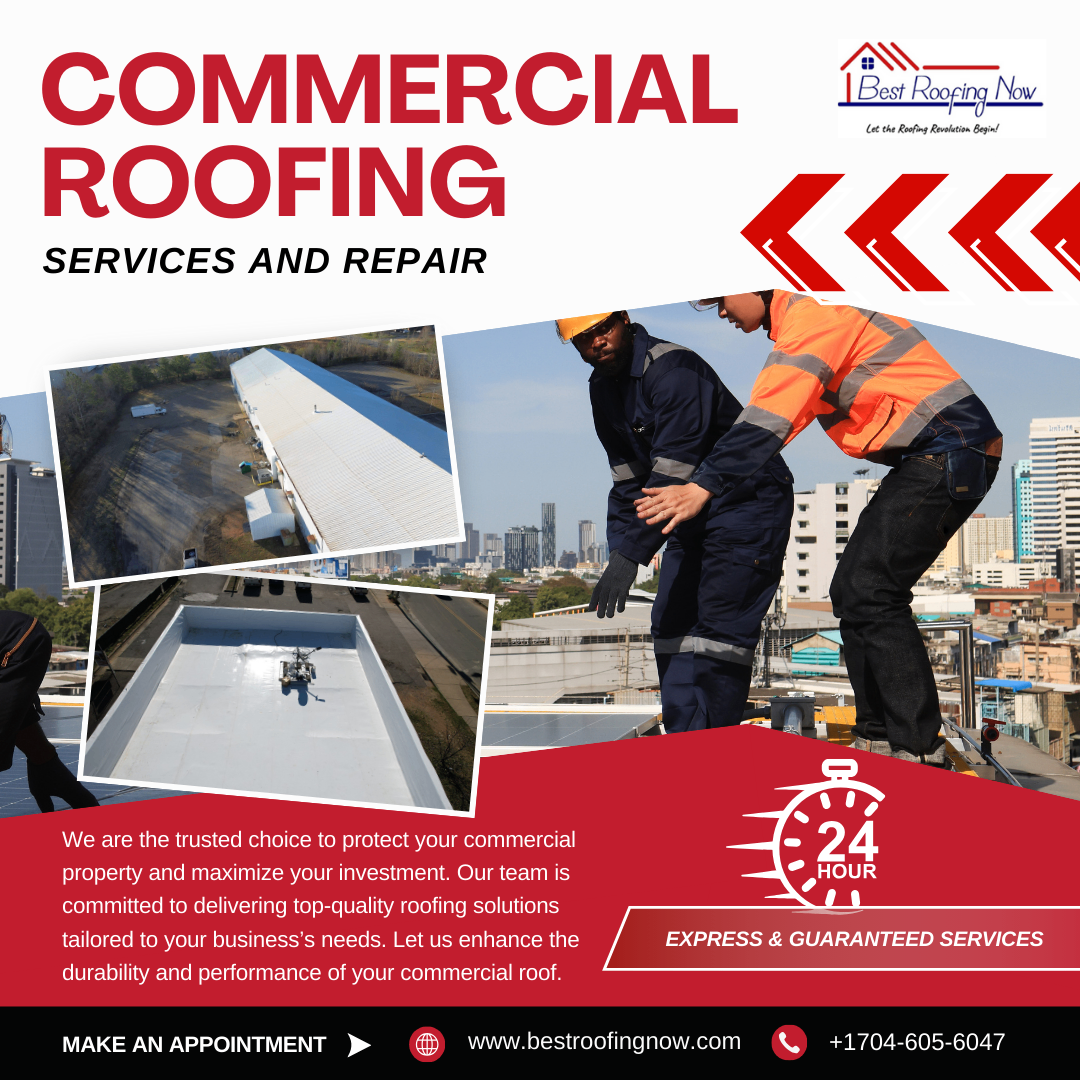
The National Roofing Contractors Association (NRCA) recommends a minimum slope of 1/4 inch per foot for flat roofs. Tapered insulation gets you there without major structural work.
We installed a tapered system on a retail building in Cornelius last year. They'd been fighting ponding for five years. Every rainstorm meant buckets in the back office. After the tapered insulation, water clears within hours. No more leaks. No more stress.
The bonus? Better energy efficiency. That insulation does double duty. It slopes your roof AND reduces your heating and cooling costs. Most clients see the investment pay for itself within 3-5 years through energy savings alone.
Sometimes the problem isn't drainage. It's the slope itself. Or lack of slope.
Building codes require new flat roofs to have at least 1/4 inch of slope per foot. Older buildings often don't meet that standard. And roofs that do can settle over time, creating low spots where water collects.
If your building is more than 20 years old, there's a good chance your roof has settled. The deck sags slightly. Supports compress. What used to drain now holds water.
We can add sloping material beneath your roofing membrane to redirect water. It's more invasive than tapered insulation but sometimes necessary when the existing slope works against you.
I walked a manufacturing facility roof in Davidson last month. Original construction from 1994. The roof had settled near the center, creating a bowl shape. Water had nowhere to go except sit in the middle. We're designing a re-slope project that will restore positive drainage across the entire surface.
Let's be honest about something. Sometimes ponding points to bigger problems.
If your roof deck has sagged significantly, you might need structural reinforcement. Additional support members. Deck replacement in problem areas. This isn't cheap. But it's the only real fix when the structure itself has failed.
Here's how you know if you have a structural issue: the ponding gets worse over time. Low spots get deeper. More areas start holding water.
That's not a drainage problem. That's a structural problem.

The good news? Structural repairs fix the problem permanently. You're not putting a band-aid on a broken bone. You're actually healing the bone.
The bad news? It costs more upfront. But consider the alternative. Temporary fixes fail. You spend money year after year on repairs. The damage spreads. Eventually you're replacing the entire roof earlier than necessary.
We always shoot straight with our commercial clients. If you need structural work, we tell you. If you don't, we tell you that too. Our job is to give you the real diagnosis, not sell you services you don't need.
Not every ponding issue requires a complete roof overhaul. Sometimes you need strategic solutions in problem areas.
Roof Crickets
These are raised structures that divert water around obstacles. If water pools near your HVAC unit or around a chimney, a roof cricket can redirect that water toward drains.
We built crickets around rooftop equipment on a office building in Charlotte. The HVAC units were creating dams that trapped water. Simple cricket installation solved the problem for a fraction of what a full re-slope would have cost.
Elastomeric Coatings
These protective coatings can fill minor depressions while adding a waterproofing layer. They work well on EPDM and modified bitumen roofs.
But let me be clear: coatings alone won't fix serious ponding. They're part of a solution, not the whole solution. If you have significant water collection, you need to address the drainage or slope issues first.
Coatings work best after you've fixed the underlying problem. They extend membrane life and provide extra protection against UV damage. In North Carolina's hot summers, that UV protection matters.
Self-Leveling Compounds
For visible dips or small depressions, self-leveling compounds can even out problem areas. These work for minor issues, not major structural sags.
Think of them like spackle for your roof. They smooth out small irregularities that collect water. They're not strong enough to fix serious settlement or structural problems.
Prevention beats repair every single time. Here's the maintenance schedule we recommend for every commercial flat roof in the Charlotte area.
Quarterly Inspections
Walk your roof every three months. Look for standing water, debris accumulation, and membrane damage. Take photos of problem areas so you can track changes over time.
Spring and fall are critical. After winter freeze-thaw cycles and before summer heat. After hurricane season and before winter weather.
Bi-Annual Deep Cleaning
Clean gutters and downspouts twice yearly minimum. Spring and fall. If you have heavy tree coverage, do it more often.
Assign someone to check drains after major storms. Make it part of your building management routine.
Annual Professional Inspection
Get a roofing professional on your roof once a year for a detailed inspection. We catch problems you might miss. Small issues that are cheap to fix now, expensive to fix later.
During our annual inspections, we check membrane seams, flashing details, drain connections, and structural integrity. We're looking for the early warning signs that prevent major failures.
Document Everything
Take photos of where water collects. Note how long it takes to drain. Track which areas are getting worse. This documentation helps roofing professionals diagnose problems accurately and helps you track whether solutions are working.
Not all roofing materials handle our climate equally. North Carolina throws everything at commercial roofs. Heavy spring rains. Summer heat and UV exposure. Hurricane remnants. Occasional ice storms.
For flat roofs that handle ponding well, we typically recommend:
TPO (Thermoplastic Polyolefin)
White reflective surface reduces heat absorption. Excellent UV resistance. Holds up well to occasional standing water. Popular choice for commercial buildings throughout Charlotte.
The heat-welded seams are stronger than glued seams. That matters when water is sitting on your roof for extended periods.
Modified Bitumen
Extremely durable. Multiple layers provide redundancy. If the top layer gets damaged, the layers below still protect your building.
Good choice for buildings with equipment traffic on the roof. HVAC techs won't damage it as easily as single-ply membranes.
Built-Up Roofing (BUR)
The old-school choice that still works. Multiple layers of felt and asphalt create a thick, durable surface. Heavy enough that wind isn't a concern.
More expensive to install than TPO but can last 30+ years with proper maintenance.
Whatever material you choose, make sure it's installed correctly. The best material in the world won't perform if the installation is sloppy. That's where working with experienced commercial roofers matters.
We've been installing commercial roofs in the Charlotte area for years. We know which materials work in our specific climate. And we know the installation details that make or break long-term performance.
Here's the reality check. Some ponding issues are DIY-fixable. Most aren't.
You can clean drains yourself. You can remove debris. You can monitor problem areas.
But diagnosing why water is ponding? Designing effective solutions? Installing tapered insulation or re-sloping a roof? That requires professional expertise.
Call a roofing professional when:

When we assess a ponding problem, we start with a thorough roof inspection. We're looking at the overall slope, drain function, membrane condition, and structural integrity. Sometimes we use water testing to see exactly how water flows across your roof.
Then we give you honest recommendations. If you need major work, we tell you. If a simple drain cleaning will solve it, we tell you that too.
We provide options at different price points. The quick fix, the good fix, and the permanent fix. You make the final decision based on your budget and long-term plans for the building.
One thing we never do: pressure you into unnecessary work. If your roof has years of life left and a minor repair will solve the ponding, that's what we recommend. Our reputation is built on honesty, not overselling.
Standing water on your commercial roof isn't just ugly. It's expensive. It shortens roof life. It risks leaks. It can cause structural damage.
But it's also preventable and fixable.
Start with the basics. Keep drains clean. Inspect regularly. Address small problems before they become big ones.
When you need professional help, work with a roofing company that knows commercial buildings and North Carolina weather. Someone who will give you straight answers about what you actually need.
We've helped dozens of commercial property owners in Charlotte, Huntersville, Cornelius, and Davidson solve ponding issues. From simple drain repairs to complete tapered insulation systems.
Your flat roof is a major investment. Protect it with proper drainage and proactive maintenance. The money you spend now prevents much bigger expenses down the road.
Ready to solve your ponding problem for good? Call us at Best Roofing Now for a free commercial roof assessment. We'll diagnose exactly why water is pooling on your roof and give you honest recommendations about the best solution for your building and budget. No pressure. Just straight answers from experienced commercial roofing professionals. Visit our website or give us a call today. ✅
Best Roofing Now
Charlotte's trusted roofing experts since 2019
Based on this article, you may be interested in these services.
We proudly serve these Charlotte-area communities with professional roofing services.
View All Service Areas →See our recent roofing work across the Charlotte metro area.

Charlotte, NC
new roof

Charlotte, NC
work in progress

Charlotte, NC
work in progress

Charlotte, NC
before after
Get a free roof inspection and honest assessment from Charlotte's most trusted roofing company.


