
Roofing Tips & Guides
Expert Roofing Advice for Charlotte Homeowners
Learn from Charlotte's trusted roofing experts. Tips on maintenance, repair, replacement, and protecting your home from the elements.
Leak or wind damage from Isaias? 24/7 emergency tarping, free storm-damage inspections and insurance-claim help.
Learn from Charlotte's trusted roofing experts. Tips on maintenance, repair, replacement, and protecting your home from the elements.
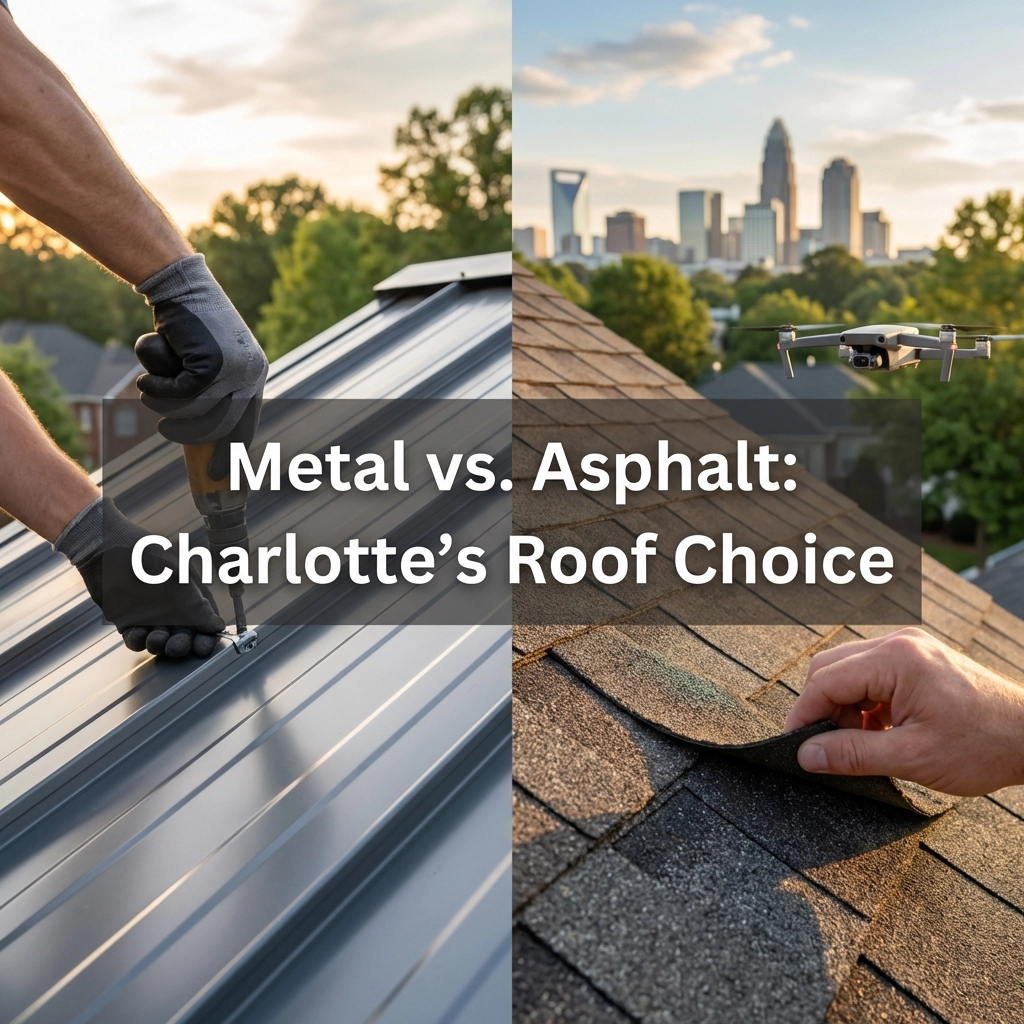
Choosing a new roof in Charlotte is a big decision. And honestly? It's not just about what looks good. Your roof has to stand up to our humid summers, sudden storms, and those occasional ice events that catch everyone off guard.
Two materials dominate the conversation here in the Queen City: metal roofing and asphalt shingles. Both have their place. Both have loyal fans. But which one actually makes sense for Charlotte's unique climate?
Let's break it down together.
Charlotte sits in a humid subtropical climate zone. That means we get a little bit of everything throughout the year.
Our summers are hot and sticky. July averages around 80°F, and we typically see about 44 days hitting 90°F or higher each year. August dumps the most rain on us: over 4 inches on average. Humidity peaks around 70% in late summer.
Winters are mild but unpredictable. January averages in the low 40s. We only get 2-3 inches of snow annually, but freezing rain? That's the real troublemaker.
And then there's the rain. Charlotte receives about 43.6 inches of precipitation every year, spread pretty evenly across all four seasons.
Your roof has to handle all of this. Heat expansion. Moisture intrusion. Wind. Occasional hail. The material you choose determines how well your home weathers these conditions for the next 20, 30, or even 50 years.

Asphalt shingles remain the most popular roofing choice in the Charlotte metro area. Drive through Myers Park, Ballantyne, or anywhere in Lake Norman: you'll see asphalt everywhere.
There's good reason for that popularity.
Lower upfront cost. Asphalt shingles typically cost 40-50% less than metal roofing for initial installation. For a standard 2,000 square foot roof, that difference can mean thousands of dollars.
Proven performance. Modern architectural shingles (the dimensional ones with that layered look) perform well in our climate. They handle heat and humidity better than the basic 3-tab shingles of decades past.
Easy repairs. When Charlotte storms damage a few shingles, repairs are straightforward. Most roofing contractors can match existing shingles and make repairs quickly.
Variety of styles. Want your roof to look like slate? Wood shake? There's an asphalt shingle for that. This matters in neighborhoods with HOA requirements.
Shorter lifespan. Quality architectural shingles last 20-30 years here. But Charlotte's heat accelerates aging. We see plenty of 15-year-old roofs that need replacement.
Heat absorption. Asphalt shingles absorb heat rather than reflecting it. During our brutal August afternoons, this can increase cooling costs and stress your HVAC system.
Moisture vulnerability. Humidity and algae growth go hand in hand. Those dark streaks you see on older roofs? That's algae feeding on limestone filler in the shingles. It's not just ugly: it shortens roof life.
According to the Asphalt Roofing Manufacturers Association, "In humid climates, algae-resistant shingles can extend roof appearance and performance by preventing organic growth that accelerates granule loss."
If you go with asphalt in Charlotte, algae-resistant shingles aren't optional. They're essential.
Metal roofing has gained serious momentum in Charlotte over the past decade. And it's not just for commercial buildings or farmhouses anymore.

Exceptional longevity. Quality metal roofs last 40-70 years. Some homeowners in Charlotte are still enjoying metal roofs installed in the 1980s. That's two or three asphalt roofs' worth of life.
Energy efficiency. This is where metal shines, literally. Metal reflects solar radiation instead of absorbing it. During Charlotte summers, this can reduce cooling costs by 10-25%. Your attic stays cooler, your AC works less, and your energy bills thank you.
Superior storm resistance. Charlotte gets its share of severe weather. Metal roofing handles high winds better than asphalt: many metal systems are rated for 140+ mph winds. And metal won't blow off in sections the way shingles can.
Low maintenance. No algae streaks. No granule loss. No moss growth. Metal requires minimal upkeep compared to asphalt.
100% recyclable. When your metal roof eventually reaches the end of its life (decades from now), it gets recycled rather than filling a landfill. Asphalt shingles? About 11 million tons go to landfills annually in the US.
Higher initial cost. Metal roofing costs significantly more upfront: often 2-3 times the price of asphalt. For that same 2,000 square foot roof, you might pay $15,000-$25,000 instead of $8,000-$12,000.
Noise during storms. This concern gets exaggerated, but it's real. Proper insulation and underlayment minimize rain noise, but metal roofs are inherently louder than asphalt during heavy downpours.
Expansion and contraction. Metal expands in Charlotte's heat and contracts during cold snaps. Proper installation with allowance for thermal movement is critical. Poor installation leads to loose fasteners and leaks.
Dent potential. Large hail can dent some metal roofing materials. Aluminum dents easier than steel. For areas of Charlotte that see more hail, this matters.
The Metal Roofing Alliance notes: "Standing seam metal roofing systems with concealed fasteners provide the best long-term performance in variable climates, eliminating potential leak points where fasteners penetrate the surface."
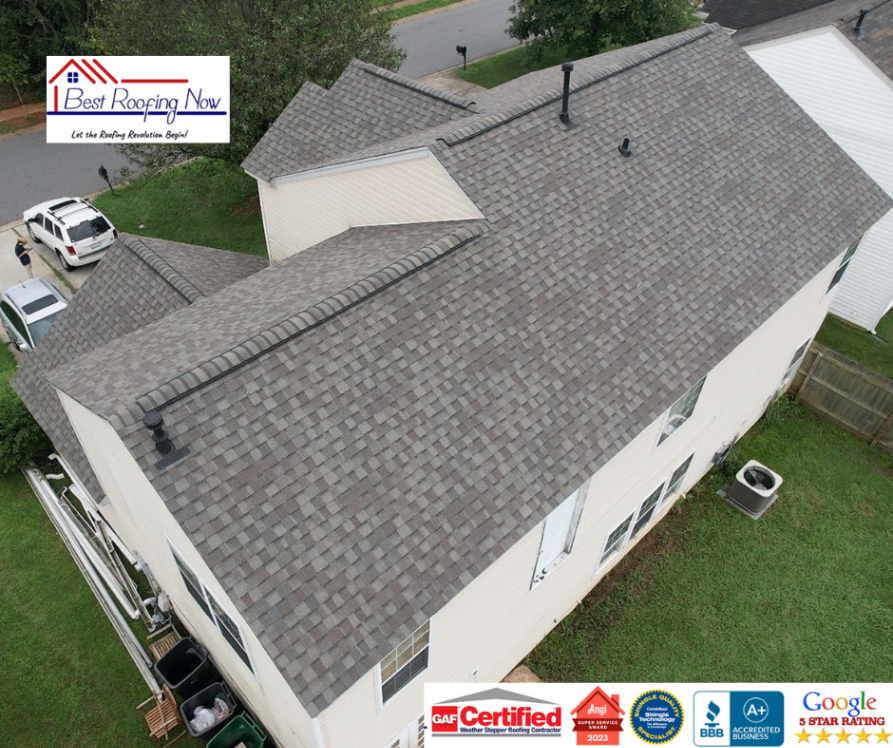
Let's get specific about how each material handles what Charlotte throws at it.
Winner: Metal
Charlotte's summer sun is relentless. Metal roofing reflects up to 70% of solar energy while asphalt absorbs most of it. On a 95°F day, an asphalt roof surface can reach 150-170°F. Metal stays 50-100 degrees cooler.
That heat affects your attic temperature, your insulation's effectiveness, and ultimately your energy bills. Over 20-30 years, those savings add up.
Winner: Metal (with proper installation)
Both materials can handle Charlotte's 43+ inches of annual rain. But metal's interlocking panels and lack of organic materials give it an edge for moisture resistance.
Asphalt shingles can work great: but they require vigilant maintenance. Clogged gutters, debris buildup, and algae growth all accelerate moisture problems.
Winner: Metal
This one isn't close. Metal roofing systems commonly achieve 110-140 mph wind ratings. Quality asphalt shingles max out around 110-130 mph, but individual shingles can lift and tear at lower speeds.
Charlotte doesn't get hurricanes like the coast, but severe thunderstorms with 60-80 mph gusts happen every spring and summer. Metal holds up better.
Winner: Tie (with proper installation)
Charlotte's occasional ice events can damage either roofing type. Metal sheds ice and snow more readily, but ice dams can still form at eaves without proper ventilation.
Asphalt handles freeze-thaw cycles well when properly installed with ice and water shield (a sticky waterproof barrier) along vulnerable edges.
Energy costs keep climbing. Your roof choice today affects your utility bills for decades.
Metal roofing with a reflective coating can reduce summer cooling costs by 10-25%. Over a 50-year lifespan, that's substantial.
Asphalt shingles in lighter colors reflect more heat than dark ones. But even "cool roof" asphalt options can't match metal's reflectivity.
For Charlotte homeowners planning to stay in their home long-term, metal's energy savings help offset the higher initial investment. The break-even point typically falls around year 15-20 when you factor in energy savings and avoided replacement costs.
We've noticed a clear shift in the Charlotte market over the past five years.
New construction in Lake Norman and south Charlotte increasingly includes metal roofing: especially standing seam systems on modern farmhouse and contemporary designs. Architects love the clean lines.
Roof replacements still favor asphalt shingles for budget-conscious homeowners, but we're seeing more upgrade conversations than ever. Homeowners who planned on asphalt are asking about metal once they understand the long-term value.
HOA restrictions remain a consideration. Some older neighborhoods have covenants requiring specific roofing materials. Always check before assuming metal is an option.
Here's my honest take after years of installing both materials across Charlotte and Lake Norman.
Choose asphalt shingles if:
Choose metal roofing if:
Neither choice is wrong. Both materials can protect your Charlotte home effectively when properly installed. The "best" roof depends on your specific situation, budget, and long-term plans.
Here's something that matters more than material choice: installation quality.
A perfectly manufactured metal roof installed poorly will fail. A basic asphalt shingle roof installed correctly will perform for decades.
Charlotte has plenty of roofing contractors. Not all of them have experience with both materials. Whatever you choose, work with a contractor who specializes in that roofing type and understands Charlotte's specific climate challenges.
✅ Key takeaway: The best roof is the one installed correctly by experienced professionals using quality materials suited to your goals.
Thinking about a new roof for your Charlotte or Lake Norman home? We'd love to help you weigh your options. Schedule a free roof inspection and let's talk about what makes sense for your home, your budget, and your long-term plans.
Best Roofing Now
Charlotte's trusted roofing experts since 2019
Based on this article, you may be interested in these services.
We proudly serve these Charlotte-area communities with professional roofing services.
View All Service Areas →See our recent roofing work across the Charlotte metro area.
Charlotte, NC
new roof
Charlotte, NC
new roof
Charlotte, NC
new roof
Charlotte, NC
new roof
Get a free roof inspection and honest assessment from Charlotte's most trusted roofing company.


