
Roofing Tips & Guides
Expert Roofing Advice for Charlotte Homeowners
Learn from Charlotte's trusted roofing experts. Tips on maintenance, repair, replacement, and protecting your home from the elements.
Ice & Snow Damage? Get 10% off repairs with a free inspection.
Learn from Charlotte's trusted roofing experts. Tips on maintenance, repair, replacement, and protecting your home from the elements.
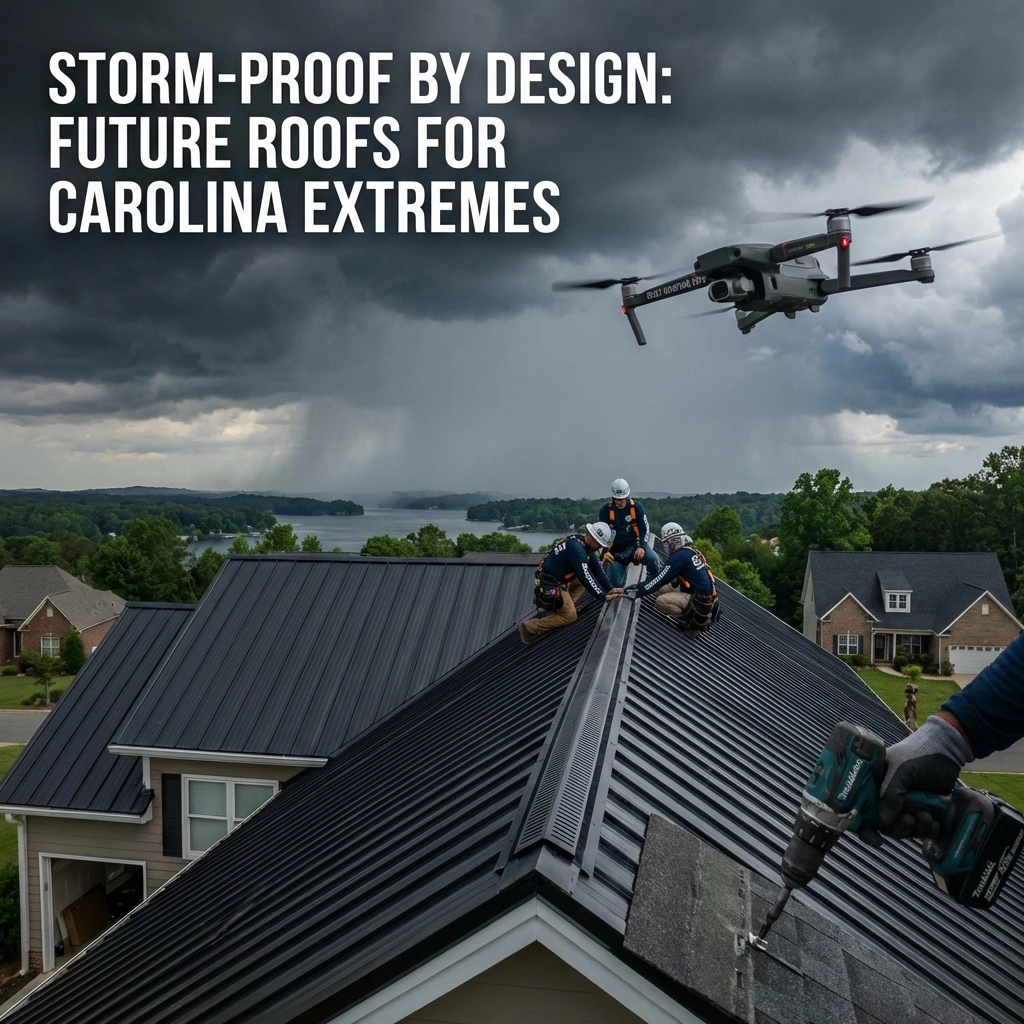
Mother Nature isn't getting gentler with Carolina homeowners. If anything, she's throwing bigger punches each year.
As someone who's climbed onto hundreds of roofs after storms in Charlotte and Lake Norman, I can tell you this: the roofs we're installing today won't cut it for tomorrow's weather. We're entering an era where "good enough" roofing will leave families with buckets in their living rooms and insurance claims that never fully cover the damage.
But here's the exciting part – the future of roofing is already here. We're seeing materials and designs that can laugh at 150+ mph winds and shrug off golf ball-sized hail. The question isn't whether storm-proof roofing will become standard in the Carolinas. It's whether you'll be an early adopter or wait until the next hurricane forces your hand.
Let me paint you a picture of what we're up against. Hurricane season runs from June through November, and we're seeing storms that would have been once-in-a-lifetime events becoming regular visitors. Category 1-4+ hurricanes with winds exceeding 150 mph aren't just hitting the coast anymore – they're making their way inland to Charlotte, Huntersville, and Davidson with enough punch to turn traditional roofing materials into projectiles.
But hurricanes aren't our only enemy. We're dealing with:
Traditional roofing systems designed for moderate climates simply weren't built for this kind of abuse. A standard asphalt shingle roof might handle a Category 1 hurricane if you're lucky. But when that Category 3 storm decides to park over Lake Norman for six hours, that's when we get the phone calls that no homeowner wants to make.

The future of storm-proof roofing starts with materials that treat extreme weather as a design requirement, not an afterthought.
Standing seam metal roofing is leading this revolution. When properly installed, these systems can withstand wind speeds exceeding 140 mph – some manufacturers are now rating their products for 180+ mph winds. The secret lies in the continuous panels with interlocking seams and concealed fasteners. There are no tabs for wind to grab, no exposed nails to work loose, and no vulnerable points where Mother Nature can get a grip and start peeling your roof away like opening a sardine can.
I've inspected metal roofs after severe storms that looked like they were installed yesterday, while the neighboring houses needed complete replacements. The difference isn't luck – it's engineering.
Concrete and clay tiles represent another quantum leap forward. When mechanically fastened (not just laid in place like the old days), concrete tiles can handle winds of 150+ mph and rain so heavy it sounds like a freight train on your roof. Their weight and interlocking design create a fortress-like barrier that doesn't just resist storm damage – it actively fights back against it.
But here's where it gets really exciting: manufacturers aren't stopping there. We're seeing new composite materials that combine the best properties of multiple materials into single products. Imagine shingles with the wind resistance of metal, the impact resistance of concrete, and the aesthetic flexibility of traditional asphalt – all while weighing less than any of them individually.
Most homeowners focus on roofing materials and forget about the shape of their roof. Big mistake.
Hip roofs – which slope on all four sides – dramatically outperform gable roofs in extreme weather. Why? Wind flows over them like water over a river stone. There are fewer edges where high winds can catch and lift, and the aerodynamic shape actually helps channel wind away from vulnerable areas.
Gable roofs, especially those with large overhangs, are like putting up a sail in a hurricane. The wind hits that vertical gable end and has nowhere to go but up and over, creating massive uplift forces that can tear sections of roof off in one piece.
If you're building new or considering a major renovation, roof geometry should be part of your storm-proofing strategy. It's not just about looking good – it's about physics and survival.

Here's something most homeowners don't know: there's now a certification program that can cut your insurance premiums while making your home exponentially more storm-resistant.
FORTIFIED certification ensures roofs meet enhanced protection requirements that go way beyond standard building codes. This includes:
The certification process involves professional assessment, quality materials, proper installation, and ongoing maintenance requirements. It's like having a PhD in storm resistance for your roof.
Insurance companies love FORTIFIED roofs because they result in fewer claims. Many insurers now offer premium discounts of 10-15% for FORTIFIED-certified homes. In hurricane-prone areas, that discount can pay for the certification process within a few years.
The future of storm-proof roofing isn't just about tougher materials – it's about intelligence.
We're starting to see sensor systems that monitor roof performance in real-time. Imagine getting a text alert that your roof has detected potential damage from last night's storm, complete with GPS coordinates of the affected area. Or sensors that measure wind uplift forces and can predict when maintenance is needed before problems develop.
Some manufacturers are developing "self-healing" roofing materials that can seal minor damage automatically. While this technology is still emerging, the early results are promising for climates like ours where small problems can quickly become big ones if left untreated.
Weather-responsive design is another frontier. Roofing systems that can adjust their properties based on incoming weather conditions aren't science fiction anymore – they're in development and testing phases right now.
Living in our area comes with specific challenges that storm-proof roofing needs to address.
Lake effect considerations around Norman, Cornelius, and Davidson can intensify storms and create localized weather patterns that catch traditional roofing off-guard. Homes near the water face additional humidity, wind shear, and temperature differential challenges.
Clay soil movement throughout the Charlotte region can cause settling that affects roof alignment and flashing integrity. Future roofing systems are being designed with flexible attachment points that accommodate foundation movement without compromising weather resistance.
Urban heat island effects in Charlotte create temperature extremes that accelerate roofing material degradation. Storm-proof roofing incorporates reflective and heat-dissipating technologies that maintain performance even under extreme temperature stress.

You don't need to break the bank to significantly improve your roof's storm resistance.
High-wind architectural shingles with 150 mph warranties represent the entry-level option for serious storm protection. While not as robust as metal or tile systems, they offer dramatic improvements over standard shingles at a modest price premium.
Stone-coated steel shingles provide the middle ground many homeowners are looking for. With wind ratings of 120-150 mph and coastal lifespans of 40-70 years, they deliver serious storm protection at roughly half the cost of premium metal systems.
For maximum protection, standing seam metal or mechanically-attached concrete tile systems represent the gold standard. Yes, the upfront investment is higher. But when you factor in longevity, insurance savings, and avoiding replacement costs after storm damage, they often prove more economical over time.
The writing is on the wall – extreme weather is becoming the norm in the Carolinas. The roofing industry is responding with materials and methods that can handle whatever nature throws at us.
But here's the thing: these advances only help if you implement them. Waiting until after storm damage to upgrade means dealing with emergency contractors, insurance hassles, and temporary repairs while living under tarps.
The homeowners who are getting ahead of this trend are the ones who'll sleep soundly during the next hurricane warning. They're investing in storm-proof roofing now, while they can choose their contractor and materials carefully rather than scrambling for whoever's available after the storm.
If you're in Charlotte, Lake Norman, or surrounding areas, I encourage you to have your roof evaluated not just for current condition, but for storm readiness. The question isn't whether we'll see more extreme weather – it's whether your roof will be ready for it.
Ready to storm-proof your home? Contact Best Roofing Now for a free consultation on upgrading your roof to handle Carolina's extreme weather. We'll assess your current system and recommend the most cost-effective path to serious storm protection. Don't wait for the next hurricane warning – call us today and sleep better tomorrow.
Best Roofing Now
Charlotte's trusted roofing experts since 2019
Based on this article, you may be interested in these services.
We proudly serve these Charlotte-area communities with professional roofing services.
View All Service Areas →See our recent roofing work across the Charlotte metro area.

Charlotte, NC
completed exterior

Charlotte, NC
work in progress

Charlotte, NC
new roof

Charlotte, NC
new roof
Get a free roof inspection and honest assessment from Charlotte's most trusted roofing company.


