
Roofing Tips & Guides
Expert Roofing Advice for Charlotte Homeowners
Learn from Charlotte's trusted roofing experts. Tips on maintenance, repair, replacement, and protecting your home from the elements.
Ice & Snow Damage? Get 10% off repairs with a free inspection.
Learn from Charlotte's trusted roofing experts. Tips on maintenance, repair, replacement, and protecting your home from the elements.
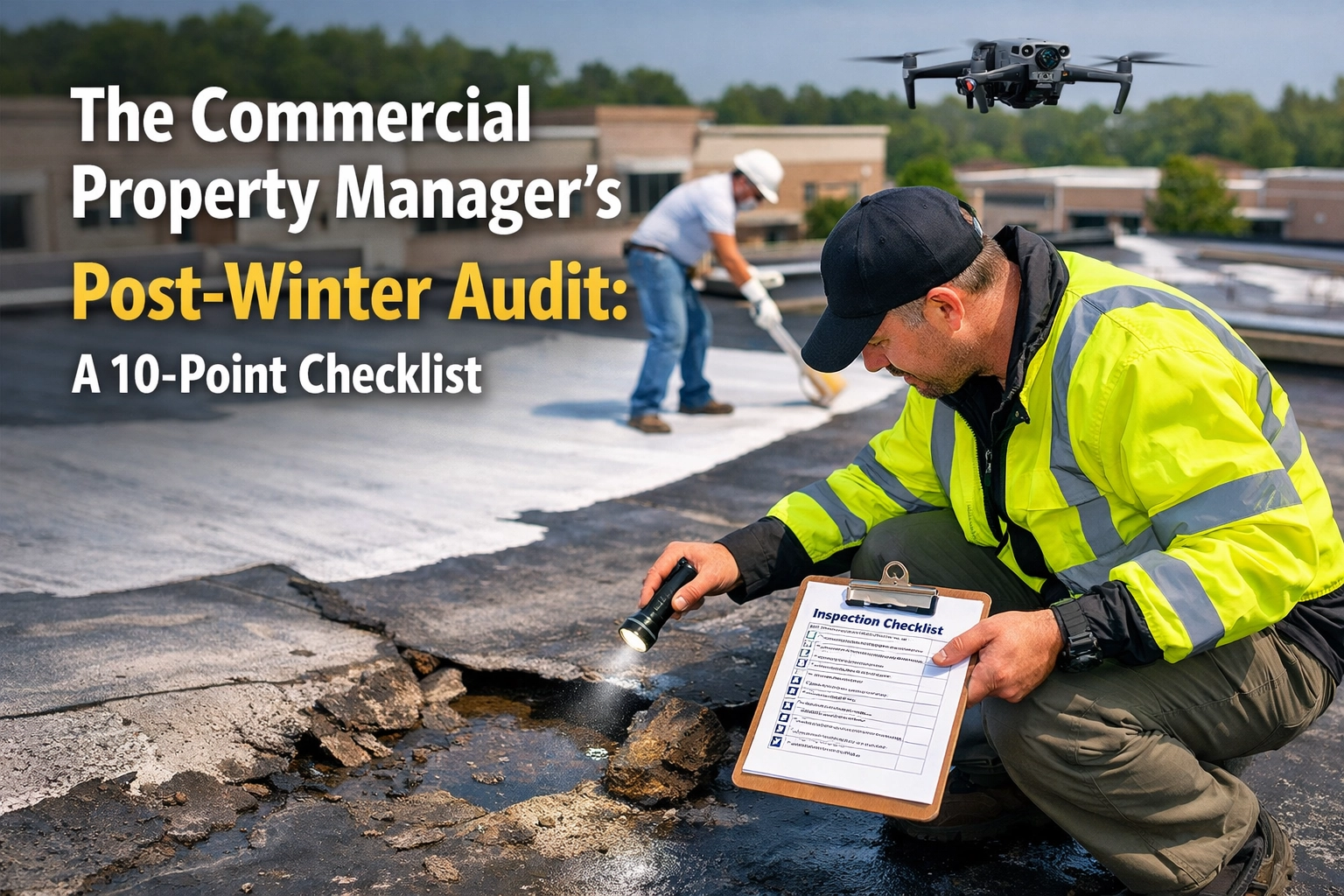
February 2026 has been rough on commercial roofs across Charlotte and Lake Norman.
That record snowstorm we just dealt with? It didn't just make your tenants grumpy about the parking lot. It put serious stress on every flat roof, HVAC unit, and drainage system under your management.
Now that the Big Melt is underway, you've got a narrow window to catch problems before they become expensive disasters.
I've walked hundreds of commercial roofs after major weather events. The property managers who catch issues early save tens of thousands in emergency repairs. The ones who wait until May? They're dealing with ceiling tiles falling during business hours and furious tenants threatening to break their leases.
This checklist is built from two decades of post-storm commercial inspections. It's designed to be fast, thorough, and focused on the problems that actually cost you money.
Let's get started.
Residential roofs shed water quickly because of their steep pitch. Commercial flat roofs hold water like a bathtub.
After weeks of snow and ice, that "bathtub" has been tested hard. Expansion and contraction. Freeze-thaw cycles. Weight stress. UV damage during those rare sunny days.
All of these create small problems that become big ones during spring rain season.
The National Roofing Contractors Association says most commercial roof failures start with minor issues that went unnoticed for months. In Charlotte's climate, those months are usually February through April.
Your post-winter audit is your chance to find the small stuff before it ruins someone's inventory.

Start your audit with your phone camera out.
Take wide shots of the entire roof from multiple angles. Get close-ups of every drain, HVAC unit, and roof penetration. Include timestamps if your phone supports it.
Why does this matter? Because insurance adjusters need proof of the original condition. If you fix a problem before documenting it, you might lose coverage.
I've seen property managers miss out on $15,000 insurance claims because they cleaned debris before taking photos. The adjuster assumed the damage happened after winter.
Document curbs. Parapets. Equipment pads. Everything.
What to photograph:
Save these photos with the property address and date. You'll thank yourself later.
Walk the entire roof surface and look for standing water.
Ponding is any water that stays on the roof longer than 48 hours after rain or snow melt. It might seem harmless. It's not.
Standing water degrades roof membranes. It adds weight stress to the structure. It freezes and expands in the next cold snap. And it creates the perfect breeding ground for algae and moss that eats through your waterproofing.
After the 2026 snow, I found commercial roofs in Huntersville holding 6+ inches of water. That's roughly 31 pounds per square foot of dead weight. On older buildings with questionable structural support, that's dangerous.
Where ponding usually happens:
If you find ponding, mark the locations. Take measurements of depth if possible. This tells your roofing contractor exactly what needs fixing.
Some ponding requires structural work to correct the slope. That's not a quick fix. But catching it now means you can budget properly instead of panicking during spring storms.
Clogged drains are the number one cause of commercial roof leaks in Charlotte.
After winter, drains fill with leaves, ice chunks, shingle granules from neighboring buildings, and general debris. When blocked, water backs up onto the roof membrane and finds any weakness to leak through.
Pull the drain strainers and look inside. Wear gloves: this gets messy.
Check for:
Scuppers (those overflow openings in parapet walls) need the same attention. Make sure they're clear and pointing away from the building.
Pro tip: Pour a bucket of water into each drain after you clear it. The water should disappear immediately. If it drains slowly or backs up, you have a clog deeper in the system that needs professional attention.
I've seen entire roof membranes fail because a $50 drain cleaning got put off for six months. Don't be that property manager.

Your roof membrane is the waterproof layer that keeps the building dry. On flat commercial roofs, it's usually TPO, EPDM, or modified bitumen.
Winter weather beats up membranes. Ice expansion creates tiny tears. Tree branches puncture the surface. UV exposure during sunny days causes blistering.
Walk slowly across the entire roof. Look for:
Pay extra attention to high-traffic areas. Spots where HVAC techs walk regularly see more wear.
Blisters are tricky. Small ones might not leak yet. But they trap moisture underneath that freezes and expands during the next winter. That turns a small blister into a major tear.
Mark every problem area with chalk or bright tape. Your roofing contractor will need to address each one.
Flashing is the metal or membrane that seals around anything that penetrates the roof. Think HVAC units, vent pipes, skylights, and roof hatches.
These are the weak points. They're where most leaks start.
After winter's freeze-thaw cycles, flashing pulls away from penetrations. Sealant cracks. Metal expands and contracts until fasteners loosen.
Inspect every penetration carefully:
HVAC curbs deserve special attention. These heavy units sit on raised platforms that create complicated flashing situations. Ice dams form around the bases and cause hidden leaks.
According to the Metal Construction Association: "Approximately 70% of roof leaks occur at roof penetrations and flashing details." That's not surprising when you see how much stress these areas take.
If you find flashing problems, document them with photos. Some repairs are simple resealing. Others require complete flashing replacement. Your contractor will tell you which is which.
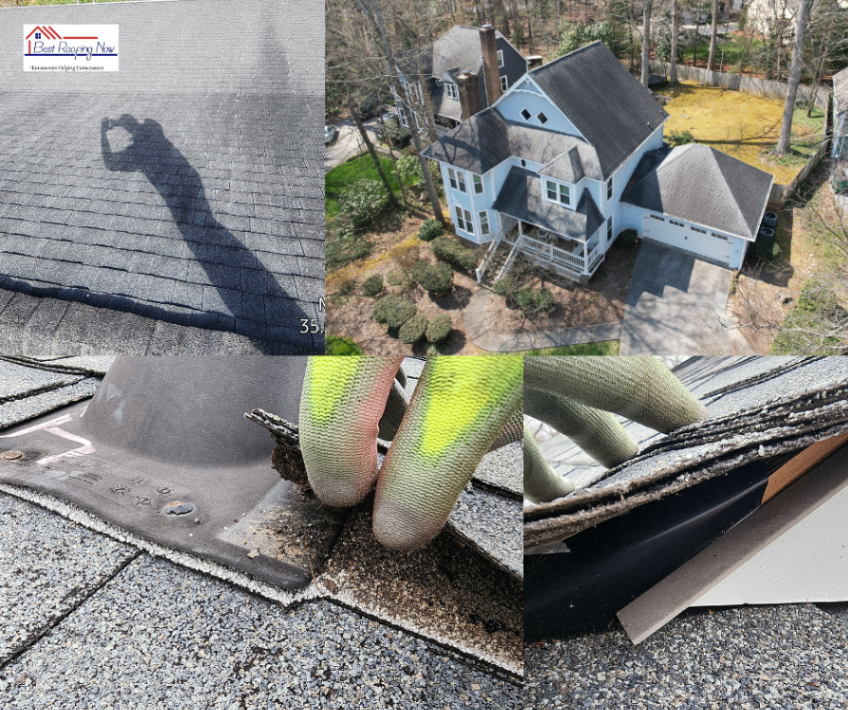
Commercial roofs are equipment farms. HVAC units, exhaust fans, satellite dishes, and utility boxes crowd the surface.
Each piece of equipment is a potential problem after winter.
Start with a visual inspection from ground level if possible. Look for:
Then get on the roof and check the mounting. Make sure:
Heavy snow loads can shift HVAC units. Even an inch of movement can tear the flashing and create leaks.
I once found a 5-ton unit in Davidson that had shifted 8 inches during the winter. The property manager didn't notice until water started dripping through the ceiling in the middle of a business meeting.
Document any equipment issues and share them with your HVAC contractor. Roof leaks and HVAC problems often overlap. Both contractors need to coordinate repairs.
Parapet walls are those short walls around the edge of flat roofs. They're supposed to protect the roof edge. But after winter, they often need protection themselves.
Ice buildup along parapet walls creates tremendous pressure. It can crack masonry, shift coping caps, and damage the membrane at the wall base.
Walk the entire perimeter and inspect:
Loose coping caps are dangerous. They become projectiles during spring windstorms. If you find any movement, get them secured immediately.
The National Roofing Contractors Association recommends inspecting parapets twice yearly: spring and fall. After major weather events like the 2026 snow, add an extra inspection.
Not all commercial buildings have gutters. But if yours does, they took a beating this winter.
Ice dams form in commercial gutters just like residential ones. The weight pulls gutters away from the building. Expanding ice cracks seams and end caps.
Check each section of gutter:
Commercial gutters handle higher water volumes than residential systems. A small problem becomes a major leak fast.
If gutters overflow during spring rains, water cascades down exterior walls. That causes:
Budget gutter repairs now. They're cheaper than fixing water damage inside the building.
If you hired a snow removal contractor this winter, inspect for collateral damage.
Plows and shovels damage more roofs than people realize. Especially on low-slope commercial buildings where contractors can't see what they're scraping.
Look for:
Take photos of any damage you find. Compare them to your pre-winter documentation. This helps with insurance claims and contractor accountability.
Some snow removal damage doesn't show up immediately. A small puncture might not leak until spring rains arrive. That's why this inspection matters.
Best practice from industry experts: Review your snow removal contract to understand liability for roof damage. Many contracts exclude responsibility for membrane damage. Know what you're covered for before you need to make a claim.
Your roof audit isn't complete until you check inside the building.
Some winter damage shows up as interior problems first. Especially if tenants haven't reported issues yet.
Walk the top floor and look for:
Check storage rooms, mechanical rooms, and other spaces tenants don't use daily. These areas hide leaks longer.
If you find interior damage, trace it upward. Find the corresponding roof area above and inspect thoroughly. The leak source might be 10 feet away from where water appears inside: water travels along joists and insulation before dripping through.
Document interior damage with photos. Include measurements and descriptions. Your insurance adjuster will need this information.

Now you have a complete picture of your roof's post-winter condition.
Sort your findings into three categories:
1. Immediate repairs (active leaks, safety hazards, structural concerns)
2. Preventive maintenance (minor issues that will worsen)
3. Budget planning (problems that need attention within 12 months)
Share your documented findings with a local commercial roofing contractor. Someone who understands Charlotte's weather patterns and has experience with your type of building.
At Best Roofing Now, we provide free commercial roof inspections for property managers across Charlotte, Huntersville, Cornelius, and Davidson. We'll review your audit findings, provide detailed repair estimates, and help prioritize work based on your budget.
We're veteran-owned and have been maintaining commercial roofs in Lake Norman for years. We understand the pressure property managers face. Quick response times. Clear communication. No-pressure consultations that respect your timeline and budget.
I wish I could say this audit was optional. It's not.
The average commercial roof leak costs between $8,000 and $15,000 to repair, according to industry data. That includes interior damage, lost business hours, tenant complaints, and emergency roofing work.
Compare that to a $300 spring inspection and minor repairs. The math is clear.
But beyond the money, there's liability. If a tenant suffers property damage from a leak you could have prevented, you're looking at insurance claims, legal issues, and lost trust.
Property managers who run post-winter audits sleep better. They know exactly what's happening on every roof under their management. They budget properly. They avoid surprises.
The ones who skip this step? They're the ones calling us at 9 PM on a Friday because water is pouring through a retail space ceiling.
Print this checklist. Walk every commercial roof you manage. Document what you find.
Then call Best Roofing Now at the number on our website. We'll schedule a free inspection to review your findings and provide detailed repair recommendations.
We serve property managers throughout Charlotte and Lake Norman. Our commercial roofing team understands the unique challenges of flat roofs, built-up systems, and EPDM membranes.
We don't use high-pressure sales tactics. We provide honest assessments and fair pricing. That's the veteran-owned difference.
Schedule your free commercial roof inspection today: https://bestroofingnow.com
Because your tenants deserve a roof that works. And you deserve to sleep through the next spring storm. ⚠️
Best Roofing Now
Charlotte's trusted roofing experts since 2019
Based on this article, you may be interested in these services.
We proudly serve these Charlotte-area communities with professional roofing services.
View All Service Areas →See our recent roofing work across the Charlotte metro area.

Charlotte, NC
new roof

Charlotte, NC
new roof

Charlotte, NC
new roof

Charlotte, NC
before after
Get a free roof inspection and honest assessment from Charlotte's most trusted roofing company.


