
Roofing Tips & Guides
Expert Roofing Advice for Charlotte Homeowners
Learn from Charlotte's trusted roofing experts. Tips on maintenance, repair, replacement, and protecting your home from the elements.
Ice & Snow Damage? Get 10% off repairs with a free inspection.
Learn from Charlotte's trusted roofing experts. Tips on maintenance, repair, replacement, and protecting your home from the elements.
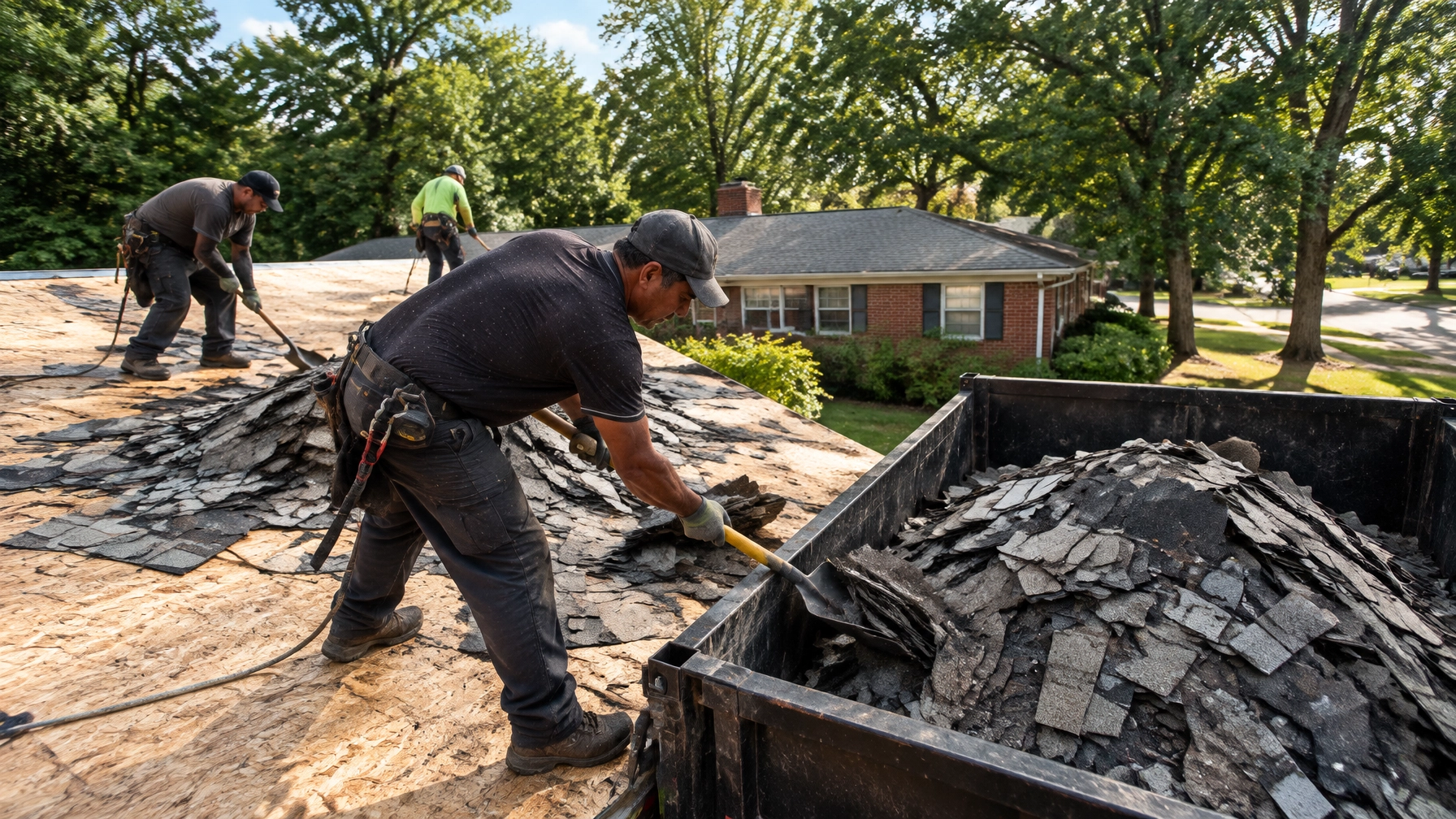
When a roof comes off, the old shingles do not simply disappear.
A typical tear-off can create a large pile of asphalt shingles, felt, nails, flashing, wood, and other debris. In Charlotte and Lake Norman, storm damage can make that pile even larger. Hail, high winds, and fallen branches often lead to emergency roof work during storm season.
So, what happens next?
Some old roofing material goes to a landfill. But clean asphalt shingles can often be processed and used in new roads, parking lots, and driveways. This process is called asphalt shingle recycling.
For homeowners planning a replacement, the most important step is simple: ask your roofing contractor where the old material will go.
Most asphalt shingles contain a blend of asphalt, mineral granules, fiberglass, and other materials. These materials protect homes well, but they do not break down quickly in a landfill.
The amount of waste depends on several factors:
Older homes in Dilworth, Myers Park, and Plaza Midwood may have more than one layer of shingles. Each extra layer adds weight and volume to the tear-off load.
Lake Norman homes can create large loads, too. Waterfront communities in Cornelius, Davidson, Mooresville, Denver, and Sherrills Ford often have larger roof areas, garages, porches, and complex roof lines.
That means more material to handle after the crew finishes the tear-off.
The process varies by facility, but it usually follows these steps.
Roofers use tear-off tools to remove the shingles and underlayment. They then place the debris into a trailer, truck, or roll-off container.
A good crew tries to keep the shingle load as clean as possible. Wood, insulation, plastic, loose trash, and metal flashing should stay separate when the recycling facility requires it.
Nails usually do not need to be pulled out by hand. The Asphalt Roofing Manufacturers Association explains that most recyclers use powerful magnets on the grinder to remove nails from the shingles.
That saves time without preventing recycling.
Recyclers have different rules. Some accept shingles with attached felt and nails. Others require a more carefully separated load.
The facility may reject a load if it contains too much wood, insulation, plastic, or general trash. This is why your contractor should contact the recycler before the project begins.
North Carolina has an important safety step, too. Before old shingles are ground, they must be tested for asbestos by a North Carolina Accredited Asbestos Inspector or Accredited Roofing Supervisor.
This matters most with very old roofing materials. Do not assume an old roof is safe to process without testing.
Once accepted, the shingles move through a grinder. The machine breaks them into smaller pieces and removes nails with magnets.
The processed material is called reclaimed asphalt shingles, or RAS. The grinder and screens help create a consistent material for future use.
North Carolina also requires paving plants using post-consumer recycled asphalt shingles to follow air quality rules. Asphalt plants must modify their air quality permits before using this material.
The most common use for recycled shingles is hot mix asphalt. The ground shingle material can replace a portion of new asphalt binder and stone.
Road crews may use the finished mix for roads, parking lots, and other paved surfaces. In this way, an old roof can become part of a new roadway.
ARMA reports that the equivalent of about 256,400 residential roofs were recycled into asphalt pavement in 2024. North Carolina has also remained one of the leading states for reclaimed asphalt shingle use. The state reported RAS use every year from 2014 through 2024.
“Shingle recycling is economically viable, convenient where available, and saves valuable resources from being sent to a landfill.”- Asphalt Roofing Manufacturers Association
The North Carolina Department of Environmental Quality uses the term “clean” for shingles with unwanted materials removed.
NC DEQ states that shingles are clean when metal, wood, insulation, flashing, and other trash are removed.
Clean loads are easier to process. They may also qualify for lower tipping fees at some facilities.
But this does not mean every roof can be recycled. Some roofing projects have mixed debris. Some facilities are too far away to make recycling practical. Others may not accept certain roofing types.
A responsible roofing plan looks at both the environmental benefit and the actual local logistics.
Homeowners and contractors should call each facility before hauling a load. Rules, hours, fees, and accepted materials can change.
If you are comparing options in Charlotte and around Lake Norman, it helps to look at both the disposal site and the driving distance from the job. A recycler that looks great on paper may not make sense if the haul is long, the load is small, or the roof includes too much mixed debris.
Mecklenburg County accepts shingles as construction and demolition waste at its full-service drop-off centers and the Foxhole Landfill. Disposal fees apply.
This provides a local disposal option. However, acceptance as construction waste does not always mean the shingles will enter a dedicated recycling stream. Ask how the material will be handled before delivery.
You can review current information through Mecklenburg County solid waste facilities.
Boggs Paving in Monroe accepts shingles and roofing materials for recycling. Its location may make sense for some Charlotte-area projects, depending on the roof size, truck route, and load requirements.
Ask whether the facility accepts your specific material and what contamination limits apply. Visit Boggs Paving for current contact information.
Iredell County operates a shingle recycling program at the Twin Oaks facility in Statesville. Clean, source-separated loads may qualify for reduced tipping fees.
This can be useful for homeowners and lake-area projects near Mooresville, Davidson, and other northern communities. See the Iredell County asphalt shingle recycling program for current requirements.
Two useful search tools are ShingleRecycling.org and Earth911.
Neither resource replaces a phone call. Confirm that the facility is open, accepts post-consumer shingles, and can handle the material from your roof.
Homeowners usually do not sort roofing debris themselves. But you can often tell, before work starts, whether your load has a good chance of being recycled.
A load is more likely to qualify when:
A load is less likely to qualify when:
One simple clue is the estimate itself. If your contractor lists one clean shingle dumpster and a separate trash or wood load, that often means they are planning for better separation. If everything is going into one mixed demolition container, recycling may be harder.
Another clue is roof age. Very old roofing materials may trigger extra asbestos testing steps before processing. That does not always mean the load cannot be recycled. But it can slow the process or make landfill disposal the more practical route.
And here is the honest part. Even when a contractor plans to recycle, the final call usually belongs to the receiving facility. If the load shows too much contamination, the recycler may reject it.
A roof tear-off includes much more than shingles. Homeowners are often surprised by how many materials come off during a full replacement.
Older roofs often have felt paper under the shingles. Newer roofs may have synthetic underlayment, which is a woven or plastic-based water-shedding layer.
These materials usually do not go into the same recycling stream as shingles. In many cases, they end up in the landfill with other mixed jobsite debris. Some specialty programs exist in parts of the country, but they are not common on everyday residential tear-offs in our area.
Flashing is the sheet metal around chimneys, walls, valleys, and pipe boots. Drip edge and other trim pieces are also metal.
If those pieces come off fairly clean, contractors can often separate them for scrap-metal recycling. This is one of the easiest parts of a roof to recover. But badly bent, heavily sealed, or mixed metal may still go out with general debris.
Decking is the wood surface under the shingles. If the wood is dry and in good shape, it stays in place.
If the decking is rotten, delaminated, or water-damaged, the crew removes it and installs new wood. Damaged decking usually goes into construction waste. Clean dimensional lumber is easier to reuse or recycle than old roof sheathing, which is often nailed up, broken, and wet.
Roofing nails come off by the thousands. The good news is that they do not usually stop shingle recycling.
As ARMA explains, recyclers often use magnets during grinding to remove nails from the shingle material. Loose nails swept up around the site usually go out with debris unless the contractor collects them with a magnet and separates the scrap metal.
If the project also includes gutter replacement, aluminum gutters can often be recycled as scrap metal. Steel gutters may be recyclable too, depending on the yard and condition.
But old gutters with heavy sealant, rotted fascia attached, or mixed leaf debris may be harder to process cleanly. So, sometimes.
These smaller parts are usually made of mixed materials such as rubber, plastic, mesh, foam, and metal. Most go into the landfill because they are hard to separate and low in value.
That may sound disappointing. But it is normal. Roofing recycling is helpful, not perfect.
Many homeowners think about color for curb appeal first. That makes sense. But roof color and material choice also affect attic heat, shingle aging, and sometimes how long the roof holds up.
Lighter-colored roofs usually reflect more sunlight than darker roofs. That can reduce heat buildup at the roof surface and in the attic. Darker roofs absorb more heat, which may increase summer attic temperatures during long Charlotte heat waves.
The U.S. Department of Energy explains that cool roofs are designed to reflect more sunlight and absorb less heat than standard roofing materials. In simple terms, some roofs stay cooler because they bounce more sun away.
Material matters too:
Color alone will not decide roof life. Ventilation, installation quality, storm exposure, tree cover, and maintenance matter just as much. But if two roofs are installed equally well, the one that runs cooler may age a bit more slowly over time.
This is one reason we talk with homeowners about the whole system, not just the shingle sample board.
From a homeowner's side, disposal may appear as one line on the estimate. From a contractor's side, there is more going on.
The real cost comparison often includes:
If the recycler is close and the roof is a clean one-layer asphalt tear-off, recycling can be very competitive with landfill disposal. In some cases, reduced tipping fees for source-separated shingles help offset the extra sorting effort.
But if the project has multiple layers, lots of rotten wood, or a long drive to the recycler, landfill disposal may cost less overall. The trucking alone can erase the savings.
A realistic contractor view looks something like this:
That is why two honest contractors can give different answers on the same question. One may say recycling is practical for your address and roof type. Another may say landfill disposal is more realistic this time.
Neither answer is automatically wrong. The key is whether they can explain the reason clearly.
The National Roofing Contractors Association has long emphasized planning, safety, and proper material handling on reroofing jobs. And that is really the point here. Recycling works best when it is part of the plan from the start, not an afterthought at the dump gate.
Metal roofing has a different end-of-life story.
Standing seam and exposed-fastener metal roofing are largely recyclable when removed. Steel and aluminum can usually enter established scrap-metal recycling systems.
The crew still needs to remove other materials first. Insulation, wood, fasteners, sealants, and mixed debris may need separate handling.
Metal roof recycling is one reason metal can offer a strong long-term sustainability benefit. A metal roof may last longer than many asphalt systems, and the material can often be recovered instead of buried.
Still, metal roofing is not automatically recyclable at every local facility. Ask your contractor where the panels and trim will go.
Before hiring a roofing contractor, ask these questions:
A clear answer should include the name of the facility or recycling partner. “We dispose of it responsibly” is not enough detail.
You can also help by keeping loose household trash away from the roofing work area. Ask the crew to separate large pieces of metal flashing, wood, and other debris when practical.
And remember: recycling should never come before worker safety or proper roof protection.
Good maintenance can also reduce waste.
A roof that receives regular inspections may avoid premature replacement. Replacing damaged flashing, sealing small openings, and correcting ventilation problems can sometimes extend roof life.
This does not mean every repair will last forever. Old shingles lose flexibility, and storm damage can weaken a roof quickly. But a timely repair may prevent water damage to decking, insulation, drywall, and personal belongings.
For homeowners researching roof maintenance in Charlotte, NC, the goal is simple: keep the roof working safely for as long as it reasonably can. When replacement becomes necessary, plan the tear-off and recycling route before the first shingle comes off.
There is also a second benefit. A well-maintained roof often comes off cleaner when replacement day finally arrives. Less hidden rot, less soaked underlayment, and fewer emergency patch materials can make separation easier for the crew.
Recycling concerns the old shingles, but a quality replacement also depends on what happens underneath.
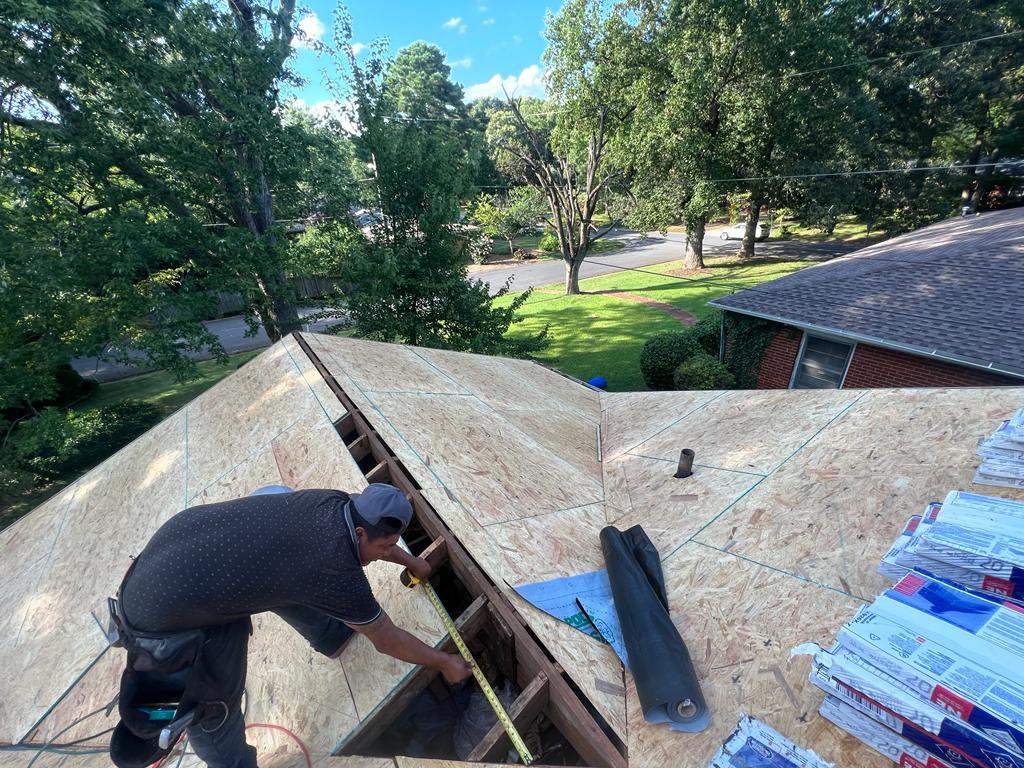
During a replacement, the crew may find soft decking, damaged valleys, or worn flashing. Those materials need careful inspection before the new roof goes on.
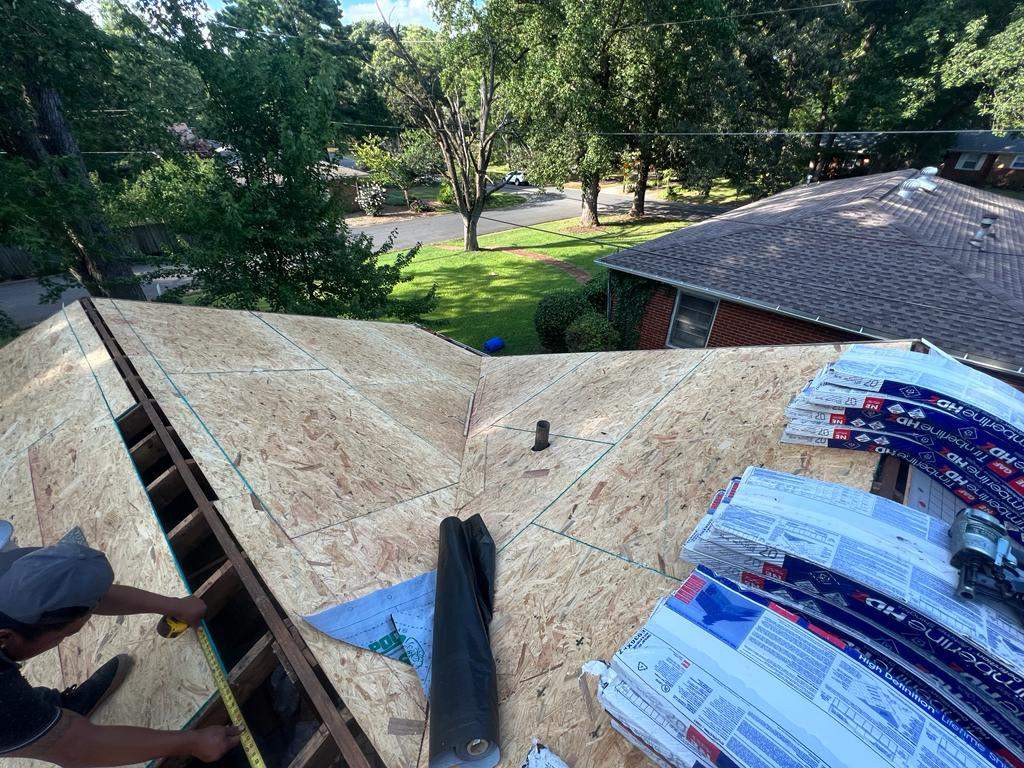
The new roof should include sound decking, correctly installed underlayment, proper flashing, and shingles fastened according to manufacturer instructions.
That complete approach helps the roof last longer. A longer-lasting roof means fewer tear-offs and less waste over time.

Not every old roof in Charlotte or Lake Norman can be recycled. Haul distance, contamination, asbestos testing, facility rules, and project size all matter.
But many clean asphalt shingle loads can become useful pavement instead of landfill waste. Metal roofing can often enter scrap-metal recycling channels. Homeowners can influence the outcome by asking specific questions before work begins.
If you are planning a roof replacement, Charlotte homeowners and property owners near Lake Norman can start with one clear step:
Schedule a free inspection with Best Roofing Now and ask for a written plan showing how your old roofing materials will be handled.
{“@graph”:[{“@type”:”Article”,”about”:[“Asphalt shingle recycling”,”Roof recycling”,”Metal roof recycling”,”Roofing in Charlotte NC”,”Lake Norman roofers”],”author”:{“name”:”Best Roofing Now”,”@type”:”Organization”},”headline”:”What Happens to Your Old Roof? How Shingle Recycling Works in Charlotte & Lake Norman”,”publisher”:{“url”:”https://bestroofingnow.com”,”name”:”Best Roofing Now”,”@type”:”Organization”},”inLanguage”:”en-US”,”description”:”A practical guide for Charlotte and Lake Norman homeowners explaining asphalt shingle recycling, local disposal options, recycled shingles, metal roof recycling, and how to keep old roofing materials out of landfills.”,”mainEntityOfPage”:”https://bestroofingnow.com”},{“@type”:”FAQPage”,”mainEntity”:[{“name”:”Can asphalt shingles be recycled in Charlotte and Lake Norman?”,”@type”:”Question”,”acceptedAnswer”:{“text”:”Yes. Clean asphalt shingles may be accepted by regional recycling facilities and processed into reclaimed asphalt shingles for pavement. Availability depends on facility rules, haul distance, contamination, and asbestos testing requirements.”,”@type”:”Answer”}},{“name”:”Do roofing nails need to be removed before shingle recycling?”,”@type”:”Question”,”acceptedAnswer”:{“text”:”Usually, no. Many recyclers use magnets on the grinder to remove nails. Homeowners and contractors should confirm the recycler’s current requirements before delivery.”,”@type”:”Answer”}},{“name”:”What makes asphalt shingles clean enough for recycling in North Carolina?”,”@type”:”Question”,”acceptedAnswer”:{“text”:”North Carolina considers shingles clean when metal, wood, insulation, flashing, and other trash are removed. The shingles must also meet applicable asbestos testing and processing requirements.”,”@type”:”Answer”}},{“name”:”Are metal roofs recyclable at the end of their life?”,”@type”:”Question”,”acceptedAnswer”:{“text”:”Standing seam and exposed-fastener metal roofing are largely recyclable through scrap-metal channels, although local facilities may have different rules for panels, fasteners, insulation, and mixed debris.”,”@type”:”Answer”}}]}],”@context”:”https://schema.org”}
Best Roofing Now
Charlotte's trusted roofing experts since 2019
Based on this article, you may be interested in these services.
We proudly serve these Charlotte-area communities with professional roofing services.
View All Service Areas →See our recent roofing work across the Charlotte metro area.

Charlotte, NC
work in progress

Charlotte, NC
new roof

Charlotte, NC
new roof

Charlotte, NC
completed exterior
Get a free roof inspection and honest assessment from Charlotte's most trusted roofing company.


