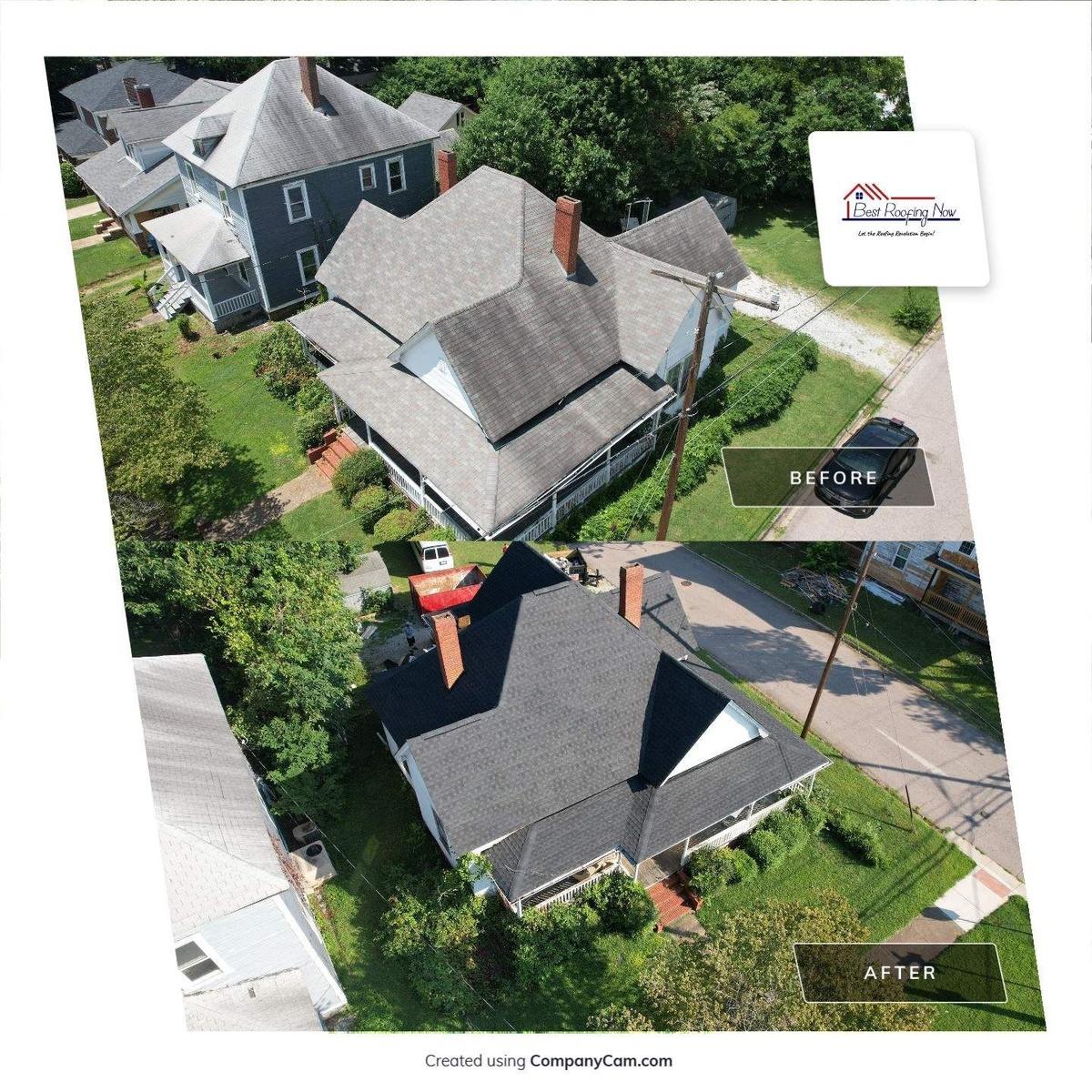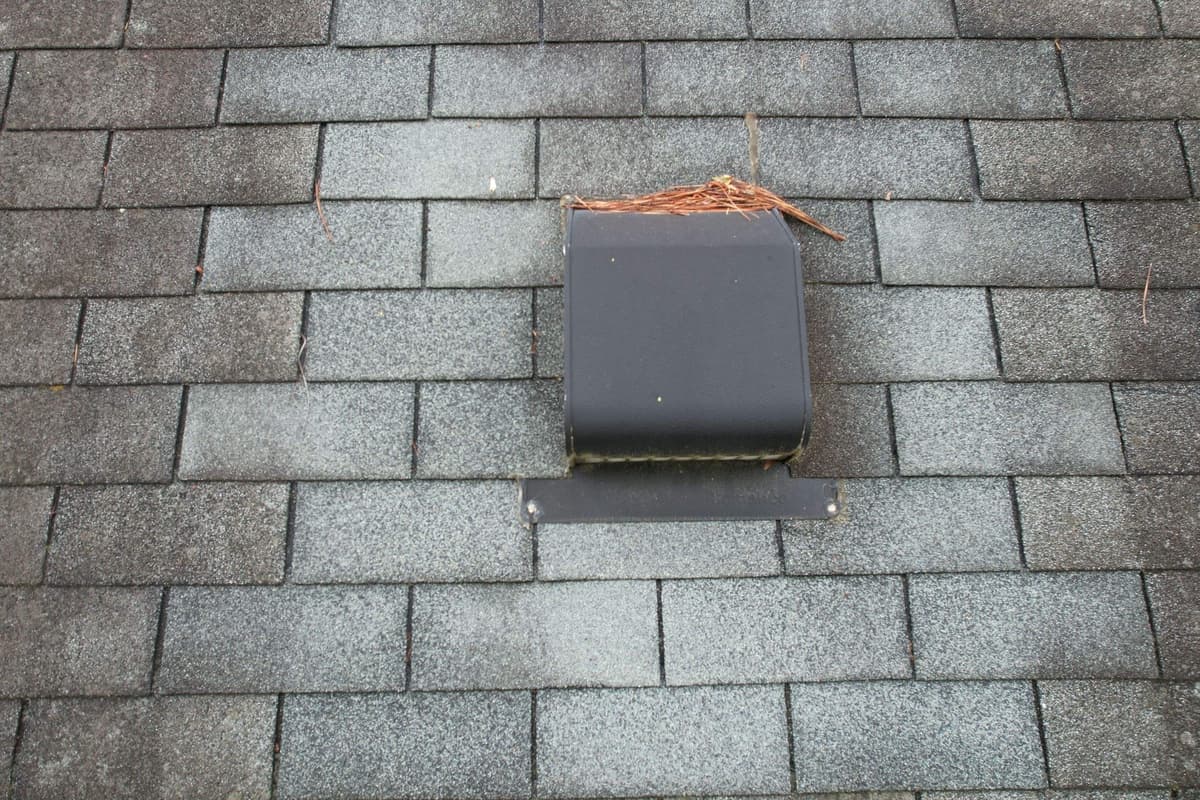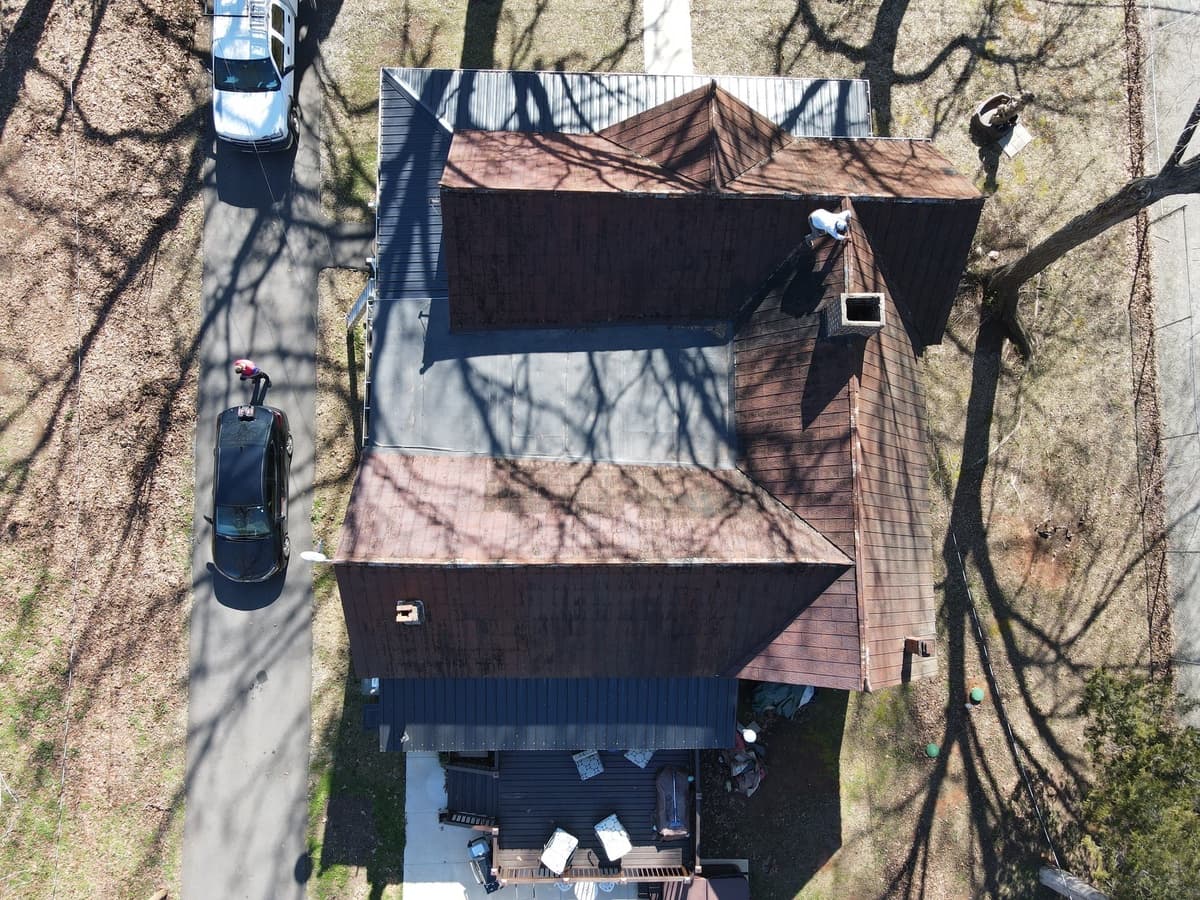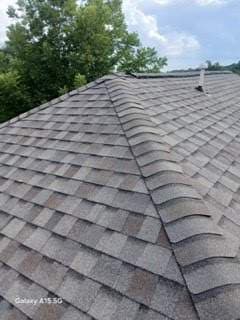
The call we get every August sounds familiar. A homeowner points to an 11-year-old roof with curling, blistering shingles. There has been no hail and no tree damage.
Then we look inside the attic. Sometimes the air is so hot and still that it takes your breath away. Other times, a bathroom fan blows warm, wet air onto the roof deck. The damage can begin under the shingles, where no one sees it from the driveway.
Charlotte’s July normal high is 90.3 degrees, and its normal low is 69.9 degrees. Those warm nights give an attic little time to cool down. The National Weather Service’s Charlotte July daily normals show why summer heat can linger.
A roof is more than the shingles you see. The attic beneath them helps decide how well the whole system handles heat and moisture. Good roof maintenance in Charlotte, NC, starts by looking at both.
What a roof assembly really is
Think of a roof assembly as a set of layers working together. Shingles sit on top and block sun and rain. Under them is underlayment, a protective sheet that helps keep water from reaching the wood.
Below that sits the roof deck, the wood sheets that support the roof. Then comes the attic. In a typical vented attic, air should enter near the eaves, move through the space, and leave near the roof’s peak.
Each layer has a job. Shingles shield the home, the deck holds the roofing up, and the attic helps manage heat and moisture. When attic air cannot move or moisture cannot escape, trouble can start below the part you can see.
How a hot attic cooks shingles from below
The sun heats shingles from above. At the same time, trapped attic air warms the roof deck from underneath. That means the roof can face heat on both sides for hours.
Asphalt shingles contain asphalt and small mineral granules. The asphalt helps hold the shingle together, while granules help protect its surface. Long periods of heat can make asphalt lose some of its oils and grow stiff.
Stiff shingles do not bend as well when the roof deck shifts or a storm pushes against them. They may crack instead. Shingles are rated for surface temperature, not for being baked from two directions by a hot roof and a trapped attic.
A balanced vent system helps move hot air out. Soffit vents are the small openings under the eaves. A ridge vent is a long vent strip along the roof’s top ridge.
Outside air can enter through soffit vents and flow up toward the ridge vent. That movement helps carry heat and moisture away. But vents only work as a system when air has a clear path in and out.
Joseph Lstiburek of Building Science Corporation explains how a roof’s venting needs can change with the weather:
“In a hot climate, the primary purpose of ventilation is to expel solar-heated hot air from the attic or roof to reduce the building's cooling load and to relieve the strain on air-conditioning systems. In mixed climates, ventilation serves either role, depending on the season.”
His article, “A Crash Course in Roof Venting”, points to the same balance we see in local homes. Summer heat matters, but so does moisture during cooler months.
Charlotte is a mixed climate, and that is the tricky part
In summer, the attic needs to let heat out. In winter, it needs to release moisture. Charlotte’s winters are often short and wet rather than deeply cold, so attic moisture still deserves attention.
Warm, moist air from a home can leak into the attic. On a cold January night, that air can touch the cooler roof deck and turn into water. This process is called condensation: water forms when warm, damp air cools against a cold surface.
Repeated moisture can soften the deck and cause the wood to rot. The roof may sag if damaged wood loses strength. Mold can also grow on the roof sheathing, the wood panels that make up the deck.
Our Charlotte, NC location page notes about 43 inches of rain each year. After a summer storm, humid air can linger for days. The roof needs a way to dry, not just a way to shed rain.
ENERGY STAR describes what good natural airflow can do:
“In the summer, natural air flow in a well-vented attic moves super-heated air out of the attic, protecting roof shingles and removing moisture.”
It also warns about a common mistake: “NEVER COVER ATTIC SOFFIT VENTS WITH INSULATION”. Read ENERGY STAR’s guide to attic ventilation before planning insulation work.
⚠️ Insulation over a soffit vent can block the air that should enter the attic. More insulation does not help if it seals off the vent path.
Five attic habits that quietly harm Charlotte roofs
These are not jobs we suggest homeowners do by climbing into a tight attic. They are conditions a roofer checks with a flashlight and photos. A safe inspection can show whether air and moisture have a clear path.
1. Insulation covers the soffit vents. Blown insulation can drift over the openings under the eaves. That seals off the air intake, leaving the ridge vent with little air to pull through. Rafter vents, also called baffles, are channels that keep insulation away from the openings.
2. A bath fan or dryer ends in the attic. These fans carry damp air out of a room or clothes dryer. If they dump that air inside the attic, moisture can collect on the wood. They should send air outside through a proper roof or wall vent.
3. A ridge vent has no intake air. A ridge vent added to an older roof may not work well if the eaves have no open intake vents. It is like trying to draw air through a straw with the other end blocked.
4. Storage or a finished ceiling blocks airflow. Boxes can cover vents, while a later ceiling project may close off the space. That can interrupt the air path a vent system needs.
5. An attic fan pulls air from the home. If intake vents are blocked or the ceiling below leaks air, a fan may pull cooled indoor air into the attic. The air conditioner then has to work harder, which can raise the power bill.
ENERGY STAR also explains why attic fans can waste energy when air sealing and ventilation do not work together. A fan needs outside air to draw in. Otherwise, it may pull conditioned air from the home instead.

Most of these are cheap to correct once someone actually looks. The hard part is knowing which one you have.
What we look for inside the attic
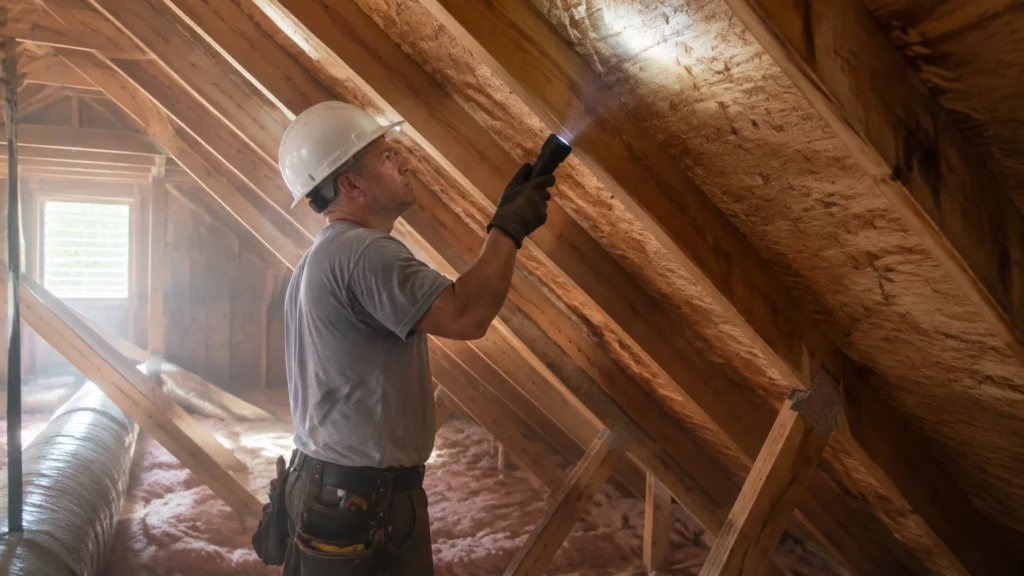
A roof inspection in Charlotte should not rely on guesses from the street. In about 10 minutes inside the attic, we can often find clues that guide a closer look. We bring a light and take photos so homeowners can see what we see.
Rusty nail tips poking through the deck can point to moisture. Dark water stains on the sheathing may show where water has reached the wood. White or black fuzz on the wood can be a sign of mold growth.
We also check whether the deck feels solid. A section that flexes underfoot needs careful attention, and no one should walk on a weak surface. Daylight at the ridge can help show an opening, while insulation pushed into the eaves can hide blocked vents.
We take a cell phone photo of vent openings to document what is clear and what is blocked. We may also use a moisture meter, a handheld tool that reads how wet the wood is. When the attic is too tight to see well, a thermal camera can help us find areas that may need a closer inspection.
Not every stain means an active leak, and not every warm attic needs a new vent. We look at the full picture, including the roof, the attic, the vents, and the home's air paths.
How much vent a roof actually needs
Ventilation is not guesswork, even when it feels that way. Building codes use a ratio. For every 150 square feet of attic floor, the vents should add up to about 1 square foot of open area. When intake and exhaust are balanced, that ratio can loosen to 1 to 300.
Open area is not the same as the size of the vent. Screens, louvers and shingles all cut down the space air can pass through. That is why a long ridge vent can still be too small for a large attic.
Air also needs room to move once it gets inside. Building Science Corporation notes that code asks for at least 1 inch of clear space between the insulation and the roof sheathing, and recommends 2 inches for better results.
That clear channel is exactly what baffles protect. When insulation touches the deck, air stops moving, and the ridge vent above it has nothing to pull.
Why the deck matters more than the shingle brand
Shingles are the visible cover. The roof deck is the wood base that supports them. If the deck is weak or damp, even quality shingles cannot make that foundation sound.
A 50-year shingle on a rotted deck is a 50-year warranty on a bad foundation. When a warranty claim is reviewed, the deck and the conditions under the shingles matter. A claim can be denied when a failure stems from poor ventilation, so attic condition belongs in an honest inspection.
That does not mean ventilation trouble automatically voids every warranty. Terms differ, and the cause of a problem matters. We explain what we find rather than promising that a warranty will cover a condition we have not checked.
A strong roof starts with sound wood, a clear path for air, and careful installation. That is the part of roofing in Charlotte, NC that homeowners rarely get to see. The shingle brand matters, but it cannot make up for damage underneath.
Fixing ventilation during a replacement or between replacements
During a roof replacement, it is easier to correct ventilation as part of the work. The right approach may include a new ridge vent sized for the roof, open intake vents at the eaves, and baffles that keep insulation out of the airflow path. We also check whether bathroom fans need to be sent outside.

Between replacements, many homes can have their intake and venting corrected without removing the whole roof. The right repair depends on the roof design and the condition of the wood. We tell homeowners when the roof is too far gone for a small ventilation fix to make sense.
Some roofs are harder to vent than others. Vaulted ceilings, complex hip roofs, valleys, and other design features can interrupt airflow. Those attics may need a different plan, so we do not pretend one simple setup fits every home.
Summer roof maintenance is more useful when it considers the space below the shingles. Better airflow may help manage heat and moisture, but it cannot fix every leak or replace damaged wood. We explain what ventilation can solve and what needs a separate repair.
What Lake Norman homes may face
Homes near Lake Norman sit close to open water. In our experience, waterfront roofs around Cornelius, Davidson, Huntersville, and Mooresville face more moisture in the air and stronger, less-blocked winds than many inland lots.
That setting can add to the work a roof must do. Wind-driven rain can reach roof edges and openings from different directions. Lake Norman roofers also need to account for the home’s position, nearby trees, and the roof shape when looking at airflow and water entry.
Charlotte’s summer storms can drop heavy rain quickly. Afterward, warm, humid air may remain around the home and in the attic for days. Good ventilation helps the attic release heat and moisture, but it must work with a sound roof and properly sent exhaust fans.
If you own a home or manage property in Charlotte, NC, the lesson is simple. Watch the weather outside, and watch the conditions under the roof too. An inspection should start in the attic, not with the shingles you can see from the driveway.
A simple rule before spending money on shingles
✅ If your attic feels much hotter than the outside air on a July afternoon, or you can smell the attic inside your home, have it checked before buying shingles. A musty smell may point to moisture, but an inspection is needed to find its source.
We would rather find a small ventilation problem than sell a roof that did not need replacing. That is why our consultations focus on what the roof needs, not on pressuring a homeowner to buy a new one.
Schedule a free roof inspection and consultation. We’ll look at the roof and inside the attic, then explain what we find.
Related Posts



Written by
James Turner, Co-Founder & Chief Executive Officer, Best Roofing Now
Co-founded Best Roofing Now with his father Fred. The company's roofing and insurance-claim expert, and the one who will happily explain any of it to anyone who asks.
More about James →Related Roofing Services
Based on this article, you may be interested in these services.
Service Areas Mentioned
We proudly serve these Charlotte-area communities with professional roofing services.
View All Service Areas →